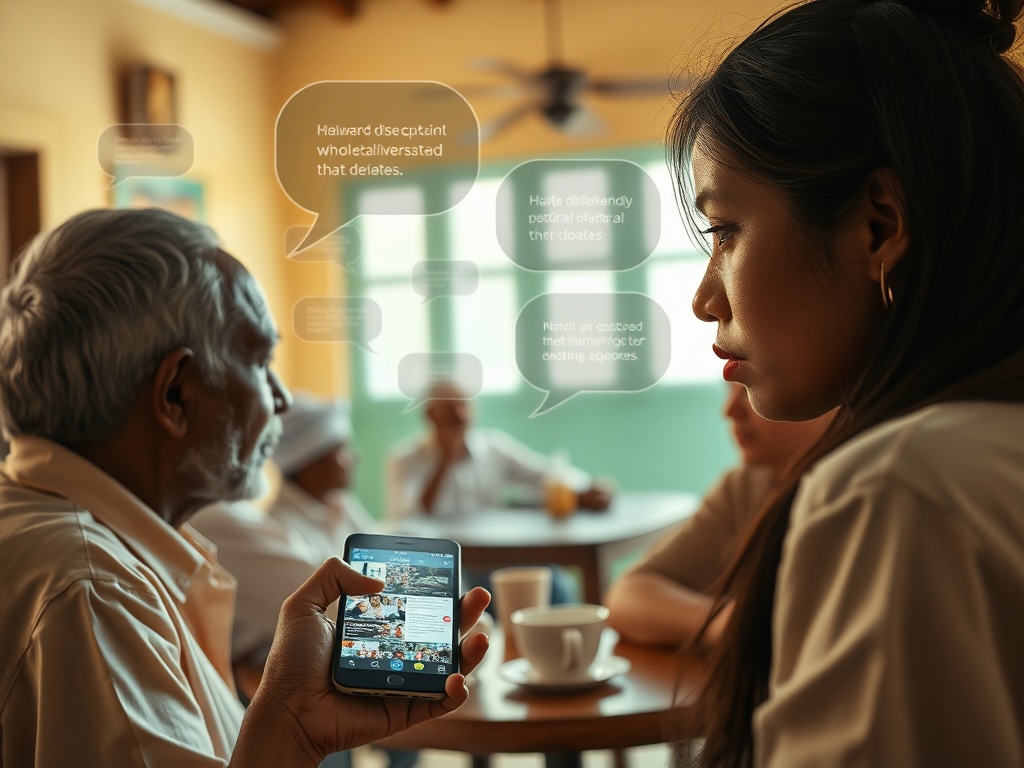
Maldivian Social Media Echo Chambers Where Debate Died
In the echo chambers of Maldivian social media, political discussion has devolved into something far removed from constructive debate. The digital town square, once hailed as a platform for democratic engagement, now echoes with personal insults, character assassination, and tribal warfare that crosses the line from political disagreement into something more corrosive.
The pattern is familiar to anyone who spends time on these platforms: accusations fly without evidence, labels replace arguments, and the substance of policy discussions gets lost in the noise of personal attacks. The phenomenon isn't unique to any single political faction—it has become the default language of political engagement across the spectrum.
What's particularly concerning is how this toxicity mirrors and potentially exacerbates the polarization in our actual political landscape. When political opponents become 'child rapists' or 'terrorists' in online discourse, it becomes increasingly difficult to find common ground in the real world of governance and policy-making. The digital dehumanization of political opponents makes compromise seem like betrayal and turns governance into perpetual warfare.
This degradation of discourse comes at a particularly challenging time for the Maldives. With pressing issues ranging from economic instability and housing shortages to foreign policy challenges and governance reforms, the country needs thoughtful, substantive debate more than ever. Yet social media platforms have become arenas for performance politics—where the most extreme voices often get the most attention, and measured analysis gets drowned out by inflammatory rhetoric.
The psychological toll is equally concerning. As one observer noted, the constant state of political warfare leaves participants 'constantly upset and on edge,' turning political engagement from civic duty into emotional burden. The line between healthy skepticism and cynical dismissal of all opposing views becomes dangerously blurred.
Some users have developed coping mechanisms—muting certain keywords, curating their feeds, or disengaging entirely. But these individual solutions don't address the systemic problem: that our primary platforms for public discourse have become environments that reward outrage over reason, and personal attack over policy critique.
The challenge ahead isn't just about moderating content or enforcing platform rules. It's about rebuilding a culture of democratic discourse that can accommodate disagreement without descending into hatred, that can critique policies without destroying persons, and that recognizes that in a small island nation where we must inevitably coexist, the quality of our public conversation matters more than we might realize.
— Source fragments: Fragments contained personal attacks, political accusations, and observations about toxic online behavior, which were synthesized into a broader analysis of political discourse quality.