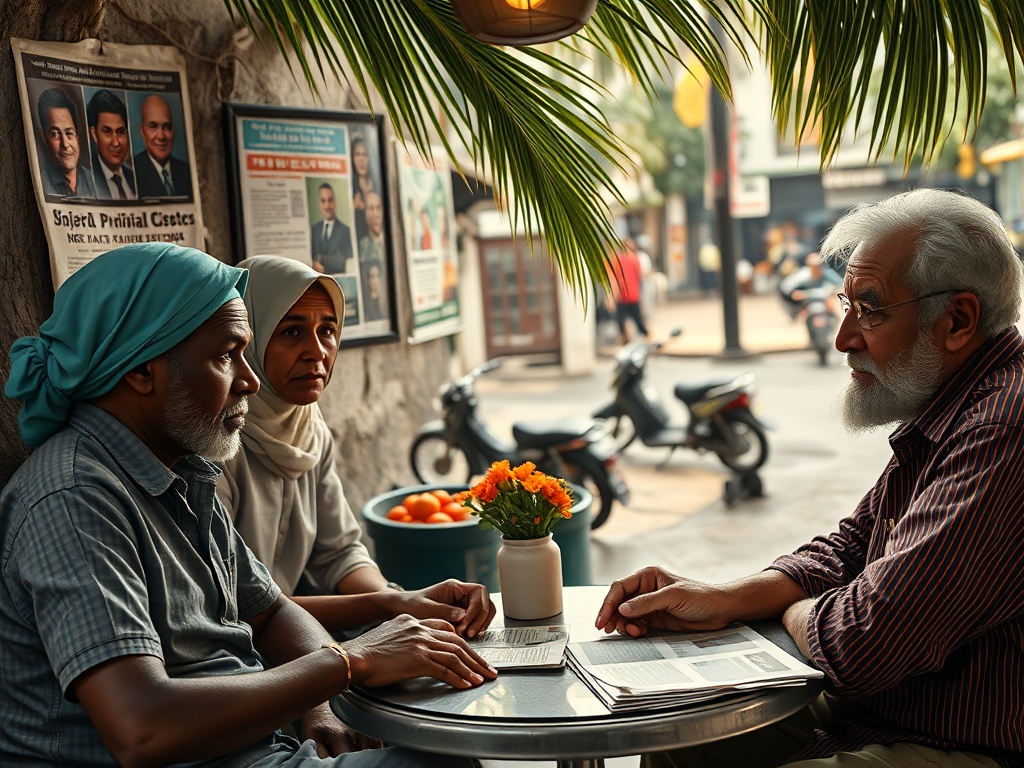
Maldivians in Malé Cafés Ask: Can This System Really Change?
In the crowded cafes and narrow streets of Malé, a quiet conversation is unfolding—one that questions the very foundations of political change in the Maldives. The debate centers on a fundamental dilemma: can meaningful reform emerge from existing political structures, or must it be demanded by citizens themselves?
The discussion reveals deep skepticism about current political figures. One observer notes that presidential candidates often pledge to solve systemic problems without understanding their root causes. "It's not western regimes that do it," the argument goes. "It's us." This self-critical perspective suggests that the solutions must come from within Maldivian society rather than being attributed to external forces.
Recent gatherings among political factions highlight the internal tensions. At one meeting, members of The Democrats expressed frustration about canceled protests and debated the need for party reform and leadership changes. These internal discussions reflect broader public sentiment about the need for political renewal.
The urban-rural divide in political representation emerges as another concern. Residents of Malé feel particularly disconnected, noting that MPs and council members primarily serve the islands, leaving the capital's specific challenges unaddressed. This geographical disparity in political attention fuels feelings of neglect among city dwellers.
Public discontent is manifesting in concrete ways. A petition calling for a political figure's resignation has gathered 2,000 signatures, indicating that citizens are finding channels to express their dissatisfaction beyond traditional political processes. The message is clear: leaders must acknowledge their constituents' feelings and demands.
Some critics describe the Maldives as "an elite run conglomerate of companies disguised as a country," hearkening back to a time before 1952 when islands and atolls were mostly self-sufficient. This nostalgic view contrasts sharply with current realities of centralized power and economic dependency.
The fundamental question remains whether change can come from within the system or must be driven by popular demand. As one voice puts it, "The only real way forward is for people or even a small group of determined individuals to rise up and demand change." This perspective suggests that transformation may require citizen mobilization rather than waiting for political insiders to deliver reform.
In this climate of political uncertainty, Maldivians are weighing their options—between hoping for change from current or future position holders and taking matters into their own hands. The answer to which path will prevail remains uncertain, but the conversation itself signals a society in search of new political possibilities.
— Source fragments: At this point, what should be the way forward? Will any of the current or future position holders bring real change? Or will the people finally rise & demand one? Only real way forward is for people or even a small group of determined individuals to rise up & demand change; I don't have an MP or council member in parliament. I live in Malé. The MP and councilors work for the islands; There is a pettition with 2000 signatures calling for his resignation. The only feelings he needs to acknowledge is the ones of his constituents; There is a reason this is not solved. And the biggest reason is that the presidential candidates that pledge to solve this have no idea why it happens in the first place. It's not western regimes that do it. It's us; We are an elite run conglomerate of companies disguised as a country. We were a country once, prior to 1952 when islands and atolls were mostly self-sufficient; i listened to a group of Dems arguing last night! They were angry at for canceling the protest! They were all members of Dems. No MDP members there. They talked about… - the need to reform MDP - To change the current leadership