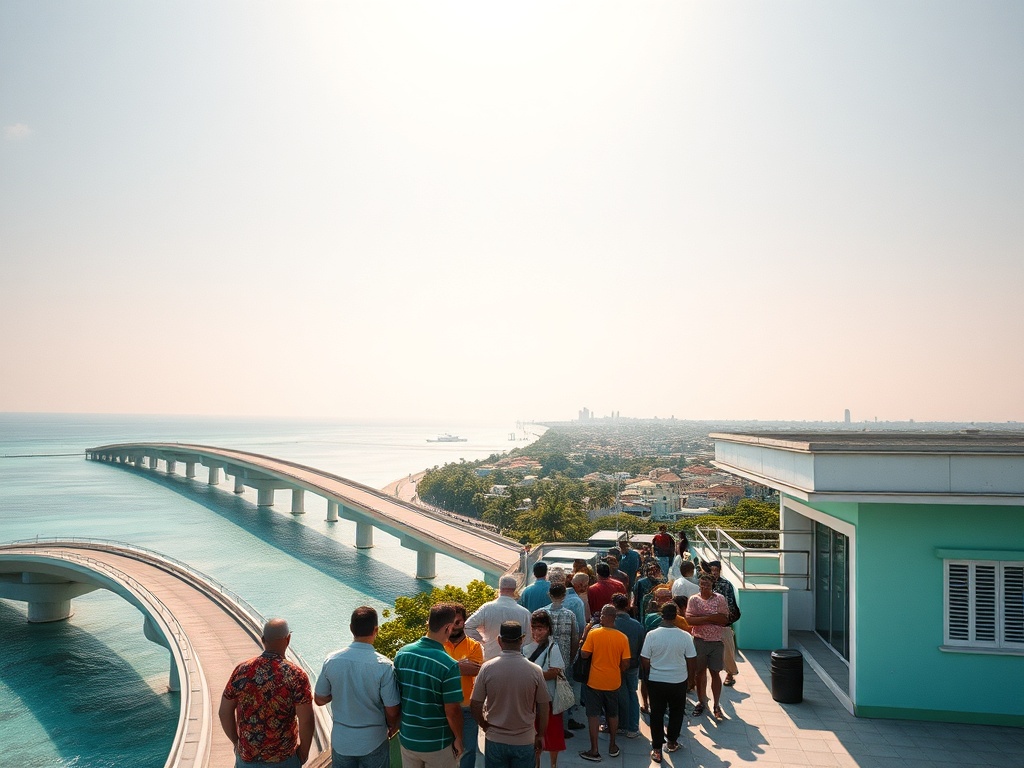
Maldivians Waiting in Line While Ribbons Are Cut
Across the Maldives, a quiet frustration simmers beneath the surface of political rhetoric and ribbon-cutting ceremonies. The familiar promise of 'big projects' no longer resonates with citizens who see deeper structural problems requiring more courageous solutions. The real need isn't for more concrete and steel, but for a government willing to reform the very systems that govern daily life.
The sentiment echoes through various sectors of society. In public administration, questions arise about resource allocation and meritocracy. Why do judges command significantly higher salaries than administrative officers when their appointments often appear politically motivated rather than merit-based? Critics argue that without genuine judicial independence and demonstrated capacity, such compensation structures represent misplaced priorities in a system where the executive branch's influence often appears overwhelming.
This extends to institutional effectiveness. The frustration with government ministries and corporations—what many call 'minivan muassasaathah'—reflects a deeper concern about their fundamental purpose. When these institutions fail to deliver on their core mandates, citizens feel compelled to become more involved in processes that should function smoothly without constant public oversight. The result is a system where participation becomes necessary not by choice, but by institutional failure.
Even basic governance functions face scrutiny. When ministerial communications appear to defy logical reasoning—described by some as 'Adhureymatics' where official positions seem disconnected from factual reality—public trust erodes further. This perception gap between government pronouncements and practical realities creates a chasm that no infrastructure project can bridge.
Media concentration adds another layer of concern. The potential for cross-ownership between financial institutions and media outlets raises questions about information diversity and independence in a democracy where multiple perspectives are essential for informed public discourse.
The underlying theme connecting these disparate concerns is systemic integrity. From judicial appointments to institutional performance, from media diversity to administrative competence, the common thread is the need for systems that function with transparency, meritocracy, and accountability. As one observer noted, the fundamental issue isn't about doing more things, but about doing the right things properly.
For the Maldives to move forward, the conversation must shift from what gets built to how systems operate. The real development challenge isn't architectural but institutional—creating frameworks that serve citizens efficiently, judge fairly, communicate transparently, and govern accountably. Until these systemic foundations are strengthened, even the most ambitious projects risk becoming monuments to missed opportunities rather than catalysts for genuine progress.
— Source fragments: Maldives doesn't need another 'BIG PROJECT.' We need a government brave enough to REFORM the SYSTEM; People wouldn't even need to be involved if minivan muassasaathah could do what they are intended to do; should be illegal for bml md to also be macl media md; Why are we paying judges a higher salary than the average Admin Officer anymore? They are appointed without merit and have no guarantee of having true capacity; You don't need a lawyer or an intelligent conversation to decide that they the ministry mean 2+2=5 according to Adhureymatics; Anything but doing their job