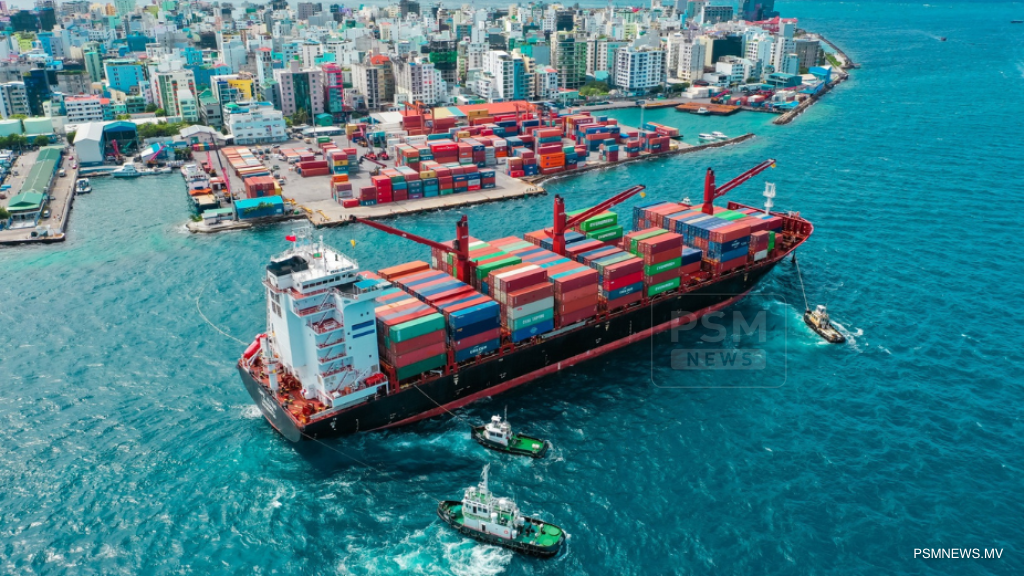
Male’ Commercial Harbour Relocation to Boost Economy and Reduce Goods Pricing
President Dr Mohamed Muizzu has announced that the relocation of the Male’ Commercial Harbour to Thilafushi is progressing on schedule, with full operations expected to commence by November 11 next year. The strategic move is designed to eliminate critical space constraints in the capital and modernize the nation's logistics infrastructure.
Speaking on the 'Nation Chat' podcast, the President detailed a hybrid operational model where approximately 80 percent of port activities will move to Thilafushi. To ensure seamless transitions, specific services will be hosted at the Male’ Industrial Village, located near the Thilamale’ Bridge and connected via the T-Jetty. This setup ensures that port operations remain functional even if the bridge is unavailable, utilizing roll-on/roll-off ferry services to route freight away from densely populated residential areas.
The President emphasized that the project is a cornerstone for economic growth. A primary highlight of the new facility is the implementation of a fully digitalized port operations management system. By automating processes and reducing processing times, the government aims to lower the cost of imported goods, directly benefiting consumers across the archipelago.
The scale of the new infrastructure represents a massive leap in capacity. The Thilafushi harbour area is ten times larger than the current facility, and the new quay wall will be three times longer than the existing one in Male’. These expansions will allow for more efficient loading and unloading of cargo, providing private businesses with allocated spaces to scale their operations.
The relocation and the development of the quay wall are being executed by the China Harbour Engineering Company and the Maldives Transport and Contracting Company (MTCC). Once complete, the transition will effectively shift the bulk of the Maldives' industrial noise and traffic away from the capital, creating a more sustainable urban environment while strengthening the country's trade capabilities.