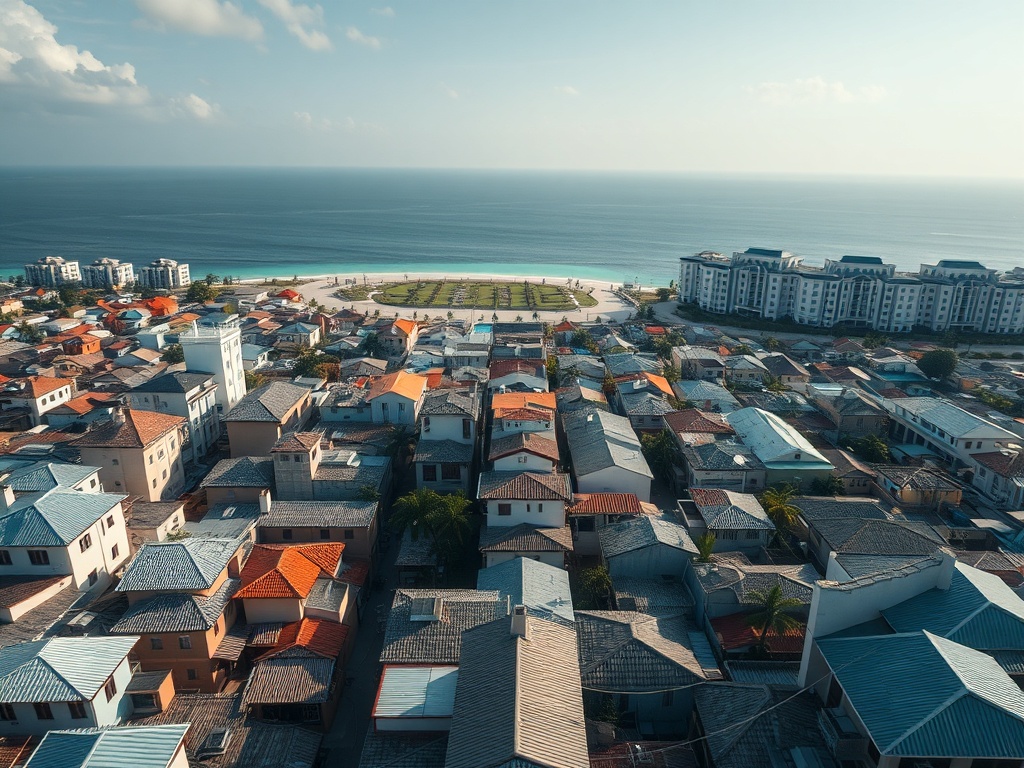
Male' Gets Land While Outer Islands Wait a Lifetime
In the crowded archipelago of the Maldives, land has become more than just territory—it has become the ultimate measure of citizenship and belonging. The ongoing debate surrounding housing allocation reveals a troubling pattern of systemic exclusion that threatens to create permanent divisions within Maldivian society.
The core of the controversy lies in what critics describe as discriminatory policies that favor Male' citizens over residents from other atolls, regardless of actual residency or contribution to the community. A resident from an outer atoll who has lived in Male' for over four decades can find themselves ineligible for housing benefits, while a Male' citizen who has spent their entire life abroad remains automatically qualified. This isn't merely bureaucratic oversight—it's the architectural blueprint for a subclass of citizens.
The historical context adds layers to this injustice. Administrative boundaries have been redrawn, land parcels separated, and entire communities redefined to serve political interests. The case of Addu Atoll, where parts were administratively separated to create land allocations in Feydhoo, stands as a stark example of how geography can be weaponized for exclusion. Meanwhile, those from Hulhumale' and Hulhudoo who returned to outer islands were often treated with undue reverence, their opinions valued disproportionately simply because they came from the capital.
This system creates what critics accurately describe as 'future rent slaves'—citizens trapped in perpetual dependency, unable to build generational wealth through property ownership. The irony cuts deeper when considering that representatives from these very communities often enable the policies that perpetuate their constituents' marginalization.
The housing crisis in Male' has reached critical proportions, with overcrowding and exorbitant costs making basic accommodation a luxury many cannot afford. Yet the solutions proposed often reinforce the very hierarchies they claim to address. When land allocation becomes a political tool rather than a social necessity, it ceases to be about housing and becomes about power—who has it, and who doesn't.
The psychological impact of this systemic exclusion cannot be overstated. When citizens are made to feel like second-class members in their own country based on their geographic origins, it erodes the very foundation of national unity. The message is clear: some Maldivians are more Maldivian than others.
As the nation grapples with broader issues of governance, economic inequality, and political polarization, the housing question remains a litmus test for the country's commitment to genuine equality. Until land and housing policies are divorced from political expediency and rooted in principles of fairness and need, the Maldives risks cementing divisions that may take generations to heal. The land that should unite us is instead becoming the ground on which we build our separations.
— Source fragments: An RT living in Malé for 40+ years doesn't qualify. A Malé citizen who has lived abroad their entire life is eligible. The only outcome of this discriminatory policy is the creation of a subclass of citizens — future rent slaves. They literally separated part of Addu administratively just so that they could have a slice of land on Feydhoo.