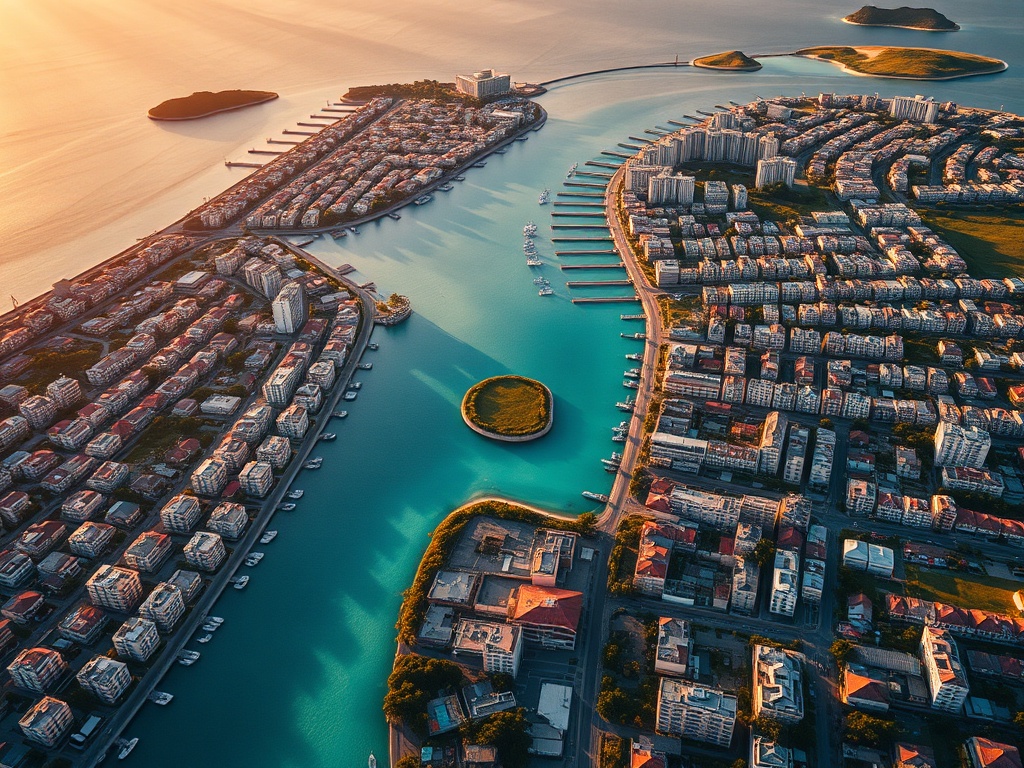
Malé Is Full, and the Empty Plots Are in Plain Sight
The sea breeze carries more than salt these days—it carries conversations about fairness, about land, about who deserves what in this archipelago we call home. People have eyes, as one voice notes, and they can see that Malé is full. The demand isn't just for space; it's for recognition, for compensation, for something that says 'I belong here too.'
When policies are implemented in biased ways, even good intentions crumble. The MDP's housing scheme, as one observer points out, solved a problem at lower cost—but its unconstitutional implementation became the real issue. This is the recurring pattern: solutions that could work become weapons in political battles, leaving ordinary people caught between promises and reality.
Economics teaches us that when demand far exceeds supply, price ceilings create shadows—black markets where housing units trade hands illegally at higher prices. Yet the human need for shelter doesn't follow market logic. The debate isn't just about housing versus land, though the distinction matters. It's about what we value as a society: birthright or need, origin or contribution.
Some argue against any free land distribution, insisting criteria shouldn't discriminate by birthplace or profession. Others envision a Maldives where any Dhivehin can settle anywhere, buy land, sell it, move freely—a mobility that reflects our seafaring heritage. But beneath these policy debates lies a deeper question: what does it mean to belong to an island when the island can no longer hold you?
The technicalities of bills and surveys matter, but so does the reality that if you can't 'wean yourself' from land—if you can't use it, build on it, make it home—then what is it really? Empty plots become symbols of unmet promises, while crowded Malé apartments become cages of compromise.
Perhaps the solution lies not in choosing between regulation and free distribution, but in creating systems that acknowledge both our limited geography and our unlimited need for dignity. Where housing policies become bridges, not walls—connecting people to possibilities rather than dividing them by origins.
— Source fragments: Male' is full; people demanding money as Male' meeha; policies must be fair; setting limitations for free island allocation; good policies implemented unconstitutionally; price ceilings creating black markets; against discrimination in housing criteria; housing vs land distinction; standardizing housing schemes; regulating rent vs free land