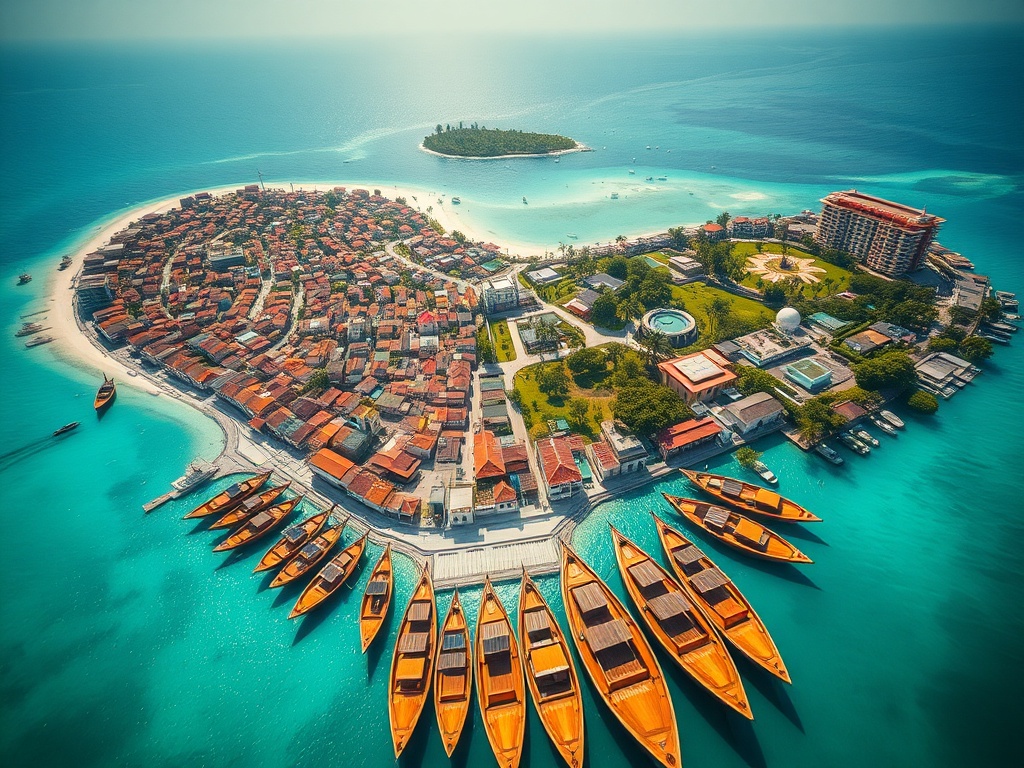
Malé's 120,000 People and the Search for Another Capital
The conversation about Malé's future has reached a critical juncture. Across social media and public discourse, Maldivians are grappling with the fundamental question of how to preserve their ancient capital while addressing its overwhelming congestion. The debate reveals competing visions for the nation's urban future, each with distinct implications for how Maldivians live, work, and maintain their island identity.
The current reality is stark: approximately two in five Maldivians now live in Malé, with migration patterns showing notable concentrations from Gaafu Alif and Gaafu Dhaalu atolls. This density creates a paradox - while many parents from Malé express desire to raise children in cleaner, healthier island environments, the lack of jobs and quality schools in outer atolls makes such moves impractical. The permanent address system compounds these challenges, creating legal and logistical barriers to meaningful decentralization.
Several solutions dominate the discussion. The RasMalé project represents one approach, designed to accommodate approximately 30,000 people who missed out on the Binveriya housing scheme. With 37 million square feet allocated for residential use, it offers measured relief but doesn't fundamentally alter Malé's central role. More radical proposals include creating dedicated expat islands for up to 100,000 people, potentially easing congestion while addressing concerns about foreign worker concentrations in the capital.
The most transformative idea involves relocating the administrative capital while maintaining Malé as the financial hub. Proponents point to international models like Ankara, Brasilia, and the upcoming Nusantara capital in Indonesia as evidence that political and economic functions need not occupy the same space. This approach could redistribute population pressure while preserving Malé's historic and commercial significance.
Underlying these technical discussions are deeper cultural concerns. Maldivians recognize that simply shifting populations without addressing fundamental infrastructure, employment opportunities, and quality of life indicators will yield limited benefits. The challenge isn't merely mathematical modeling of migration patterns but creating genuine alternatives to Malé's dominance.
The path forward requires balancing immediate needs with long-term vision. As one perspective notes, Malé cannot be depopulated - its ancient roots and established communities make complete decentralization unrealistic. Instead, the focus is developing multiple urban centers around the Maldives that can replicate Malé's opportunities without its congestion. This approach acknowledges both the practical concerns of Malé residents and the mathematical reality that migration patterns won't change without compelling alternatives.
The conversation reflects a nation at a crossroads, seeking to preserve its heritage while embracing sustainable development. The solutions emerging - whether through new cities, specialized islands, or functional redistribution - all point toward a future where Maldivians might finally have genuine choices about where to build their lives beyond the crowded capital.
— Source fragments: City development and marketing to shift perspectives; Parental preferences for island lifestyle vs job/school limitations; Malé as ancient island that cannot be depopulated; Expat island concept; RasMalé project details; Administrative capital relocation examples; Migration pattern statistics; Permanent address system limitations; Development of multiple cities like Malé