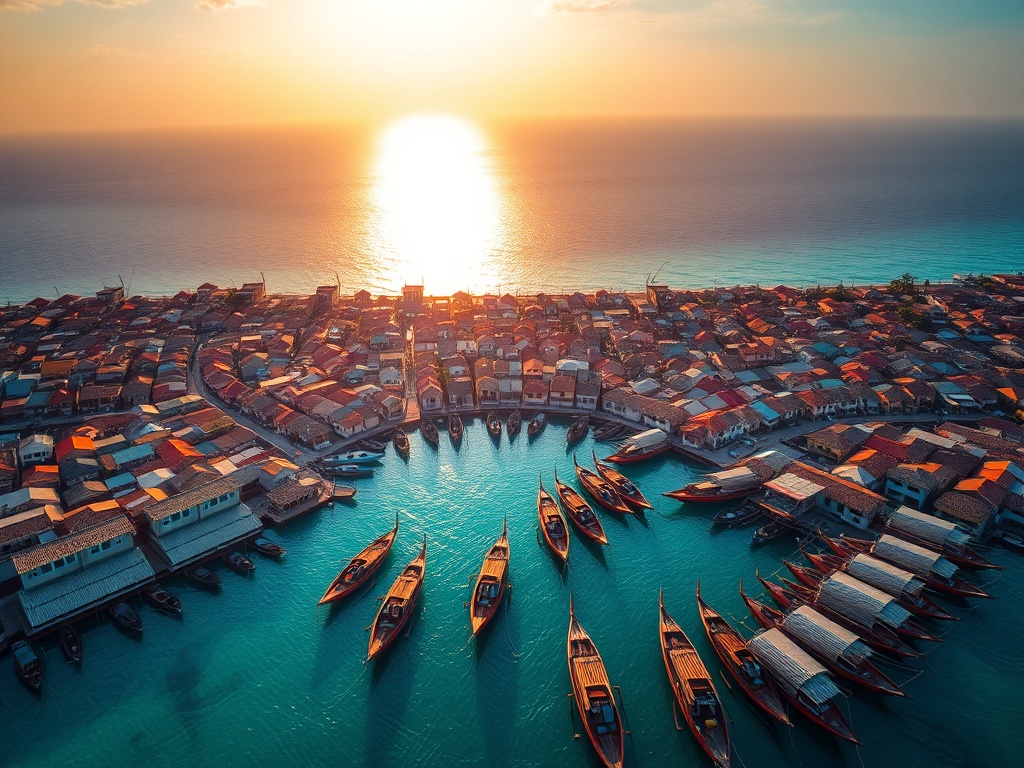
Malé's Concrete Creeps Upward as the Sea Whispers Warnings
The voice echoes across social media, blunt and unapologetic: 'It's not that they don't know. People have eyes and can see that Male' is full.' This isn't just observation—it's resignation. We've all watched our capital swell beyond its seams, the concrete creeping upward while the sea whispers warnings at its edges. Yet beneath this acknowledgment lies a more uncomfortable truth: the demand isn't always for space, but for compensation. 'Give me money cos i am Male' meeha,' they say, and the speaker admits, 'I don't mind it either.'
This raw honesty reveals how housing has become political currency in our islands. When demand far outstrips supply, simple solutions crumble like poorly mixed cement. Price ceilings meant to protect become opportunities for shadow markets to thrive. The debate shifts from 'if' to 'how'—how do we allocate limited land among Maldivian couples? How do we determine who deserves what slice of our scattered nation?
Some argue for standardization, for policies that don't discriminate between Male' meeha and Raajetherey meeha. 'Any dhivehin who wants to settle in any island shall be able to,' one voice insists, envisioning a Maldives where mobility and choice define citizenship rather than birthplace. Others draw careful distinctions: 'Housing is not the same as land,' they remind us, suggesting that the solution lies not in giveaway programs but in regulated rent and fair access.
Yet the most poignant observation comes from those who see beyond the policy mechanics: 'MDP goathi scheme is actually a v good policy bec it solves a problem and at a lower cost. But it was implemented in an obviously unconstitutional and biased way.' Here lies the heart of our struggle—not with the concept of housing assistance, but with its execution. When implementation becomes political weaponry, when fairness becomes negotiable, we risk losing not just homes but trust in the very systems meant to protect us.
As the sun sets over our crowded capital, casting long shadows between buildings where families squeeze into spaces never meant for so many, we're left with the essential question: What does it mean to belong to an island nation when the islands themselves become bargaining chips? The answer may lie not in grand political schemes, but in remembering that every policy ultimately touches someone's dream of home—a place to anchor oneself in these vast, blue waters we call our own.
— Source fragments: Male' is full; people are demanding money; policies has to be fair; setting limitation for free island allocation; scheme solves problem but implemented unconstitutionally; demand exceeds supply creates black markets; don't discriminate among residents; housing not same as land; correct policy not to differentiate between Male' meeha or Raajetherey meeha