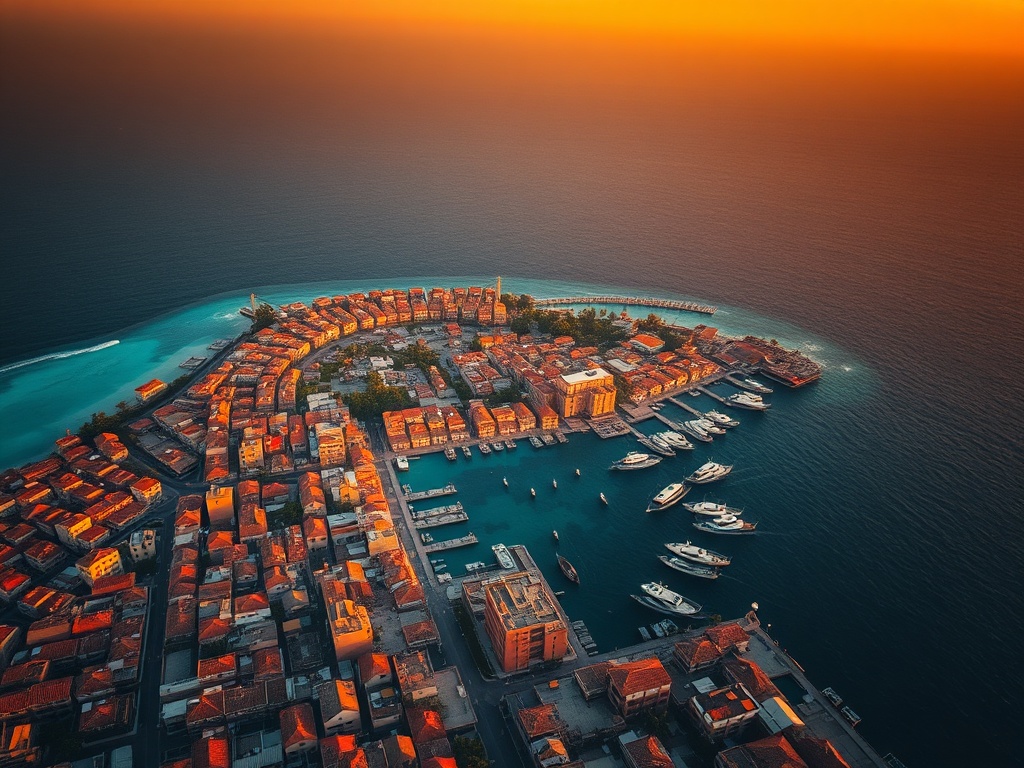
Malé's Concrete Sprawl Meets the Endless Ocean
The sea breeze carries more than salt these days—it carries conversations. In crowded cafés and on ferry decks, voices rise and fall like the tide, all speaking of one thing: home. 'People have eyes and can see that Malé is full,' someone says, and indeed they do. The concrete sprawl stretches toward the horizon, a testament to dreams compressed into limited space.
Yet beneath the practical concerns lies a deeper current—the quiet understanding that policies must be fair, that discrimination has no place in determining who gets to call which island home. The technical distinctions between housing and land allocation matter less than the principle that any Dhivehin should be able to settle where they choose, to build a life anchored in community rather than birthplace.
There's wisdom in recognizing that when demand far outstrips supply, simple solutions often create complex problems. Price ceilings become invisible ladders that only some can climb, while others remain stranded. The real challenge isn't just allocating resources but doing so with transparency and equity—standardizing approaches so that government action follows clear, consistent principles rather than political winds.
Some argue for regulation over giveaways, for systems that acknowledge the practical realities of limited space without sacrificing fairness. The tension between immediate needs and sustainable solutions plays out in policy debates, but also in the quiet moments when families consider their futures. What does it mean to be from a place when that place can no longer hold you? How do we measure belonging—by ancestry, by contribution, by need?
Perhaps the most profound realization is that the conversation itself matters. That in speaking of land and housing, we're really speaking of dignity, of the right to plant roots in soil that feels like your own, whether that soil is in Malé or any other island where life might take root and flourish. The policies may be about allocation, but the longing is about something far more fundamental—the human need for a place to belong.
— Source fragments: "people have eyes and can see that Male' is full", "policies has to be fair", "don't discriminate among residents on any island", "Any dhivehin who wants to settle in any island shall be able to buy or obtain land", "When demand far exceeds supply, setting a price ceiling below the market rate is rarely effective", "standardise housing schemes so that government has to abide by a certain standard"