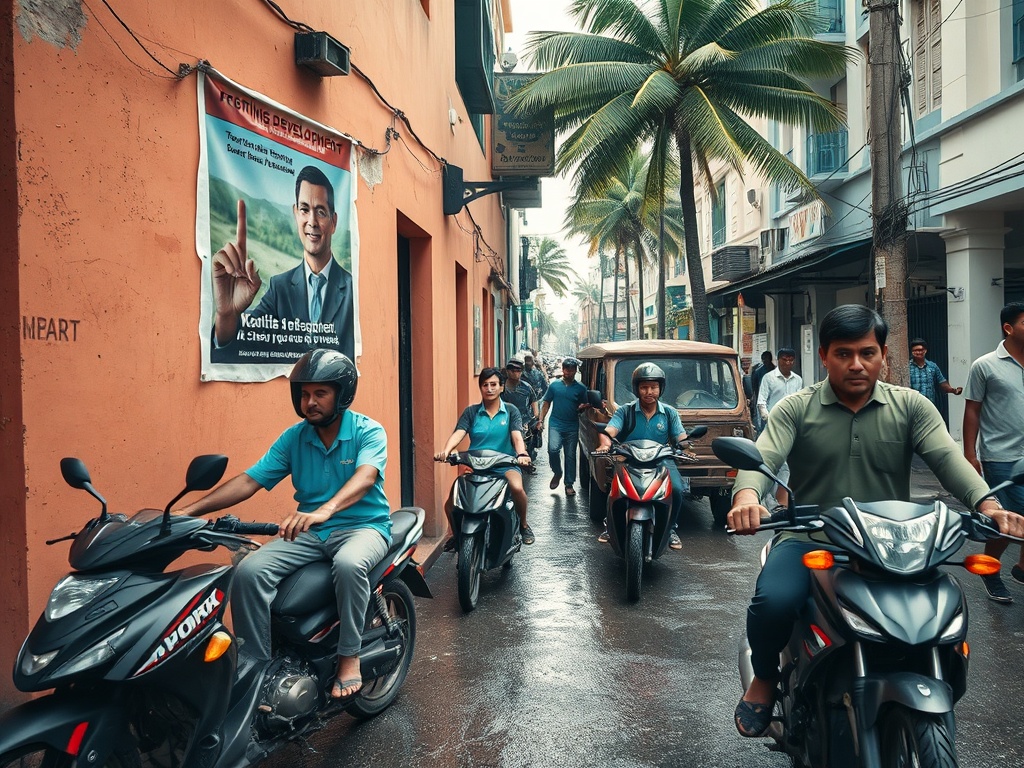
Malé's Congested Streets Meet Faded Development Posters
Across the scattered atolls of the Maldives, a familiar pattern of infrastructural disappointment repeats itself. The aspiration for balanced national development—where outer islands become viable population hubs with proper resources and opportunities—remains perpetually out of reach. For years, the political discourse has been saturated with promises of decentralisation and regional growth, yet the tangible outcomes are often marked by inefficiency and wasted potential.
The evidence of this systemic failure is palpable. In the capital, Malé, residents describe a city choking on its own congestion, where roadblocks and stalled projects inflict a devastating economic toll, estimated by some at MVR 100 million in daily transactions. This isn't merely an inconvenience; it's a direct blow to the city's commercial vitality, a symptom of planning that prioritises short-term political spectacle over long-term functionality.
The technical shortcomings are equally telling. Energy infrastructure, a cornerstone of modern development, is plagued by basic flaws. Inefficient systems, where poor insulation forces power compressors to work relentlessly, represent a double failure: they fail to deliver comfort while squandering precious energy and financial resources. This 'half-arsed' approach, as one sentiment captures, has become a national signature—substandard outcomes procured at premium costs.
This cycle of underperformance is reinforced by a bureaucratic apparatus often perceived as incompetent or deliberately obstructive. The experience of dealing with city councils, whether in Malé or evoked in international parallels, points to a culture where project management is mired in delays and inflated expenses. The result is a profound public cynicism, a weary acceptance that grand plans discussed for over a decade will inevitably falter in execution.
The core of the crisis lies in the disconnect between high-level political announcements and the granular reality of implementation. The public's desire for tangible solutions—whether a functional cable car system or reliable power plants—is met with a landscape of stalled timelines and technical inadequacy. As the nation grapples with a high cost of living and strained public services, the inability to execute infrastructure projects competently is more than a mere grievance; it is a fundamental constraint on national progress and public trust.
— Source fragments: Neglected island development, infrastructure failures in Malé, energy inefficiency, bureaucratic incompetence, economic impact of congestion, public cynicism towards projects.