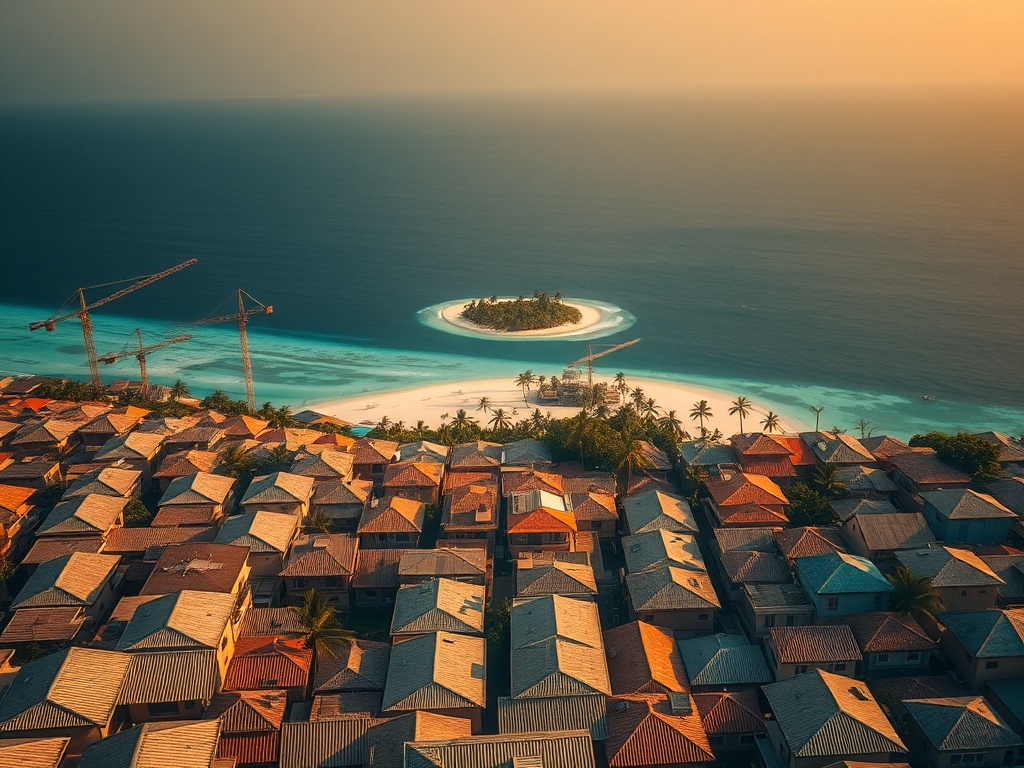
Malé's Cranes Rise as Outer Islands Wait
The transformation of Malé from a tight-knit island community to a congested urban center has sparked an urgent conversation about identity, governance, and sustainable development. Critics argue that the capital has lost its essential character in the relentless push toward centralization, becoming what one observer called 'a mess' rather than a properly planned city.
The debate goes beyond aesthetics to fundamental questions of resource allocation and quality of life. The current model forces migration to the Greater Malé Area, creating what critics describe as 'congested unhealthy living' that prioritizes density over dignity. The recurring costs of maintaining basic infrastructure across 200 islands while simultaneously funding massive urban development in the capital region has left many questioning the economic logic of current policies.
Technology offers potential solutions through decentralized systems that could distribute government services and economic opportunities more evenly across the archipelago. Yet the political will remains absent, with critics pointing to the financial incentives that keep power concentrated. The banking system's reliance on centralized development loans creates what some see as a self-perpetuating cycle that benefits financial institutions and political elites at the expense of balanced regional growth.
The situation in Hulhumalé exemplifies these tensions. As an artificial extension of the capital, it operates under corporate management rather than elected local governance, raising questions about accountability and community representation. Meanwhile, the abolition of permanent addresses has done little to address the underlying issue—what critics see as a systematic preference for centralization that forces citizens into crowded living conditions and rental markets.
The solution, according to this emerging consensus, lies not in creating more urban centers but in genuine decentralization that would allow Maldivians to thrive across the archipelago rather than crowding into an increasingly strained capital region. Until then, the debate continues between those who see centralized development as inevitable progress and those who view it as the nation's 'biggest blunder.'
— Source fragments: Male' has lost its identity; Very-cumming in Male was the biggest blunder; recurrent cost of maintaining 200 communities is unsustainable; need decentralized system; promote congested living with centralised government services; Hulhumale should be freed from corporate grip; problem is centralization