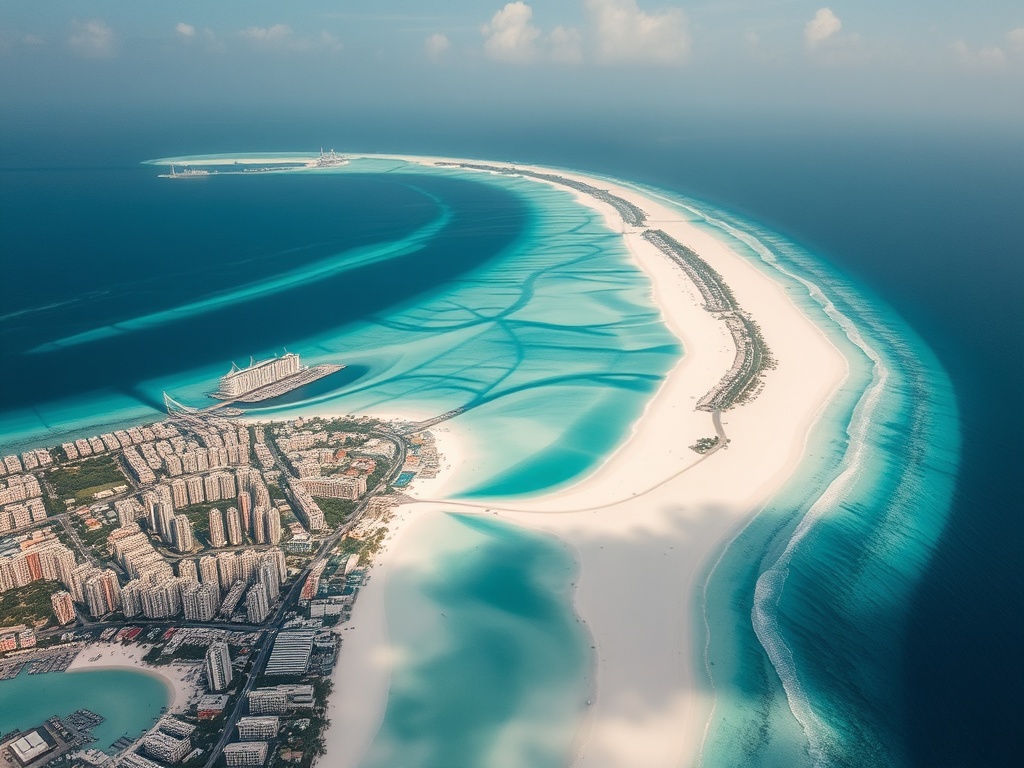
Malé's Crowded Skyline, Outer Islands' Empty Shores
The irony is as stark as the contrast between Malé's crowded skyline and the quiet shores of outer islands. When policymakers urge residents of the congested capital to disperse across the archipelago, they confront a fundamental contradiction: many island communities themselves struggle with their own exodus to the urban center. This creates a development paradox where solutions to one problem inadvertently reinforce another.
The relocation debate reveals a deeper tension in how Maldivians relate to place and opportunity. While Malé offers concentrated services, employment, and social networks, outer islands often represent not just physical distance but psychological separation from the nation's economic heartbeat. The reluctance to commit to atoll development isn't merely stubbornness—it's a rational response to decades of uneven investment that has made the capital the undeniable center of gravity for education, healthcare, and economic mobility.
Reclamation projects intended to alleviate pressure often follow this same gravitational pull. When new land emerges from the sea, it typically serves existing population centers rather than creating new hubs of opportunity. This pattern reinforces the very centralization that relocation policies aim to counter, creating a development feedback loop where infrastructure follows density rather than creating new centers of growth.
The result is a geographic catch-22: outer islands lack the critical mass to attract substantial investment, while policies designed to redistribute population struggle against the economic realities that concentrate opportunity. This isn't merely a planning challenge—it reflects how development priorities become embedded in the physical landscape, with reclaimed land serving immediate political and demographic pressures rather than long-term strategic vision.
What emerges is a conversation about more than just geography. It's about how development policies can unintentionally perpetuate the patterns they seek to break, and how genuine decentralization requires not just moving people, but moving opportunity, services, and economic vitality to create truly sustainable communities across the archipelago.
— Source fragments: The rationale of asking Male' meeha to move to islands while the island people aren't willing to commit to their own islands or atoll is ironic, while also when reclamation happens it is not the next atoll that benefits from free land but the first the residence of the same