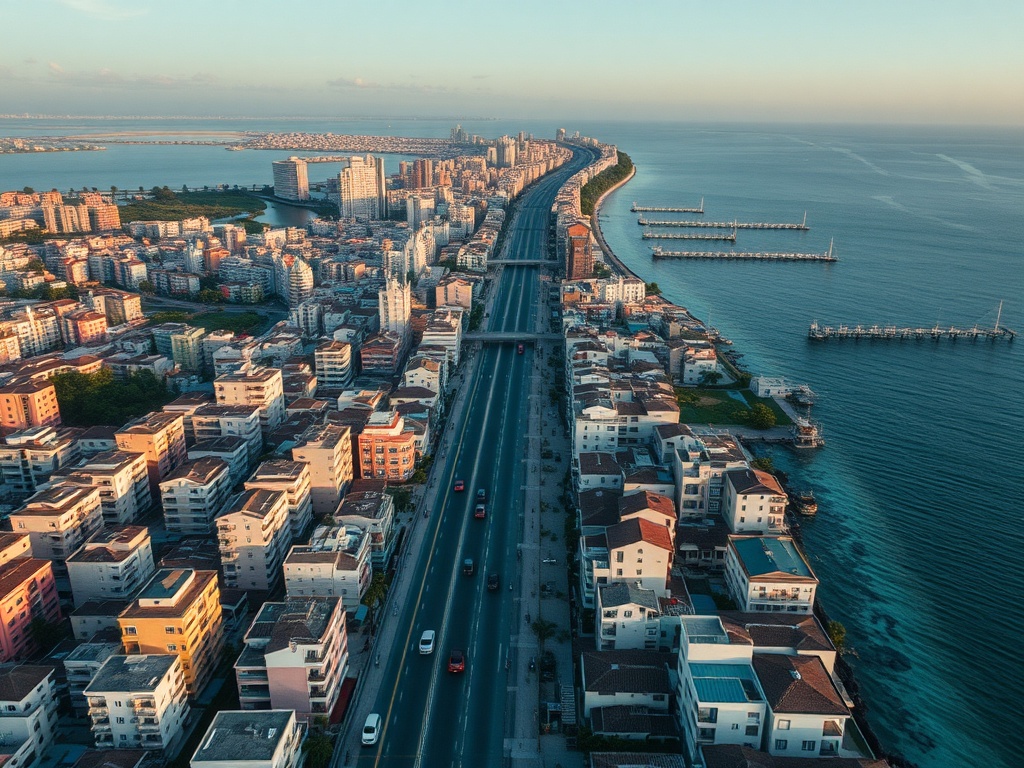
Malé's Crowded Streets, Another's Empty Villa
Across the Maldives, a quiet revolution of consciousness is unfolding. It's not marked by protests in the streets but by conversations in tea shops, on social media platforms, and in homes where the weight of systemic injustice has become too heavy to bear alone. The collective voice emerging isn't about partisan politics—it's about fundamental human dignity.
The core grievance centers on what many perceive as state-sanctioned inequality. When citizens speak of "grave injustice" that will haunt future generations, they point to systems that appear designed to perpetuate privilege. The Binveriya Scheme and permanent address system have become lightning rods for this discontent, seen not as isolated policy failures but as manifestations of a deeper pattern: that one's birthplace or family connections determine life outcomes in ways that no amount of individual effort can overcome.
This isn't merely about land distribution, though that represents the most tangible form of the inequality. It's about what that distribution represents—the institutionalization of advantage. When individuals own properties across multiple atolls while claiming commoner status, it exposes the hypocrisy that cuts deepest: not just the inequality itself, but the refusal to acknowledge its existence. The average Malé resident and those from remote islands face daily struggles that remain abstract to those insulated by wealth and connections.
The psychological dimension of this inequality reveals itself in unexpected ways. The observation that someone would call their own partner ugly speaks to a deeper sickness—a internalized hierarchy of value where even personal relationships become infected by social standing. When respect becomes conditional on wealth rather than character, the very fabric of community begins to fray.
What makes the current moment different is the clarity of analysis emerging from these conversations. People increasingly recognize that labels like 'RT' and 'MM' are symptoms rather than causes. The real driver, as many now articulate, is greed—the insatiable appetite that turns public resources into private fiefdoms. This greed manifests in land distribution schemes that create new inequalities while perpetuating old ones, in housing policies that leave generations stranded while connected individuals prosper.
The most poignant realization is how the costs are distributed. As one voice notes with heartbreaking clarity, "Only the victim suffers." The architects of these systems move through life untouched by the consequences of their decisions, while ordinary citizens bear the weight of policies designed without their interests in mind.
Yet within this bleak landscape, hope persists in the determination to bear witness. The conversation continues not because anyone expects immediate change, but because silence would mean complicity. To speak of these injustices is to plant seeds for future accountability, to create a record that someday, someone might consult when asking how we arrived at this point. The struggle isn't about rolling back single policies anymore—it's about challenging the fundamental assumptions that allow such policies to be conceived and implemented in the first place.
— Source fragments: We must do anything & everything to cease this grave injustice. Otherwise our children & their children will face similar fate as we do; The average Malé and RT meehaa are living in tough conditions. Mariya and the like are living the life while we struggle; All Maldivians should have access to the same levels of wealth. Your blood or your spawn point shouldn't give you a state sponsored level up; A poor man will never be taken seriously enough, in the Maldives, our people respect wealth and money more than character and policies; Scheme breaches multiple fundamental rights, is discriminatory across a huge swathe of the population, perpetuates historical inequalities & creates new ones; If you look closely, it is greed that sits at the root of most systemic issues; Only the victim suffers