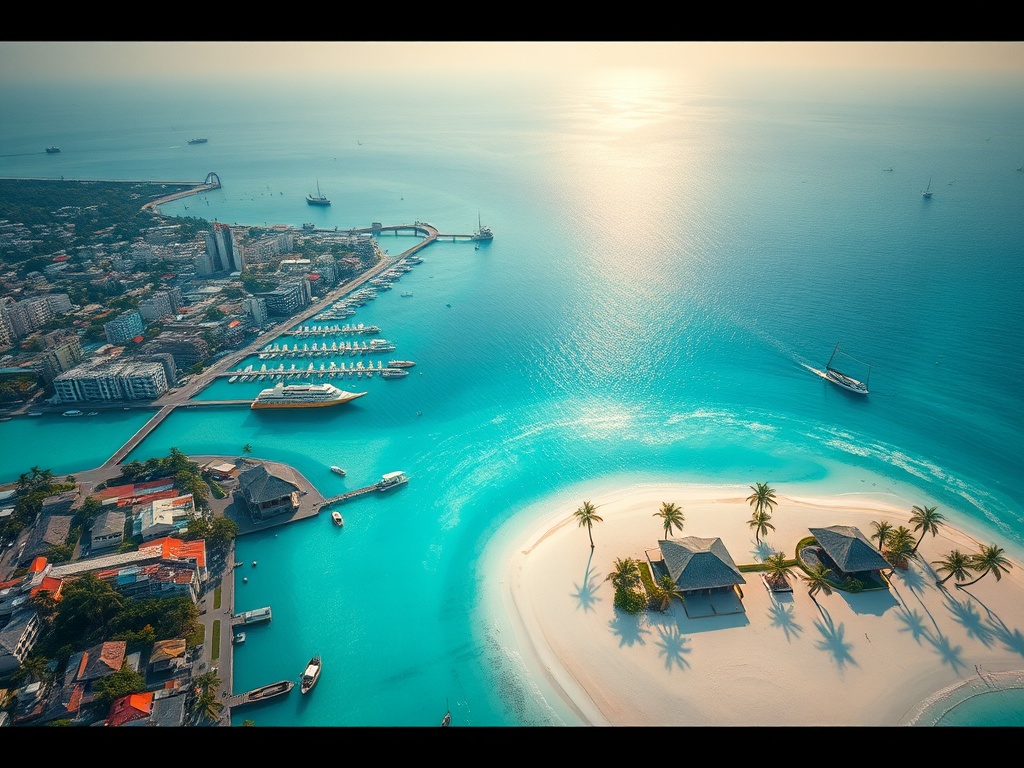
Malé's Crowded Streets, Outer Islands' Empty Plots
In the scattered archipelago of the Maldives, where land is both precious and political, the government's housing policy has become a flashpoint for deeper anxieties about citizenship, equity, and the very definition of home. The recent allocation framework, ostensibly designed to provide shelter for landless families, has instead revealed a troubling geography of exclusion that privileges Malé residents while leaving outer island communities stranded.
The policy's awarding criteria and point system appear systematically skewed toward those with established addresses in the capital. This creates what critics describe as a sub-class of citizens—people born and raised on islands that have stopped allocating plots, living in communities without nearby lagoons or relocation options. Their documentation of residence, their entire lives rooted in specific islands, becomes a liability rather than an asset in the quest for housing security.
Meanwhile, the system's loopholes enable what many call a new form of 'binveriyaa'—the historical practice of land distribution now distorted by modern bureaucracy. The policy fails to address the fundamental issue of multiple allocations, where individuals secure plots and flats through various schemes. This creates a perverse incentive structure: those who accumulate real estate assets through government programs often become landlords, renting to the very landless poor the policy was meant to help.
The constitutional questions loom large. When housing allocation becomes tied to address registration in ways that disadvantage lifelong residents of certain islands, it challenges the principle of equal citizenship. The silence from political parties, independent commissions, and civil society organizations in addressing these structural inequities suggests a normalization of selective justice.
What emerges is a housing landscape where the geography of opportunity mirrors the geography of political influence. Outer island communities watch as their young people face impossible choices: remain in islands with diminishing prospects or migrate to Malé without the housing security that gives capital residents their advantage in the very system meant to be national in scope.
The housing crisis thus becomes more than a matter of shelter—it becomes a referendum on what it means to be Maldivian in the 21st century. When policy creates winners and losers based on postal codes rather than need, it risks fracturing the social contract that binds this scattered nation together.
— Source fragments: Policy is for families with no SH. But the awarding criteria and points are for Male citizens; The gov housing policy is creating a sub-class of citizens; people getting multiple plots of land, flats under various schemes; I don't have any land, and my island has stopped allocating plots for housing; Why is this attached to an ADDRESS?