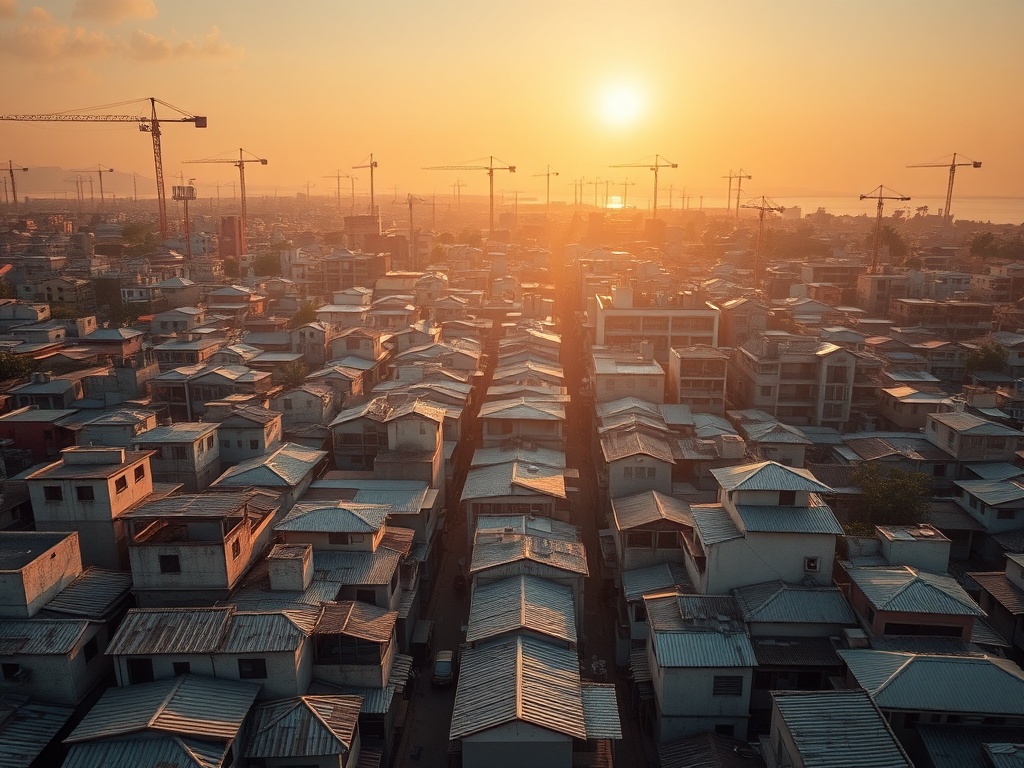
Malé's Full: The Housing Bill Arrives as We All See the Cranes
The debate over housing in Malé has reached a moment of uncomfortable clarity. When someone says, "It's not they don't know. People have eyes and can see that Malé is full," they're pointing to an obvious truth we've all been avoiding. The capital's physical constraints are undeniable - a tiny island bursting at its reclaimed seams.
Yet the conversation has evolved beyond mere recognition of scarcity. There's a growing acknowledgment of what one commentator described as the "give me money cos I am Male' meehaa" mentality - a sense of entitlement based on birthplace that complicates policy solutions. This isn't about denying anyone's connection to the capital, but about questioning whether birthplace should determine housing priority in a nation where opportunity should be equally distributed.
The recent discussion around the MDP's "Goathi" scheme reveals the core tension: good policy intentions undermined by problematic implementation. As one observer noted, the scheme "solves a problem at a lower cost" but was "implemented in an obviously unconstitutional and biased way." This pattern repeats across administrations - housing solutions become political tools rather than public services.
Economics provides another layer to the crisis. When demand far outstrips supply, simple price controls often backfire, creating black markets where "housing units are rented illegally at higher prices." The rental market itself reveals another complexity - while land ownership in Malé may be concentrated among native families, the real estate development and management involves people from across the archipelago, distributing economic benefits more widely than often acknowledged.
The current parliamentary push for a Housing Bill represents a potential turning point. The legislation aims to standardize housing schemes and require governments to follow national development plans rather than ad-hoc political decisions. This institutional approach could address the core complaint that "criteria for housing must not be where one was born, profession etc."
Yet the distinction between housing and land remains crucial, as one contributor emphasized. Solving the housing crisis requires recognizing that providing shelter and distributing land are different policy challenges with different implications for fairness and urban planning.
What emerges from these fragments of public conversation is a collective yearning for policies that transcend political cycles and tribal loyalties. The demand isn't for special treatment based on geography, but for systems that recognize both the reality of Malé's physical limits and the principle that every Maldivian deserves fair access to housing opportunities. As one voice simply put it: "People can say whatever they want but policies has to be fair." In that straightforward statement lies the challenge for lawmakers currently shaping our housing future.
— Source fragments: Malé being full and people demanding money as Male' meehaa; MDP Goathi scheme being good policy but unconstitutional implementation; economic principles of price ceilings and black markets; housing bill being fast-tracked in parliament; need for non-discriminatory housing criteria