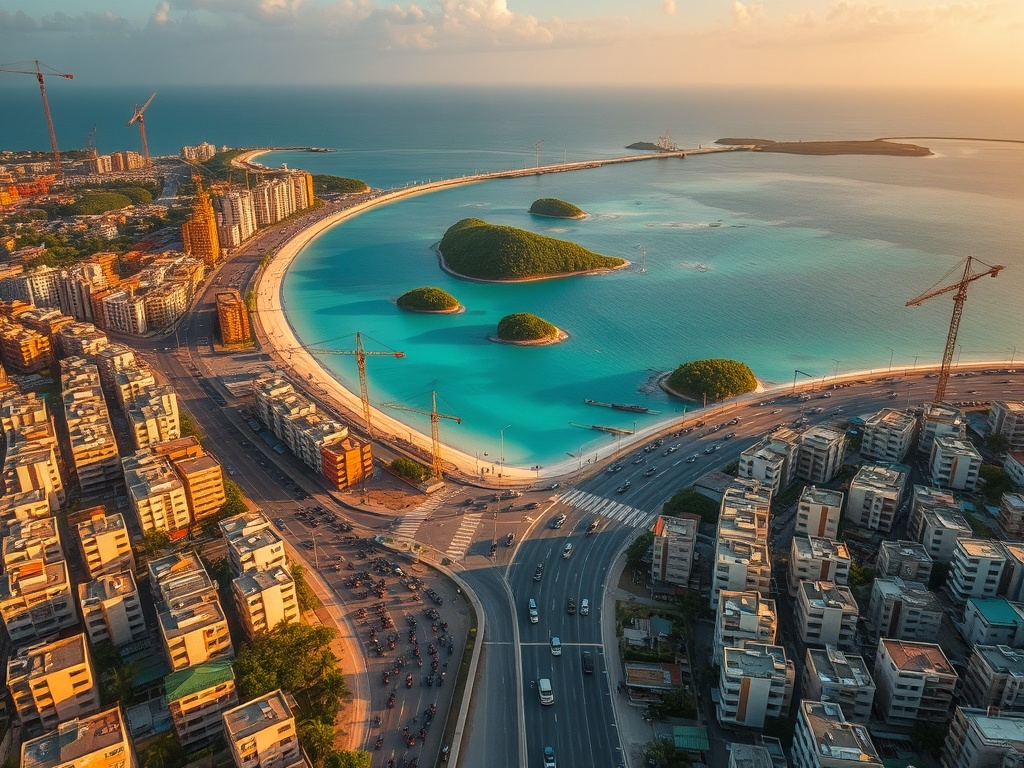
Malé's Gridlock and the Islands Left Waiting
The conversation surrounding national development in the Maldives has reached a fever pitch, with citizens expressing profound disillusionment with the gap between political promises and tangible outcomes. For years, the public has watched as massive infrastructure projects—from power plants to housing developments—consume national resources while delivering questionable returns.
At the heart of this frustration lies a fundamental question of priorities. While the capital Malé grapples with congestion and what some describe as deteriorating living conditions, calls for developing population hotspots in the north and south with proper infrastructure go largely unanswered. Instead, resources continue to flow disproportionately toward housing projects in already crowded areas, neglecting the potential for regional development that could distribute economic opportunities more evenly across the archipelago.
The technical incompetence plaguing implementation is equally troubling. Basic engineering principles are overlooked, as seen in installations where insulation leaks render cooling systems inefficient, forcing compressors to work harder while achieving suboptimal results. Such fundamental errors point to deeper systemic issues in project planning and execution.
This pattern of underperformance extends beyond technical matters to economic impact. Recent traffic disruptions in Malé, implemented under the guise of national events, have drawn sharp criticism for their devastating effect on daily commerce. With business transactions estimated at significant daily volumes, the economic toll of such disruptions raises questions about cost-benefit analysis in public planning.
The parallels with international examples are striking. Like Dublin City Council's decade-long redevelopment projects that saw costs triple from original estimates, Maldivian institutions appear trapped in similar cycles of bureaucratic inefficiency. The phenomenon of contractors inflating prices when dealing with certain government bodies suggests a recognition of systemic dysfunction that transcends national boundaries.
What emerges from this collective frustration is not merely anger about individual projects, but a deeper concern about institutional capability. When basic infrastructure fails to meet standards and development priorities seem misaligned with public need, citizens understandably question whether the system is fundamentally broken. The conversation has shifted from specific complaints to a broader examination of governance, accountability, and the very mechanics of how development decisions are made and implemented across the nation's scattered islands.
— Source fragments: Developing islands neglected, need population hotspots with proper infrastructure; Insulation leaks making cooling systems inefficient; Male is a dustbin now; Years spent on projects with little progress; Incompetent implementation leading to wasted resources; Traffic disruptions devastating to local economy