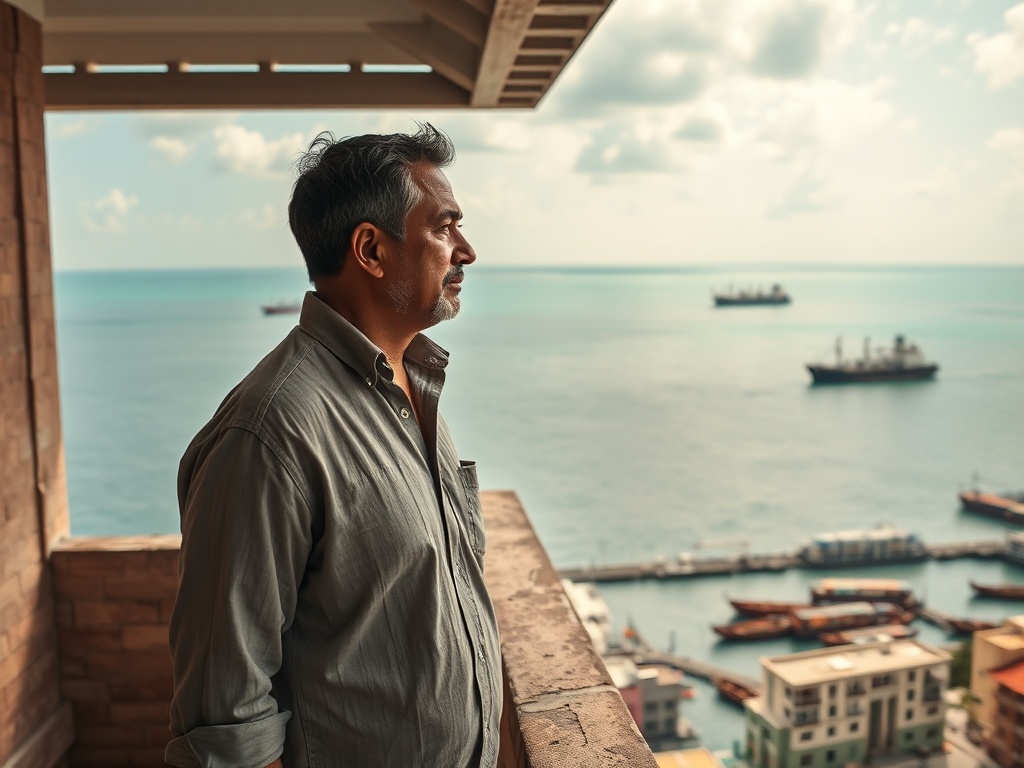
Malé's Horizon: Where Our Small Nation Meets the World's Ships
The conversation begins with a simple observation about power and control, but quickly expands into a much deeper examination of how nations—particularly small ones like the Maldives—navigate the treacherous waters of international relations. The discussion reveals a sophisticated understanding that geopolitics is rarely about simple dominance or submission.
When someone notes that "countries don't start wars just because they can," they're touching on a fundamental truth that resonates deeply in the Maldivian context. Like the glass windows in shops that remain intact not because they're unbreakable, but because of the social contract that preserves them, international order depends on complex calculations of risk and benefit. This metaphor speaks volumes about the delicate balance small island nations must maintain.
The conversation then pivots to the strategic positioning of nations like Singapore, described as a "Western client state" securing vital trade routes. This observation hits close to home for Maldivians, who understand all too well the geopolitical significance of location. The Maldives' position along key shipping lanes gives it strategic importance far beyond its size, making foreign policy choices particularly consequential.
What emerges is a nuanced debate about diplomatic approaches. The shift from "pure diplomacy" to "applied diplomacy" reflects a growing realism in international relations. As one voice puts it with mathematical precision, sometimes theoretical principles must yield to practical application. This mirrors the Maldives' own diplomatic evolution—from idealistic positions to more pragmatic engagement with global powers.
The discussion about Nigeria and Venezuela highlights another critical aspect: the relationship between national resources and international influence. While larger nations with substantial resources can "deal heavy blows" to superpowers, small states must rely on different forms of leverage. The observation that "other countries would support them" underscores how alliances and international backing become crucial multipliers of power.
Perhaps most revealing is the comment about how "world leaders have learned quickly how to get on the good side" of powerful figures through flattery. This speaks to the uncomfortable reality that small nations often must engage in diplomatic theater, performing respect and alignment to secure their interests. The suggestion about "forming an alliance with Israel" and avoiding "backhandshaking" reflects frustration with indirect diplomacy and a desire for more transparent relationships.
Underlying these strategic calculations is the fundamental tension between national identity and global engagement. As one voice notes, "America was built on immigration" while "the Maldives is a small island community that built its own statehood and traditions." This distinction gets to the heart of the matter: how to engage with the world while preserving what makes the Maldives unique.
What emerges from this conversation is not a single answer, but a complex portrait of a nation wrestling with its place in the world. The participants demonstrate a sophisticated understanding that in an era of shifting alliances and emerging technologies, small states must be nimble, principled yet pragmatic, and constantly aware that their sovereignty depends on careful navigation between competing powers.
— Source fragments: Countries don't start wars just because they can; Singapore spends a lot on their military because it's strategically located; diplomacy from pure to applied; small nations vs larger powers with resources; how world leaders navigate relationships with powerful figures; forming direct alliances vs indirect engagement; tension between immigration-based identity and traditional statehood