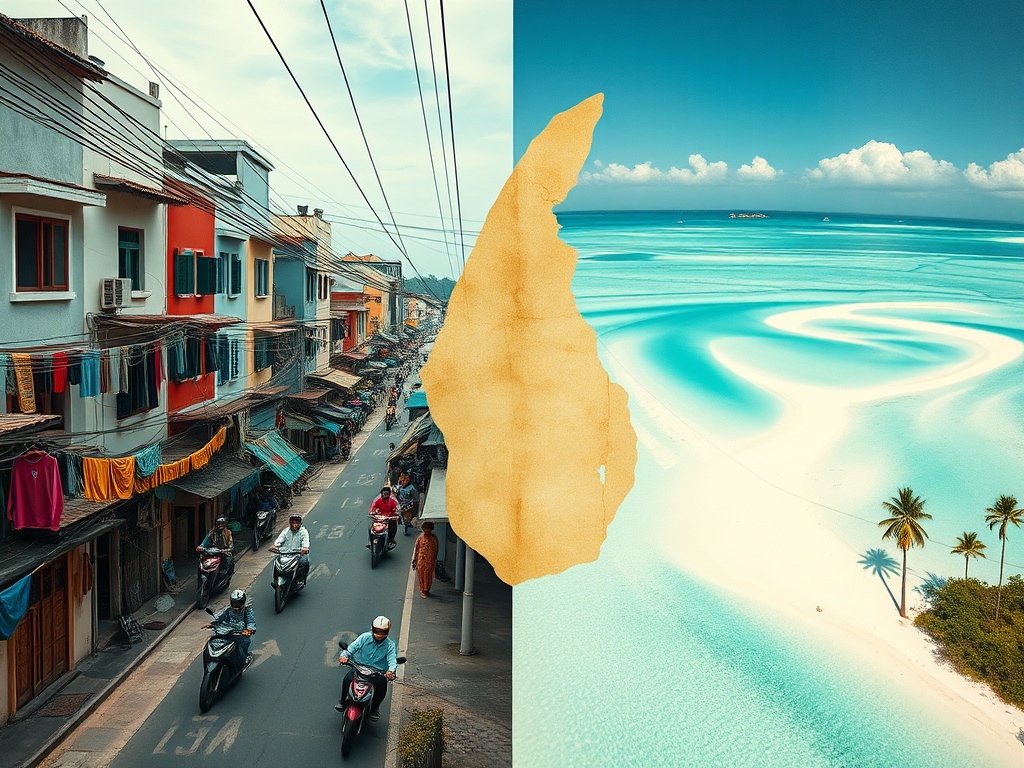
Malé's Narrow Streets, the Outer Atolls' Empty Horizons
The soul of Malé is being paved over, its identity lost beneath concrete and congestion. What was once a vibrant island community has become a case study in planning failure, where the decision to concentrate virtually all national functions in one overcrowded atoll now haunts the nation's development trajectory. The debate over moving the capital to Laamu—a recommendation from a previous era—resurfaces not as nostalgia but as a stark reminder of roads not taken.
The current reality is one of forced migration and compromised dignity. Citizens are essentially compelled to abandon their home islands for Malé and its extensions like Hulhumalé, trading healthy living spaces for rented accommodations in increasingly congested environments. This centralization creates a vicious cycle: as more people flock to the Greater Malé Area for essential services and opportunities, the infrastructure strains further, living conditions deteriorate, and the very concept of community frays at the edges.
Hulhumalé exemplifies the paradox of supposed solutions becoming new problems. Conceived as relief for Malé's overcrowding, it now operates under the corporate grip of HDC—unelected officials managing what has effectively become a city, yet accountable to no local constituency. The question echoes: if traditional islands like Hulhudhoo can govern themselves through elected councils, why should tens of thousands of Hulhumalé residents lack the same democratic right?
The fundamental issue transcends geography and touches on governance philosophy. True decentralization isn't about creating duplicate urban centers but about redistributing opportunity and administrative power across the archipelago. The technology exists to support distributed systems; what's missing is political will. Critics argue that governments resist meaningful decentralization because it disrupts established power structures and revenue streams, particularly the lucrative cycle of development loans and centralized control.
Meanwhile, the physical manifestation of this centralization grows more absurd. Garages and parking lots consume precious urban space while entire regions languish without basic infrastructure. The nation maintains over 200 communities with unsustainable recurrent costs, yet resists the economic logic of creating development corridors between strategically located hubs.
The solution lies not in tinkering with peripheral policies like permanent address systems, which often inadvertently reinforce centralization, but in a fundamental reimagining of how Maldivians inhabit their country. It requires breaking the corporate and political monopolies on development and returning sovereignty to communities. Until then, Malé will remain less a city than a monument to missed opportunities, and the Maldivian people will continue paying the price in crowded living and constrained futures.
— Source fragments: Male' has lost its identity; Very-cumming in Male' was the biggest blunder; Hulhumale is not Male'; recurrent cost of maintaining 200 communities is unsustainable; we need decentralized system; promote congested living with centralised government services; Hulhumale should be freed from corporate grip of HDC; Abolishing permanent address achieves nothing; problem is centralization; it's not a city it's a mess