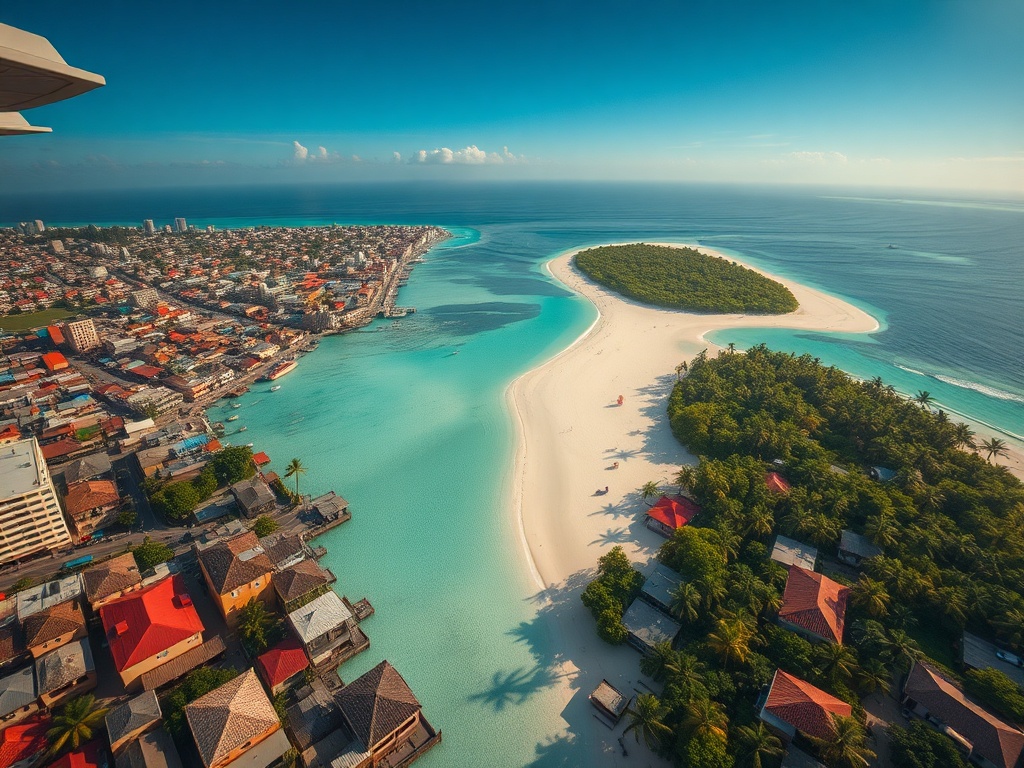
Malé's New Towers Rise as Outer Islands Wait for Power
The conversation about development in the Maldives has reached a critical juncture. For decades, the narrative of progress has been dominated by Malé-centric projects—housing complexes, power plants, and infrastructure upgrades that repeatedly consume national resources while delivering diminishing returns. Yet across social media and public discourse, a different story emerges: one of neglected opportunities and systemic inefficiencies that prevent the nation from reaching its potential.
The pattern is familiar to many Maldivians. Ambitious projects announced with great fanfare often result in compromised outcomes. The technical shortcomings are telling: insulation that fails to contain cooling, doors with visible gaps, systems that waste energy while failing to deliver comfort. These aren't merely construction flaws—they're symptoms of a deeper malaise in how development is conceived and executed.
Meanwhile, the geographic imbalance becomes increasingly apparent. While resources funnel into the capital region, the northern and southern atolls watch their potential wither. The call for developing 'population hotspots' with proper infrastructure outside Malé represents more than regional advocacy—it's a strategic imperative for national survival. Concentrating opportunity in what one observer called 'a dustbin' of congestion and inefficiency serves neither the people nor the nation's long-term interests.
The frustration isn't merely about misplaced priorities but about execution capability. From energy projects to urban planning, the gap between ambition and delivery grows wider. Technical limitations become apparent only after substantial investment, whether in power systems that can't achieve their stated efficiency or digital infrastructure that lacks the sophistication for modern governance.
This isn't simply a matter of allocating resources differently but of reimagining development itself. The solution may lie not in grander central planning but in distributed development that leverages the unique advantages of different regions. It requires moving beyond the cycle of announcing projects and instead building systems that work—from the technical specifications of buildings to the economic foundations of island communities.
The Maldives stands at a crossroads where the old model of development is showing its limitations. The path forward demands not just more investment but smarter investment—projects that serve people rather than political cycles, infrastructure that functions as intended, and development that reaches beyond the capital's crowded shores to unlock the nation's full potential.
— Source fragments: Developing islands neglected, need population hotspots with infrastructure; Insulation leaks making systems inefficient; Malé described as overcrowded and problematic; Frustration with prolonged infrastructure projects without results; Technical limitations in implementation; Concerns about cost overruns and incompetent execution