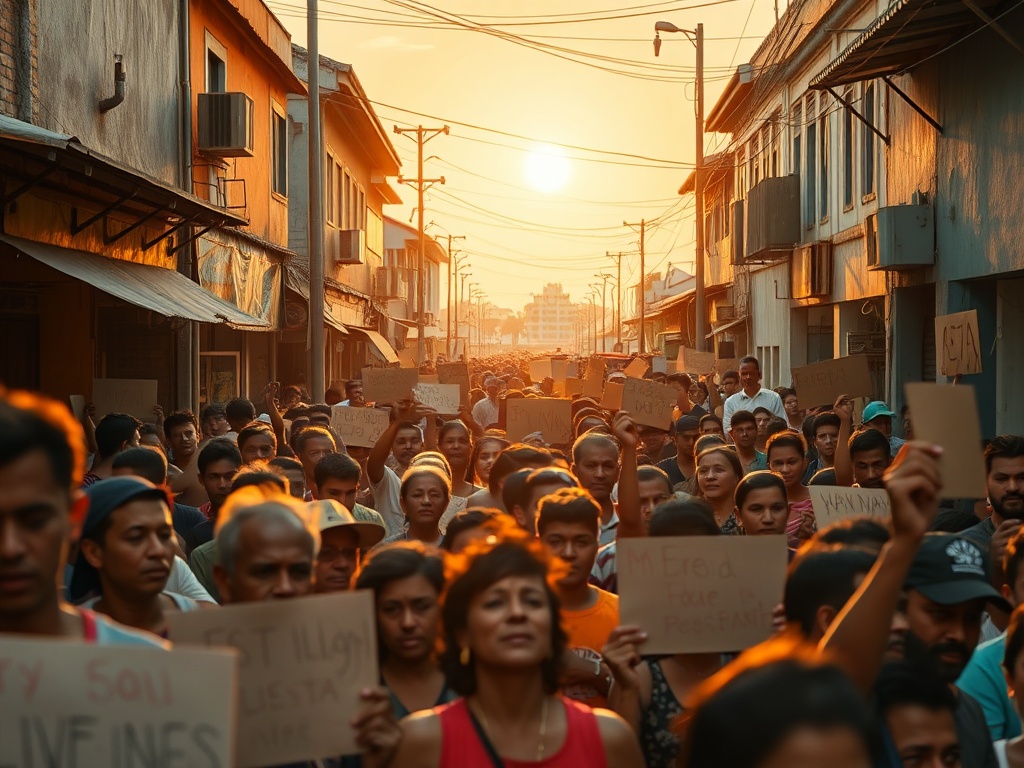
Malé's Streets Now Speak the Words Parliament Avoids
The political landscape in the Maldives has reached a critical juncture, where public patience has worn thin and frustration has boiled over into open confrontation. The sentiment echoes through the corridors of power and the streets of Malé: enough is enough.
Recent parliamentary debates have revealed deep divisions about the country's democratic future, with some politicians openly arguing against multiparty democracy, claiming it would lead to bloodshed. This stance strikes many observers as fundamentally at odds with the principles of modern governance and public representation.
The tactics employed in political discourse have grown increasingly contentious. Critics point to the use of elderly citizens as political shields—bringing vulnerable populations into public criticism to deflect from policy failures and the mounting difficulties facing ordinary Maldivians. While all citizens retain the right to voice their opinions, many question the ethics of deploying senior citizens as frontline defenders in political battles.
Public anger has reached explosive levels after years of unfulfilled promises and ignored voices. The perception that government serves itself rather than the nation has become widespread, creating a dangerous disconnect between rulers and the ruled. This frustration manifests against a backdrop of severe economic challenges: a high cost of living driven by government money printing and rising taxes, foreign currency shortages despite tourism being the main revenue source, and a housing crisis in the congested capital that leaves both locals and expatriates struggling for basic accommodation.
The political culture itself faces scrutiny, with critics noting that some politicians appear to operate without shame or accountability. This perception fuels public cynicism at a time when trust in institutions is desperately needed. Meanwhile, governance issues continue to plague the nation—from bloated ministries staffed with political appointees to allegations of judicial politicization and high-profile corruption cases that rarely seem to reach satisfactory conclusions.
As the social contract frays, the fundamental question becomes whether the political class will recognize the warning signs before the situation deteriorates further. The Maldivian people have demonstrated remarkable patience through successive governments, but current indicators suggest that patience has reached its limit. The coming months will test whether the nation's leaders can bridge the growing divide between their ambitions and the public's basic needs.
— Source fragments: Arguments against multiparty democracy, use of elderly in political defense, public frustration with broken promises, political accountability issues