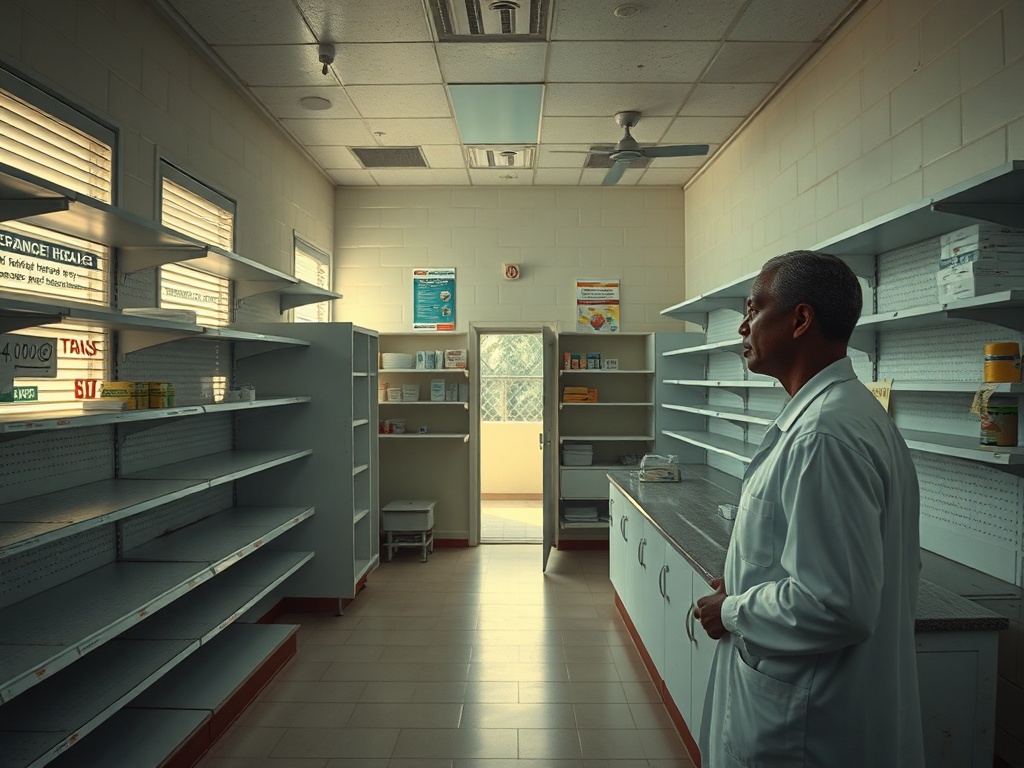
Medical shortages challenge our development story
The pharmacy shelves tell a story that official statistics don't. Empty spaces where basic medicines should be, patients turned away with prescriptions they cannot fill, doctors making do with what's available—this is the daily reality in many of our health centers. We hear grand announcements about national development milestones, yet the most fundamental promise of care remains unfulfilled in too many communities.
This isn't about occasional supply chain hiccups. It's about systemic neglect where healthcare becomes secondary to political posturing. Each new administration arrives with its own procurement schemes, its own favored suppliers, its own temporary solutions that evaporate when the political winds shift. The result is what we see today: chronic shortages that force families to seek basic medications through personal connections or pay exorbitant prices at private pharmacies.
The announcement of a national pharmaceutical company raises more questions than it answers. Will this become another state enterprise mired in the same political patronage that plagues so many public institutions? Or will it genuinely address the root causes of our medical supply crisis? The pattern is familiar—grand initiatives launched without transparent long-term planning, without community consultation, without clear accountability measures.
Across our scattered islands, the consequences are deeply personal. Elderly patients who cannot get their blood pressure medication, mothers worried about infant fever reducers, fishermen needing antibiotics for infected cuts—these aren't abstract policy failures. They're moments of anxiety and helplessness that contradict the development narrative we're constantly told. How can we speak of progress when the most basic health security remains out of reach?
The solution isn't necessarily more state-owned enterprises. What we need is consistent, transparent policy that survives political transitions. We need procurement systems insulated from political interference, supply chains managed by professionals rather than appointees, and genuine community input in healthcare planning. The sea connects our islands; surely we can create systems that reliably connect medicines to those who need them.
Perhaps the most painful aspect is watching this cycle repeat while our people's health hangs in the balance. The gap between political rhetoric and hospital reality grows wider with each shortage. True development would mean that no Maldivian has to wonder where their next dose of essential medicine will come from—that would be progress worth celebrating.