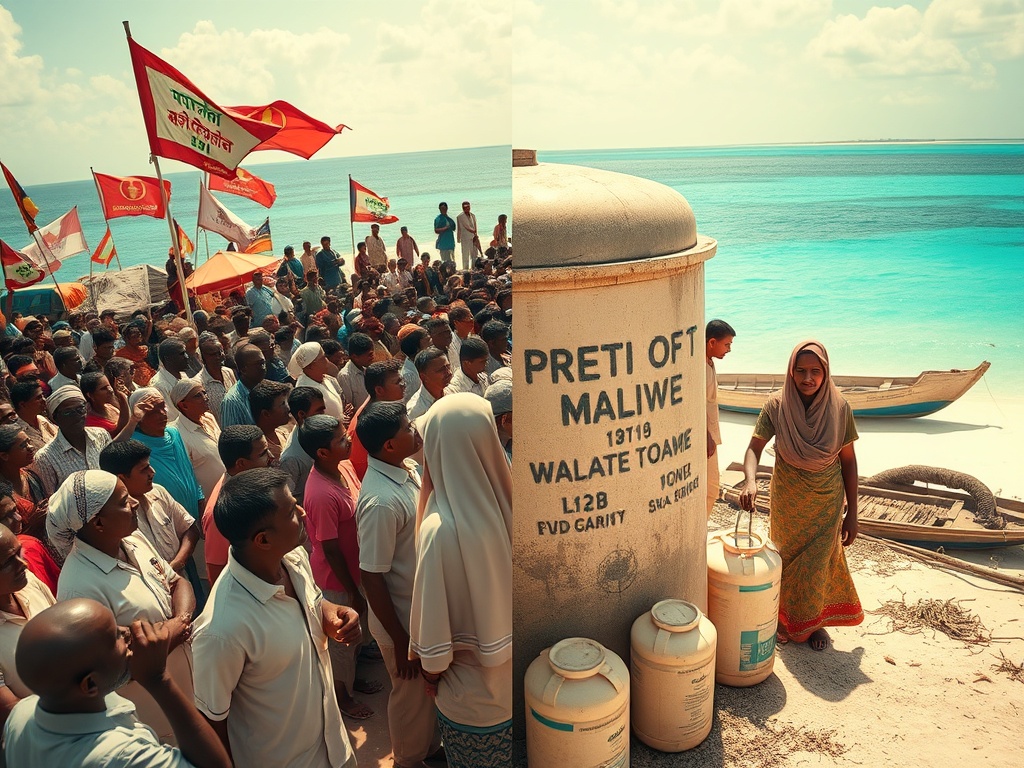
Millions for Rallies, No Safe Water for Islands
The banners have been folded, the crowds have dispersed, but the questions remain. When a nation watches millions of rufiyaa flow into a single night's political spectacle while entire cities lack safe drinking water, the disconnect between political priorities and public needs becomes impossible to ignore.
Fuvahmulah, the third-largest city in the Maldives, represents a stark reality check. While political organizers were transporting supporters to the capital for what critics estimate as a MVR 50 million rally, residents in Fuvahmulah continued their daily struggle for what should be a basic human right: clean water. This isn't merely an infrastructure failure—it's a statement of values.
The mathematics of political spending reveals uncomfortable truths. Critics point to the massive mobilization of state resources, from transportation to accommodations, arguing that such expenditures represent more than just political theater—they demonstrate a fundamental misalignment of priorities. When the cost of a single rally could address significant portions of domestic debt or solve persistent water crises, citizens are left wondering where their tax money truly goes.
Political analysts note that such displays of force typically serve electoral purposes, timed to sway undecided voters in the final days before an election. Yet when these expensive demonstrations occur outside that context, they raise different questions—about morale, about perceived support levels, and about the relationship between political confidence and public accountability.
The debate transcends party lines. Many citizens express frustration not with political opposition itself, but with the spectacle of resource allocation while basic services falter. The sentiment echoes across social media and community discussions: it's not about which side one supports, but about standing against the waste of public funds when communities are in genuine need.
This tension between political expenditure and public service delivery reflects broader governance challenges. As state institutions and state-owned enterprises become instruments of political mobilization, the line between party interests and national interests blurs. The result is a growing public skepticism about whose benefit truly drives policy decisions.
In a nation where economic pressures mount daily—from rising living costs to foreign currency shortages—the visibility of political spending becomes particularly jarring. When taxpayers see their contributions funding political rallies while they struggle with healthcare shortages, housing crises, and unemployment, the social contract frays.
The conversation now shifting toward accountability isn't about partisan politics—it's about fundamental governance. How a society allocates its resources reveals its values, and when political demonstrations take precedence over drinking water, citizens are forced to ask difficult questions about whose interests are truly being served.
— Source fragments: I just can't stand with waste our gov money and resources while one of our city is crying for water; State institutions, SOEs, and all resources are being funneled into this one pilgrimage; 70% of our domestic debt could be paid with the free land given; massive crowd to the capital tonight from across the Maldives for the party's rally—at a cost of MVR 50 MILLION—the third-largest city, #Fuvahmulah, still lacks safe, clean drinking water; That money you received is not halal; So PNC did a huge rally spending millions for no reason?