Ministry Opens Applications for Marine Hatchery Course to Boost Aquaculture Skills
The Ministry of Fisheries, Agriculture and Ocean Resources has opened applications for the third batch of its Marine Hatchery Skills Development Programme. The initiative aims to cultivate local technical expertise in reef fish aquaculture, a sector seeing rapid growth across the Maldives.
Scheduled from October 10 to 21, the 14-day basic mariculture course will be hosted at the Kaafu Atoll Maniyafushi Research and Training Facility. The program is a joint effort between the Ministry and the Maldives Marine Research Institute (MMRI), receiving financial and technical backing from the World Bank through the TRANSFORM Project.
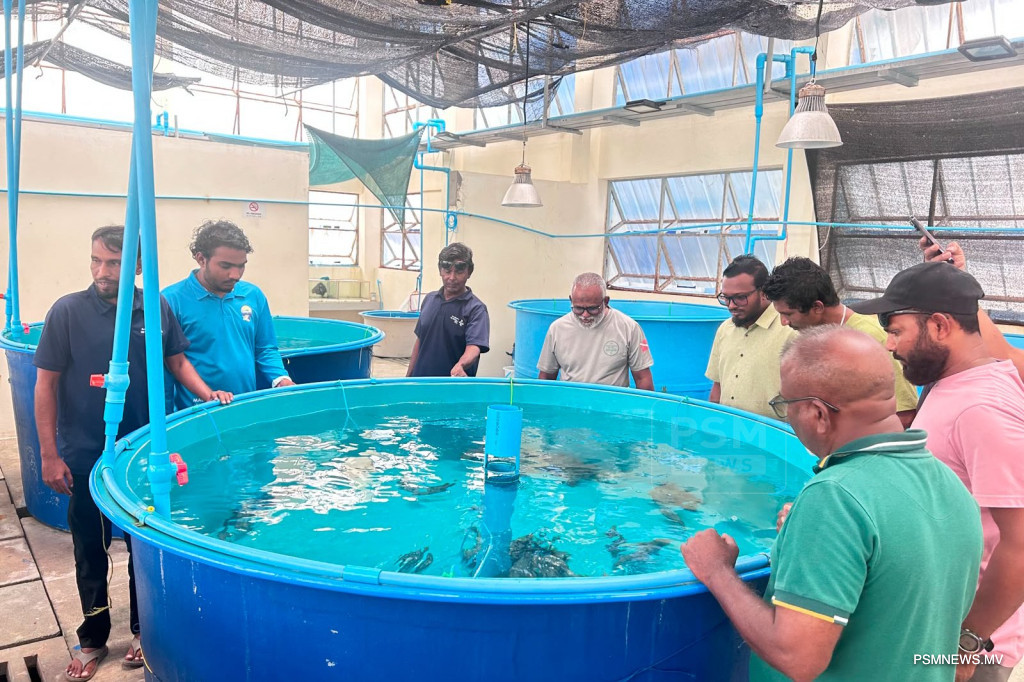
The curriculum is designed to blend theoretical knowledge with hands-on practical experience. Participants will study aquaculture system operations, live feed culture, and disease prevention and identification. The training focuses on the breeding and rearing of four primary species: grouper, sea cucumber, indigenous clownfish, and pearl oysters, while also providing instruction on seaweed farming and environmental protection.
To ensure an immersive learning experience, 15 selected participants will reside at the Maniyafushi facility for the duration of the course. The MMRI has confirmed that all selected candidates will receive complimentary round-trip transport from Male’, as well as full accommodation and meals.
Interested applicants must submit a completed application form and a copy of their National ID card to the MMRI or via email by 2:00 pm on September 17. Due to the limited capacity of 15 slots, the Ministry stated that selection will be conducted on a first-come, first-served basis.
This third intake follows the successful launch of the second batch last month. The ongoing program reflects the government's strategic commitment to diversifying the marine sector and fostering sustainable aquaculture practices to ensure long-term food security and economic resilience.