Ministry Spends 2.5 Billion on 1.18 Billion Budget as Parliament Remains Empty
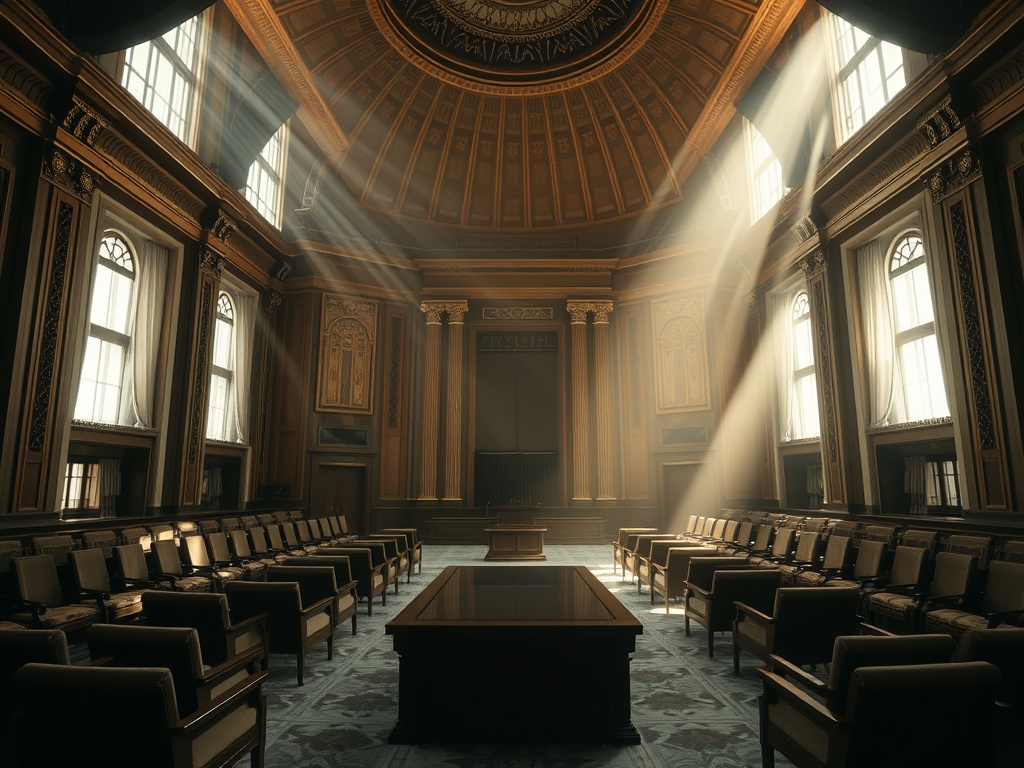
For the second consecutive week, the parliamentary chamber remained empty. Crucial agenda items—budget overruns, housing corruption, public safety—were left to gather dust by the deliberate absence of a majority of members. This is the deliberate paralysis of the nation's highest deliberative body.
This paralysis extends far beyond the vacant seats. The Ministry of Finance, tasked with enforcing fiscal discipline, had an approved budget of 1.18 billion Rufiyaa. By November 2025, its actual spending ballooned to 2.50 billion—more than double the allocated amount. This is a fundamental breakdown of budgetary control. The same ministry that lectures others on cost-cutting operates with a ledger that would be considered sloppy work drafted on a napkin. The message is clear: the rules are for others.
This pattern of institutional decay is replicated everywhere. A new Ministry of Homeland Security began its life not with experts, but with 38 political appointees. Sports ministries swell with 16 ministers of various levels while having no actual authority over sports associations. It is governance by title, not by function. "Not under my authority" has become the bureaucratic mantra, ensuring real progress remains eternally out of reach.
The consequences are felt in the streets and homes. A recent police announcement—first posted in English, then deleted and reposted in Dhivehi—instructed officers to stop and question foreigners on the streets between midnight and 6 AM. It was one of the most overtly xenophobic policies ever floated, a performative gesture sacrificing social cohesion for political point-scoring. Meanwhile, the housing crisis in Malé festers, with subsidized flats meant for locals being subleased for profit by absentee leaseholders.
The financial recklessness is staggering. The government recently attempted to acquire Kaadedhdhoo Airport for USD 17 million, a move met with immediate public backlash and a face-saving withdrawal. This episode is a microcosm of a broader disease: a complete lack of fiscal discipline. While the national debt climbs to 124% of GDP, the state engages in populist gestures like waiving fines and rents, punishing those who paid on time and eroding the concept of budgetary responsibility. All of this unfolds while students on scholarships suffer and the government pledges grand, unfunded infrastructure projects.
There is a profound sense of historical amnesia at play. The opposition MDP era is now viewed with a tinge of nostalgia—a period when, even during the COVID pandemic, the machinery of state did not seem to crumble so completely. Today, the collapse is comprehensive. It is a collapse of accountability, where surveys are conducted but no action follows. It is a collapse of expertise, where political loyalty trumps technical skill. It is a collapse of vision, where backward-looking populism stifles necessary economic reforms.
This is the architecture of collapse, built brick by brick with canceled meetings, doubled budgets, xenophobic decrees, and bloated ministries. It is funded entirely by taxpayers' money, and yet, nothing works. The system currently rewards evasion, incompetence, and political theater. Until that calculus changes, the Jalsa will remain empty, the budgets will remain fictional, and the slow-motion collapse of governance will continue unabated.
— Source fragments: Jalsa cancellation; Ministry of Finance budget overrun; xenophobic police policy; bloated political appointments; lack of action after surveys; passing of blame; fiscal irresponsibility (waived fines, airport acquisition); debt level; nostalgia for MDP era; housing corruption; general incompetence.