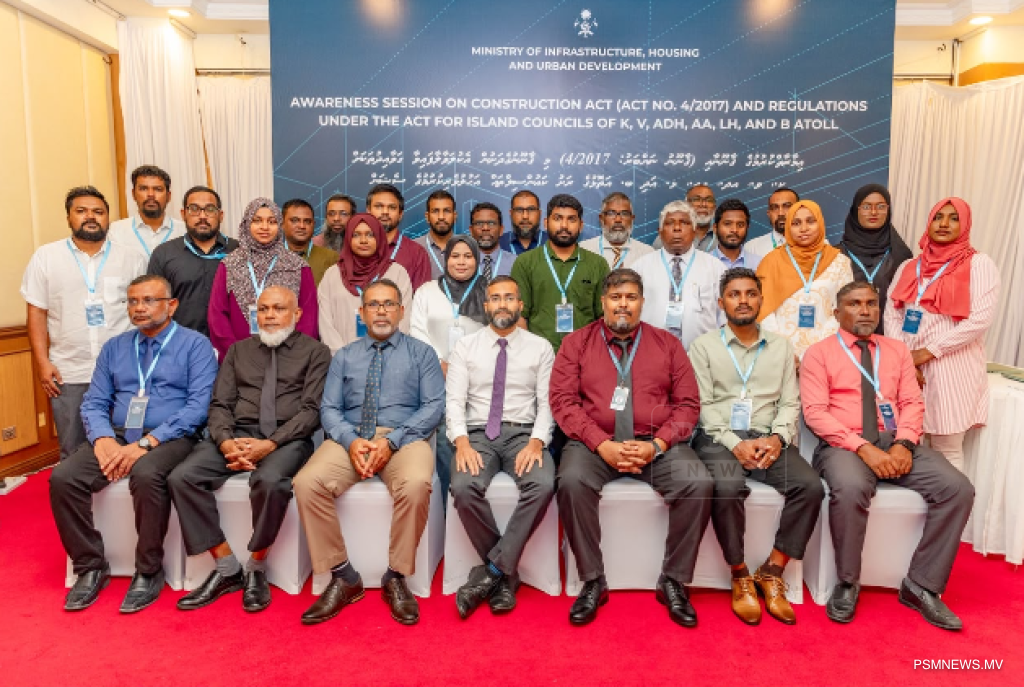
Ministry Trains Island Councils to Enforce National Construction Laws and Safety
The Ministry of Infrastructure, Housing and Urban Development has launched a specialized training programme designed to equip island councils with a deeper understanding of the Construction Act and its accompanying regulations.
Officially opened at the SHE Building in Malé by Deputy Minister Yoosuf Sidgee, the initiative runs from June 7 to June 11. The programme brings together heads and staff from councils across six atolls, including Baa, Lhaviyani, Kaafu, Alifu Alifu, Alifu Dhaalu, and Vaavu.
This training is part of a broader strategic effort by the ministry to bridge the knowledge gap within the construction industry and the general public. By enhancing the legal literacy of local authorities, the government aims to ensure that infrastructure projects on inhabited islands are managed strictly within established legal frameworks, reducing disputes and regulatory failures.
The curriculum focuses on the practicalities of urban management and safety. Key sessions cover the complexities of building permits, drawing approvals, and licensing requirements. Additionally, participants are being trained on the control and import of construction materials, site safety regulations, and the specific rules governing construction in lagoon areas for islands that lack formal planning regulations.
Beyond administrative procedures, the programme emphasizes the legal handling of violations and the specific responsibilities of contractors. A central pillar of the Construction Act is the promotion of safe building practices and the implementation of a National Building Code. This code is intended to standardize quality across the archipelago while clearly defining the rights and obligations of all stakeholders involved in the building process.
By empowering local councils to oversee these regulations, the ministry hopes to foster a more transparent and secure environment for development, ensuring that the rapid growth of island infrastructure does not come at the cost of safety or environmental integrity.