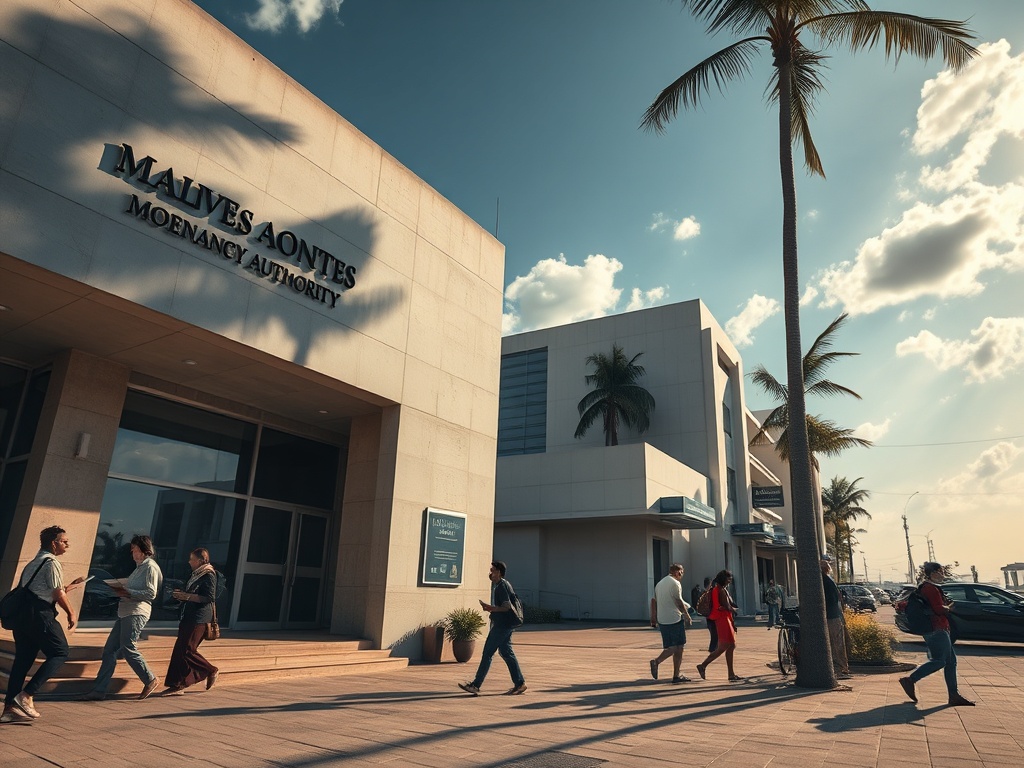
MMA's $100,000 deposit rule tightens financial control
The announcement from the Maldives Monetary Authority landed like a monsoon squall in late 2025, changing the financial landscape for hundreds of license holders across our islands. That additional $50,000 requirement, bringing the total security deposit to $100,000 per licensee, represents more than just regulatory compliance—it's a reflection of the delicate balancing act our small island nation faces in managing dollar flows while maintaining economic sovereignty.
For many Maldivian businesses, particularly those outside the resort bubble, this requirement creates immediate pressure. The uniform application across both license tiers means small importers in Malé's narrow streets face the same financial hurdle as larger operations. With youth unemployment hovering between 25-30%, and many young entrepreneurs struggling to establish themselves, this deposit represents a significant barrier to entry. The 45-day transition period for existing holders felt particularly tight for businesses already navigating the complexities of our import-dependent economy.
The rationale behind this move speaks to deeper structural issues in our financial system. The mention of black-market premiums peaking at 33% reveals the persistent gap between official and parallel exchange rates that many Maldivians have learned to navigate out of necessity. When formal channels can't meet demand, informal ones emerge—this has been the reality in our markets for years. The tourism-driven inflows of over $150 million formalized in just the first quarter of 2025 show both the scale of our dollar economy and the challenges in managing it effectively.
What's often missed in these regulatory discussions is how they connect to the daily lives of ordinary Maldivians. The requirement that these deposits be maintained at all times in designated MMA accounts means capital that could otherwise circulate within our local economy remains locked away. For a nation where 40% of citizens live crammed into Malé's 2 square kilometers, every dollar matters in the struggle for economic mobility.
The broader context of mandatory 20% USD conversions for high earners and 90% bank sales to MMA suggests a comprehensive approach to dollar management. With reserves reported at $371 million as of late 2024, the injection of approximately $10 million from these deposits represents a meaningful boost to our national financial defenses. Yet one can't help but wonder about the compliance burden falling disproportionately on smaller operators who lack the financial cushion of larger corporations.
The confusion between MVR 100,000 and USD 100,000 in some reports highlights the currency complexities we navigate daily. For Maldivians accustomed to thinking in both rufiyaa and dollars, such misunderstandings can have serious consequences. The immediate license suspension and daily fines of 0.25% for non-compliance create a high-stakes environment where a single administrative misstep could jeopardize livelihoods.
As we move forward with these financial reforms, the challenge will be balancing regulatory rigor with economic accessibility. The measures aim to strengthen our financial system against money laundering and stabilize our currency peg—worthy goals for any nation. But in the Maldives, where economic opportunity remains concentrated and many struggle with basic costs of living, we must ensure that financial stability doesn't come at the price of economic inclusion. The true test will be whether these measures ultimately serve the broader Maldivian public, not just the narrow interests of financial management.