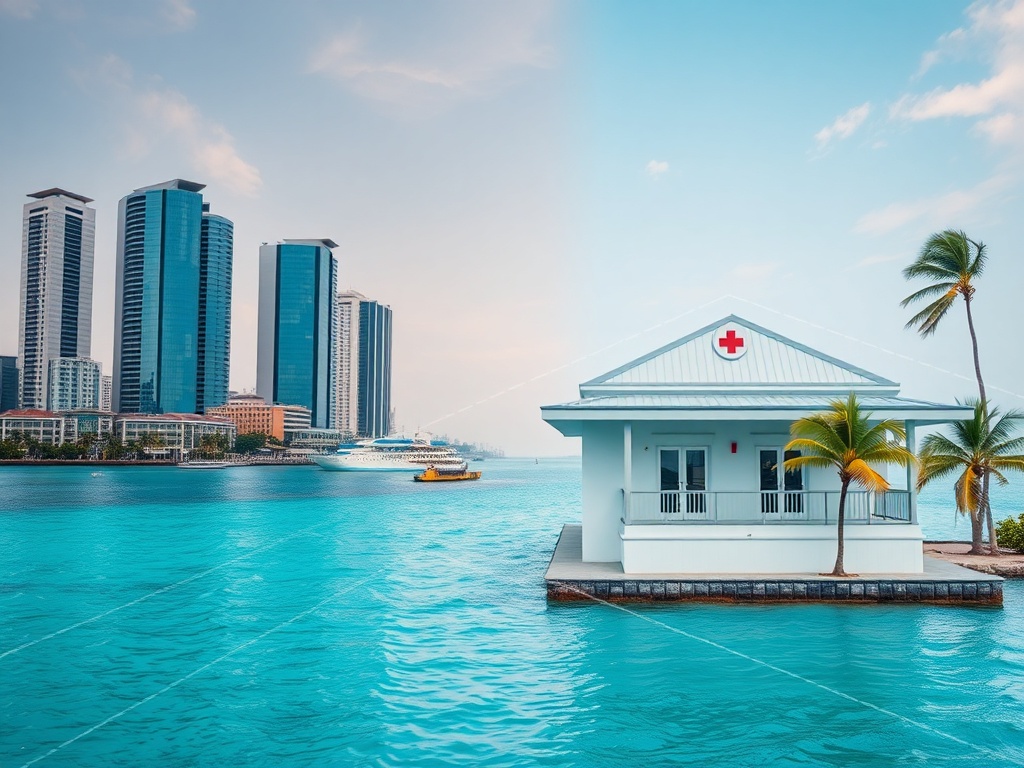
Modern Malé and Outer Atoll Clinics: One Development Plan
The debate over national development priorities often presents a false choice: either focus resources on the congested capital of Malé or channel them exclusively to the outer atolls. Yet emerging voices argue for a more nuanced approach—one that recognizes the interconnected nature of these challenges and the economic logic of pursuing both objectives simultaneously.
Malé's infrastructure strain is palpable. The capital's density creates a constant pressure on services, housing, and resources. When basic needs go unmet, citizens inevitably look abroad—to Sri Lanka, India, or Thailand—for healthcare, education, and even routine services. This external dependency represents a significant drain on national resources, with foreign currency flowing out for needs that could be met domestically with proper investment.
Meanwhile, the atolls face their own service deficits. Limited healthcare facilities, educational opportunities, and economic infrastructure push residents toward the capital, exacerbating Malé's congestion. This creates a vicious cycle where underdevelopment in one area compounds problems in another.
Strategic thinking suggests that neglecting capital development to focus solely on atoll services would be counterproductive. Without robust central infrastructure, the nation's capacity to support outer atoll development diminishes. The expertise, institutions, and administrative capabilities needed to implement atoll-level improvements often originate or are coordinated through the capital.
The solution lies in recognizing that these are not competing priorities but complementary ones. Investing in Malé's service capacity—from healthcare facilities to educational institutions—strengthens the nation's ability to deliver quality services across the archipelago. Simultaneously, developing atoll infrastructure reduces the pressure on the capital by creating viable alternatives for residence and economic activity.
This dual approach represents more than just infrastructure planning; it's a strategy for national self-reliance. Every service developed domestically, whether in Malé or the atolls, reduces the nation's dependency on foreign providers. The savings from reduced overseas spending could then be reinvested in further development, creating a virtuous cycle of improvement.
As Maldives navigates its development path, the most prudent course may be to reject either-or thinking and embrace the complexity of serving both urban center and remote communities. The goal isn't to choose between Malé and the atolls, but to build a nation where quality services are accessible across the archipelago, reducing external dependencies and strengthening national sovereignty in the process.
— Source fragments: actually we should do the two things at once, since we aspire to have more services in our own country and also we aspire to have more services in the atolls. if we neglect to increase services in our capital that will only increase our expenses in other countries.