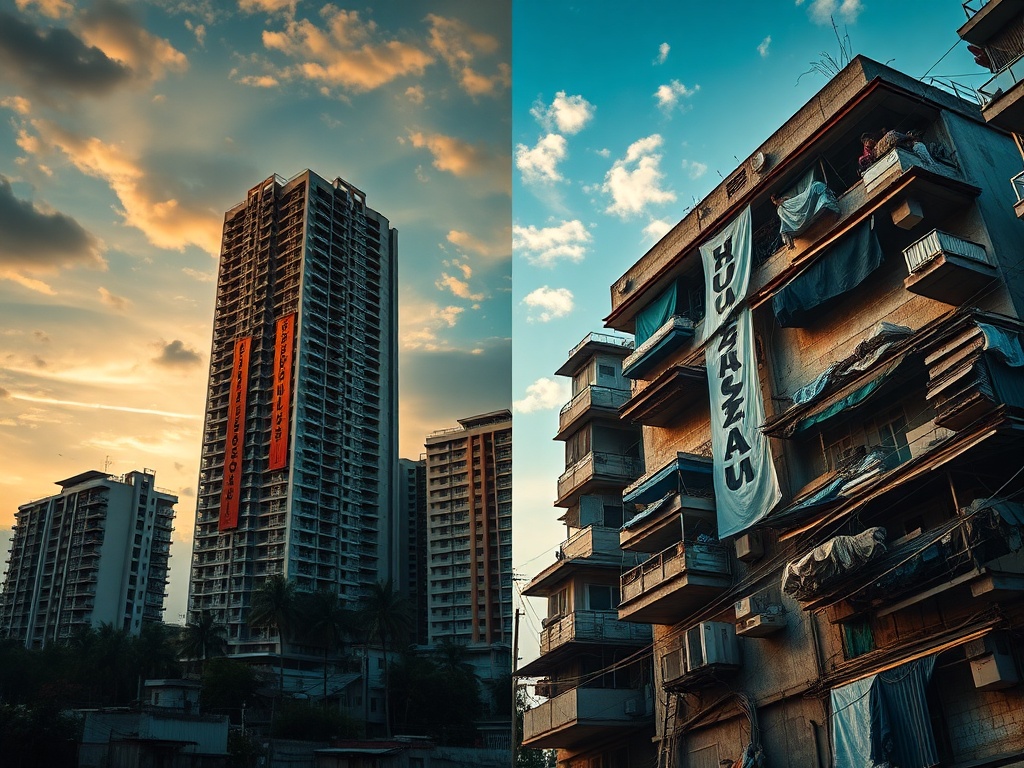
Modern Towers, Crowded Rooms: The Maldives' Housing Divide
In the crowded archipelago of the Maldives, a quiet division is taking root—one that echoes the most painful chapters of human history while wearing the mask of modern policy. The current housing allocation system, critics argue, has created two distinct classes of citizens: those granted land and property as political favors, and those condemned to decades of rental payments with little hope of ownership.
The parallels to apartheid-era South Africa are stark, though the mechanisms differ. Where race once determined residency rights, today's divisions emerge from opaque categorization systems that label citizens as 'taxi drivers,' 'fishermen,' or other seemingly arbitrary classifications. The criteria for these designations remain unclear, raising fundamental questions about whether proper needs assessments have ever been conducted or whether these categories simply serve political expediency.
For the majority of Registered Tenants (RTs) in the Greater Malé Area, this system represents an inescapable reality. While some celebrate presidential decisions that continue what critics call the 'binveriya scam'—referring to housing allocation programs—most face the grim mathematics of perpetual renting or financial burdens that will span generations. The policy has been described as the most discriminatory in recent memory, creating a permanent underclass of citizens who cannot access the stability of home ownership.
This housing crisis transcends political allegiances. As one observer noted, no political party has emerged to genuinely challenge this establishment, leaving citizens to organize independently. Calls are growing for direct action groups focused specifically on housing and tenancy rights, with legal experts being urged to educate the public about their rights and the systemic injustices embedded in current policies.
The fundamental question remains unanswered: why should housing—a basic human need—become a privilege distributed through political channels rather than a right available to all? The current approach not only perpetuates inequality but also undermines social cohesion in a nation already grappling with economic pressures, foreign currency shortages, and youth unemployment.
What emerges from this debate is not merely a policy disagreement but a profound philosophical divide about the nature of citizenship and belonging. In a nation where land is increasingly scarce and valuable, the decision about who gets to call which piece of earth their own becomes the ultimate measure of a society's values. Until housing is treated as a universal right rather than a political tool, the Maldives risks cementing a division that will define generations to come.
— Source fragments: South Africa once decided who could live where by law. Maldives is doing it today — free land for some, decades of rent for others. Different history same outcome: a system that creates two classes of citizens. Housing must be a right for everyone, not a privilege for a few. Categories like 'taxi driver' or 'fisherman', based on what criteria? Who even designs these categories? Has a proper needs assessment ever been done? The current policy is the most racist policy up till date. We need Direct action to combat this injustice.