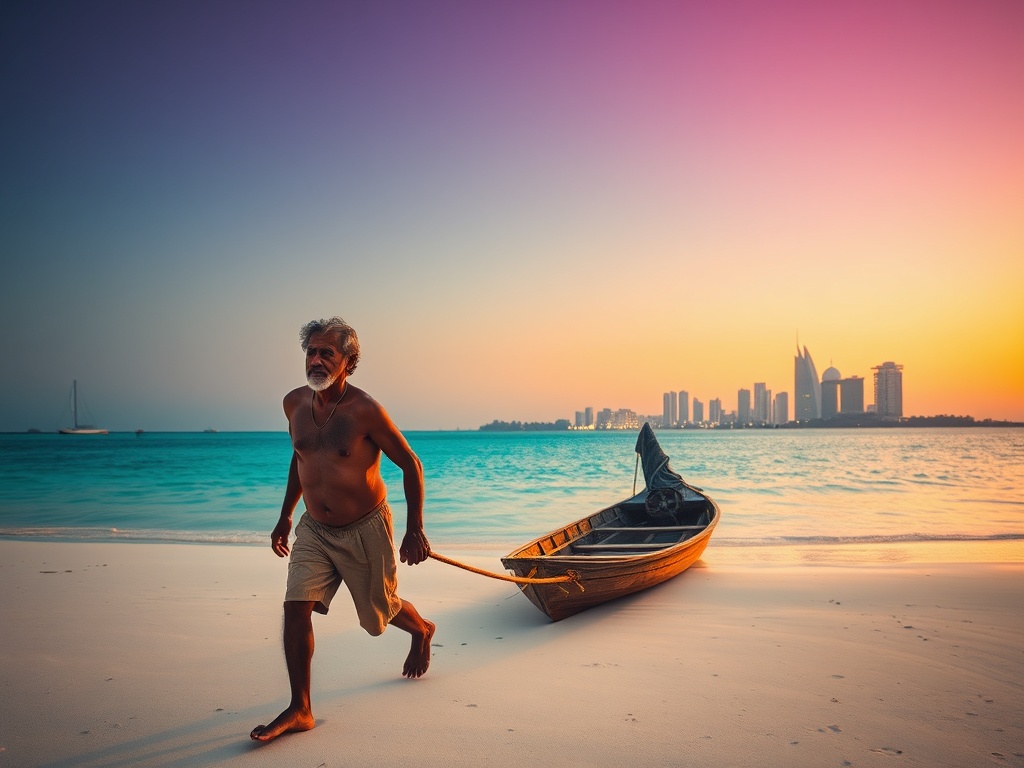
Mosques at Dusk, High-Rises Rising
In the Maldives, where Islam is woven into the very fabric of national identity, conversations about faith, freedom, and belonging carry particular weight. These discussions reveal a society grappling with how to maintain religious cohesion while navigating an increasingly interconnected world.
The constitutional requirement that all citizens be Muslim creates a unique social landscape. This legal framework, born from historical and cultural context, shapes everything from citizenship debates to daily social interactions. Critics argue that such provisions represent discrimination, while supporters see them as essential preservation of national character.
The rise of social media has amplified these conversations, creating new battlegrounds for religious identity. Young Maldivians encounter competing worldviews online, from scientific theories like the Big Bang to global social movements. Some embrace these ideas as compatible with their faith, while others see them as threats to religious orthodoxy.
This digital age has created what some observers call 'trend faith' – where religious and political positions can become fashion statements rather than deeply held convictions. The same platforms that once made atheism trendy among some youth now amplify solidarity with global Muslim causes, creating complex layers of authenticity and performance.
Meanwhile, traditional religious practices face their own scrutiny. Debates about proper interpretation of Islamic teachings, from modest dress codes to criminal punishments, reveal a community wrestling with how to apply centuries-old texts to modern contexts. Some advocate for literal interpretations, while others seek more flexible applications that account for contemporary realities.
The tension extends to governance, where religious principles intersect with democratic ideals. Questions arise about how a democratic nation can balance majority religious identity with principles of inclusion and justice. These aren't abstract philosophical debates – they touch on real lives, from expatriate workers to Maldivians questioning their faith.
At the heart of these discussions lies a deeper anxiety about cultural preservation. With globalization bringing new ideas and values, many Maldivians worry about maintaining their distinctive identity. The fear isn't just about religious dilution, but about losing the cultural markers that have defined Maldivian society for generations.
Yet within these tensions, there's also evidence of a faith community seeking balance. Many Muslims in the Maldives demonstrate nuanced approaches to their religion, rejecting both rigid extremism and complete secularization. They navigate the space between tradition and modernity, seeking ways to maintain religious integrity while engaging with the wider world.
As the Maldives continues to develop economically and socially, these conversations will likely intensify. The challenge remains how to honor religious tradition while creating space for the diverse perspectives that inevitably emerge in a globalized era. The path forward requires both conviction and compassion – qualities that have long characterized Maldivian society at its best.
— Source fragments: Discussions about citizenship restrictions for non-Muslims, debates about scientific theories versus religious texts, observations about social media trends affecting religious and political positions, conversations about proper interpretation of Islamic practices and punishments