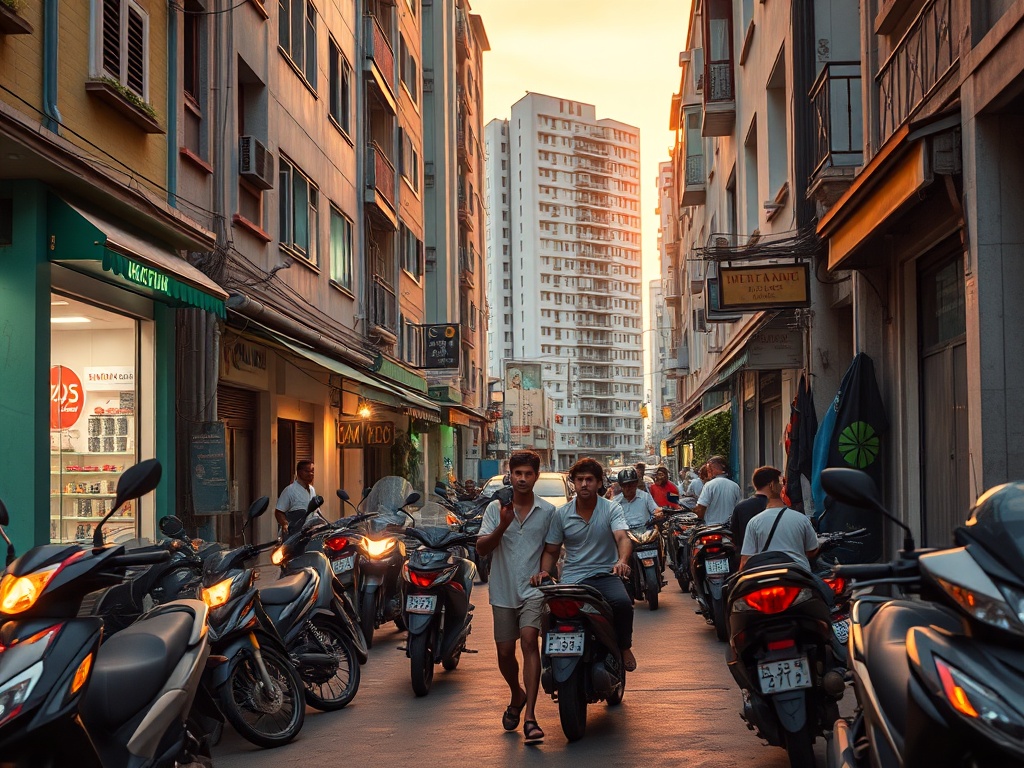
Motorcycles Crowd Every Inch of Majeedhee Magu
Along the dusty corridors of Majeedhee Magu, where motorcycles crowd every available inch of pavement, a quiet rebellion brews. Male' has become something unfamiliar to those who remember its quieter days—a city straining at its seams, where the very concept of urban living feels increasingly like a compromise rather than a choice.
The debate over decentralization is no longer academic; it has seeped into daily frustrations. When a motorcycle—often someone's sole means of transportation—is impounded for parking violations in a city that provides no adequate parking, the injustice feels personal. This isn't merely about traffic enforcement; it's about a system that creates problems then penalizes citizens for them.
Hulhumale', once envisioned as a solution to Male's congestion, now represents another layer of the problem. Residents speak of corporate control by HDC, an unelected entity managing what has effectively become a city within a city. The question hangs in the salt-tinged air: if smaller islands like Hulhudhoo can elect their own councils, why can't Hulhumale's growing population have the same democratic voice?
The centralization debate cuts deeper than infrastructure. It's about dignity—the choice between congested rental living in the capital versus healthier, more spacious communities elsewhere. Critics argue that maintaining 200 islands may be costly, but forcing migration to an overcrowded urban center creates different, more insidious costs: the loss of community, the strain on mental health, the erosion of what made Maldivian island life unique.
Technology exists to enable decentralized governance and services, yet the political will remains elusive. Some suspect the reason is financial—that centralized development fuels bank loans and revenue streams that decentralized systems might not generate as readily for government coffers.
The proposed shift of the capital to Laamu, once recommended during President Maumoon Abdul Gayoom's era, resurfaces in these discussions not as nostalgia but as a road not taken—a reminder that urban planning decisions made decades ago continue to shape today's realities.
What emerges from these conversations is not merely a critique of urban planning but a deeper questioning of Maldivian identity in the 21st century. Can a nation built across scattered islands truly thrive with a single congested heart? Or is the future to be found in embracing the geographic reality of the archipelago through thoughtful decentralization?
As the sun sets over the crowded rooftops of Male', the question remains unanswered but increasingly urgent. The city continues to grow upward and outward, but the soul of the place—the sense of community, belonging, and shared identity—feels increasingly fragmented, waiting for a new vision of what it means to be Maldivian in an urban age.
— Source fragments: Male' has lost its identity; Very-cumming in Male was the biggest blunder; Hulhumale is not Male'; recurrent cost of maintaining 200 communities; decentralized system; congested living with centralized government services; Hulhumale should be freed from corporate grip; parking violations and impounding; centralization forces flocking to one area