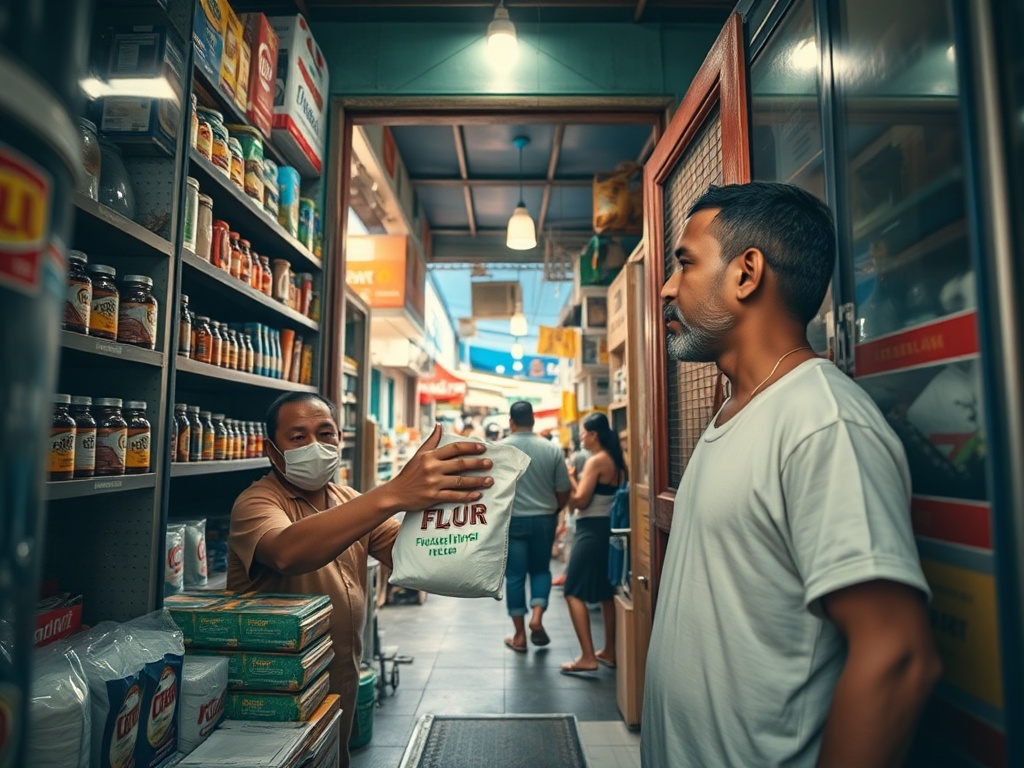
Moya veetha kaley?
The question hangs in the air, repeated in corner shops and on social media feeds: 'Moya veetha kaley?' It’s not just about the price of a single staple. It is the opening line to a much larger, more painful conversation about what is happening to our wallets and our future. When the cost of flour becomes a national talking point, you know the foundations of daily life are shaking.
Why does a bag of flour, a basic necessity in every Maldivian kitchen, feel like a luxury item? The answer leads us directly to the printing presses and the government's financial management. When the state prints money to cover its expenses, the value of every rufiyaa in your pocket decreases. This isn't abstract economics; it's the reason your salary buys less at the market today than it did last year. The rising taxes on imports, from construction materials to the very food we eat, compound this pressure until the simple act of feeding a family becomes a strategic calculation.
What is the real cost of this relentless price increase? It forces families to make impossible choices between food, rent, and their children's education. It fuels a quiet desperation that can be seen in the tired eyes of parents and the frustration of young people who see no clear path to financial independence. This economic strain is not distributed equally; it hits the middle class and the poor the hardest, widening the gap between the connected few and the struggling many.
Is the solution simply to find more money, or is it to fix the system that keeps making everything more expensive? Our heavy reliance on imports means we are perpetually at the mercy of global prices and our own foreign currency shortages. The tourism dollars that flow in are often parked in foreign bank accounts by resort owners, providing limited relief to the national treasury. Meanwhile, the outflow of money from expatriate remittances further drains our reserves. We are trying to fill a bucket with a hole in the bottom.
Where does this leave the average citizen? The question 'Moya veetha kaley?' is ultimately a question about governance. It asks about the efficiency of a public sector bloated with political appointees. It questions the priorities of a system where subsidized housing can be subleased for profit by those who don't even live here, while others struggle to find a roof in Malé. It is a plea for a government that tackles the root causes of inflation and corruption, rather than just managing the symptoms. The price of flour is more than a number; it is a barometer of national well-being, and right now, the reading is alarming.