MTCC to Tar All Bodu Thakurufaanu Magu Segments Simultaneously to Speed Completion
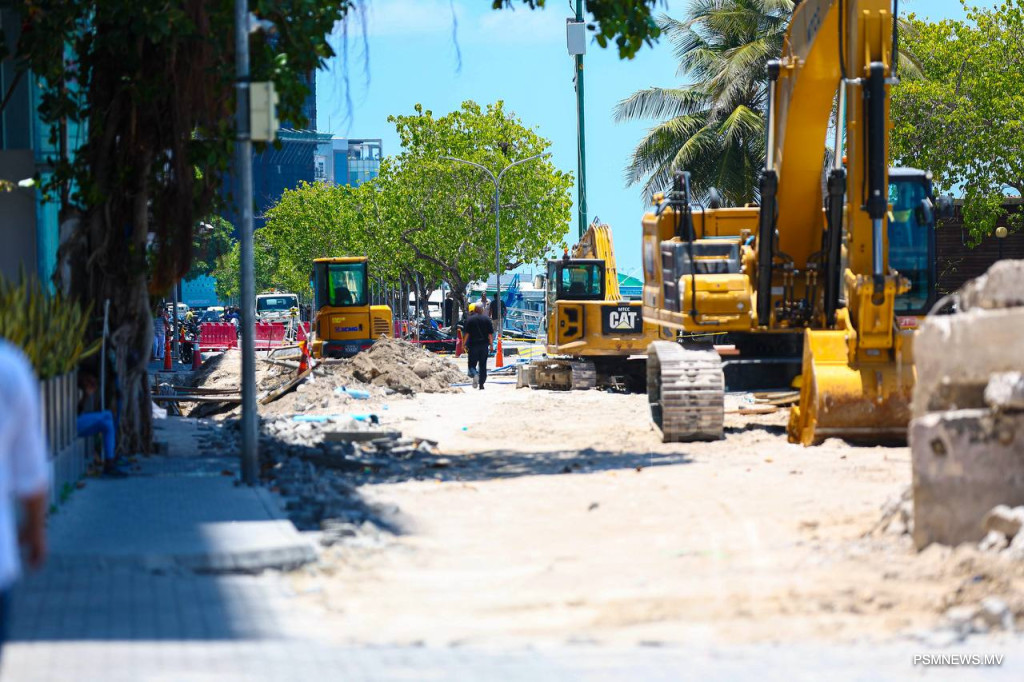
The Maldives Transport and Contracting Company (MTCC) has overhauled its strategy for the Bodu Thakurufaanu Magu development project, announcing that all remaining road segments will now be tarred simultaneously to expedite the final phase of construction.
Departing from the original plan to complete Segment 5—stretching from the Henveiru Ferry Terminal to the FSM Building—before proceeding to other areas, MTCC will now employ a unified tarring process. This decision follows substantial progress on the other three segments and ongoing sidewalk work on Segment 5.
Senior Project Manager Sharvas Abdulla Faiz informed PSM News that preparatory works, including the installation of water and sewerage pipes and critical keywall construction, are well advanced across all unfinished sections. Piling work is also progressing, with 50 percent of the 522 required sheets already driven.
"The plan is to start tarring all the segments at once," Faiz stated, adding that the work is scheduled for completion and the road is expected to open by next month.
To minimize public inconvenience, MTCC confirmed the road will remain accessible to pedestrians for most of the period. Temporary closures will occur only during the actual asphalt laying operations before the route fully reopens to vehicular traffic.
This modernisation phase covers a 700-metre stretch from the Izzuddeen Jetty to the Henveiru Ferry Terminal, including the renovation of 610 metres of seawall. A primary goal of the redesign is to alleviate chronic congestion in this high-traffic service hub for ferries and cargo boats by widening the roadway by approximately six metres.
The most significant transformation occurs in the third segment, where a 98-metre by 28-metre area has been dredged from the harbour. This reclaimed land will create a new parking zone with 500 dedicated motorcycle spaces, addressing a critical infrastructure gap in the capital and reducing road-side congestion.