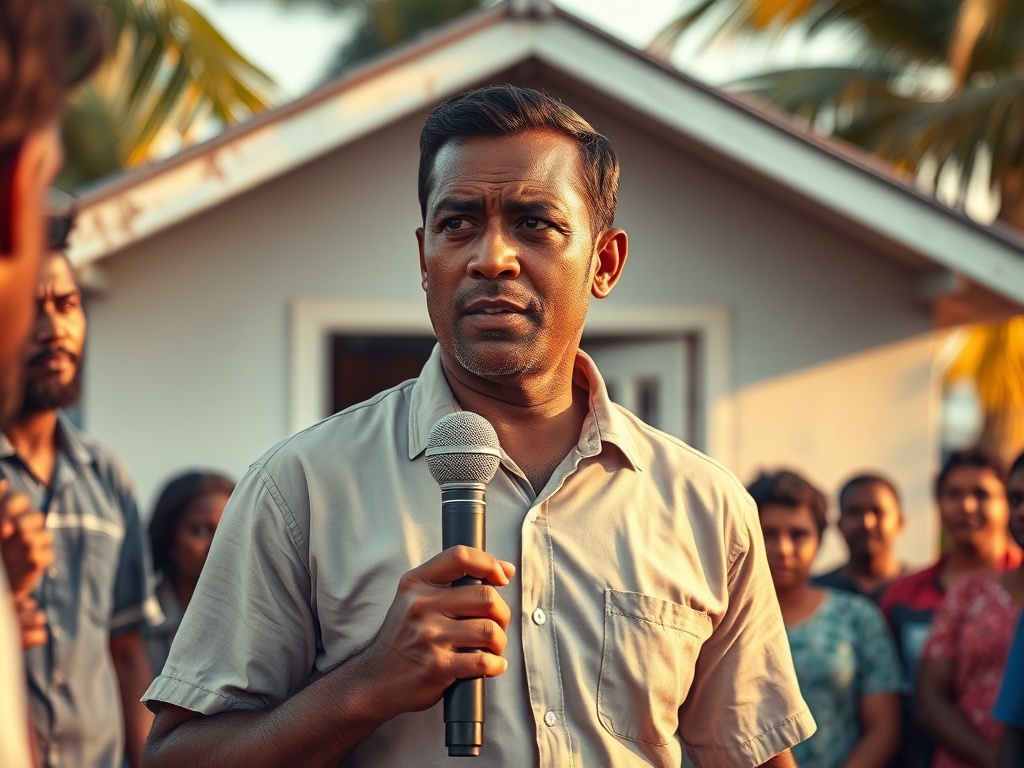
Muiz akee dhivehi rayyithunge 58% vote libigen hovaafa huri veri eh
In the heart of Kudarikilu, a council president's voice rises above the political chatter, casting doubt on the very foundation of the current government's authority. He states plainly that President Muizzu secured his position with 58% of the vote, but the implication is heavy with skepticism. This isn't merely a local grievance; it's a challenge to the national narrative of an unquestioned mandate. For many Maldivians, this resonates deeply within a context where electoral processes are frequently shadowed by allegations of bribery, with promises of land and subsidies used as political currency. The council president's assertion taps into a widespread undercurrent of distrust toward a political system perceived as increasingly centralized and detached from the people's true will. This sentiment is amplified by the government's expanding control over institutions and the frequent appointments of relatives to key positions, further eroding public confidence. As the cost of living soars and the housing crisis in Malé deepens, questions about legitimacy become intertwined with daily struggles. When a local leader from an island community openly questions the validity of the vote that brought the national leadership to power, it reflects a broader anxiety. It's a worry that the mechanisms of democracy are being manipulated, that the will of the 'dhivehi rayyithu'—the Maldivian people—is not being truly heard in the halls of power. This single statement from Kudarikilu thus becomes a powerful symbol of the growing disconnect between the governed and those who govern, a critical examination of power in today's Maldives.