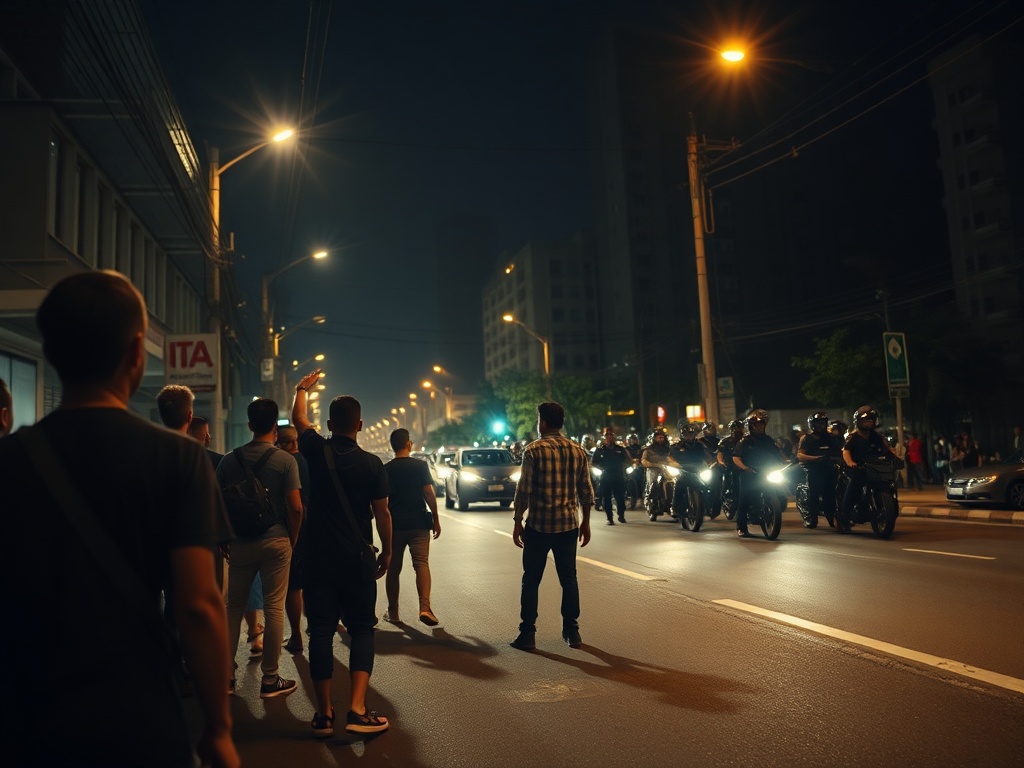
Muizzu regime defends use of police brutality to prevent rally
Late Friday night in Malé, the familiar sounds of protest were met with the harsh reality of state power. Eight individuals were arrested as an anti-government demonstration escalated into clashes with police. The Maldives Police Service stated that protesters violated previously agreed conditions, but eyewitness accounts and circulating videos tell a story of disproportionate force. This incident is not isolated; it fits a pattern where dissent is met with swift, heavy-handed responses, while other grave issues seem to languish.
Many Maldivians are asking a poignant question in Dhivehi: 'Vaki bayaku huras elheema tha goas mivany?' – Why is such boldness shown for minor infractions, yet it becomes buried when confronting daylight robbery, corruption, lies, and the deep-seated influence of drugs and gangs within the government? This sentiment cuts to the core of a growing public disillusionment. The very institutions meant to protect are increasingly perceived as tools for political consolidation.
The current administration defends these actions as necessary for public order. However, this defense rings hollow for those who see a consistent application of force only against political opposition, while high-level corruption and powerful interests operate with impunity. The selective enforcement of the law erodes public trust daily. It creates a two-tiered system: one for the ordinary citizen and another for the connected elite.
This event occurs against a backdrop of escalating political friction. The ruling PNC and the opposition MDP, along with its splinter group The Democrats, are locked in a struggle that plays out on the streets and in the halls of power. The issues are profound: a stifling cost of living, a youth crisis of drugs and unemployment, and a governance structure bloated with political appointments. The public's patience is wearing thin as they watch resources being diverted and freedoms curtailed.
The use of police force to quell rallies is a stark reminder of the narrowing space for civic engagement. When citizens cannot assemble to voice their grievances without fear of brutality, the social contract is broken. The justification of such actions sets a dangerous precedent, normalizing a response that should be exceptional. The real test for the nation's stability is not whether protests can be suppressed, but whether the underlying causes of the protest—corruption, injustice, and economic despair—are addressed with the same vigor.