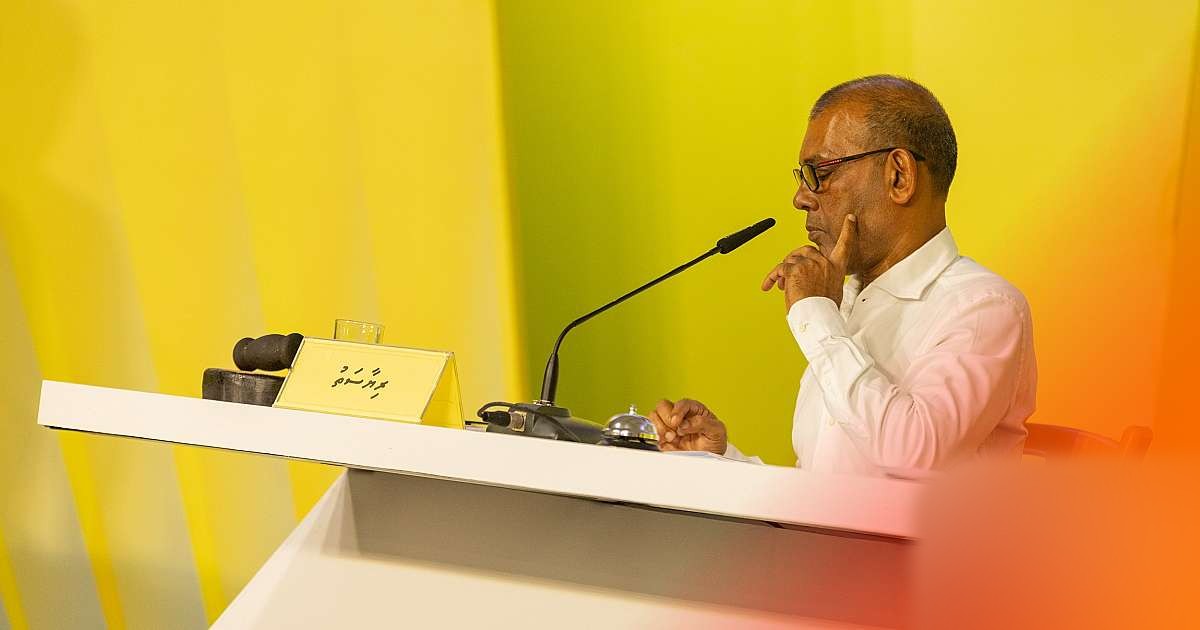
Nasheed warns against 'ruining' youth under guise of home schooling
Opposition Maldivian Democratic Party (MDP) Chairman and former President Mohamed Nasheed has called for not giving the opportunity to destroy the country's youth under the guise of home schooling. The government has proposed an amendment to the Education Act to allow children to study under home schooling based on an assessment conducted according to the degree of disability or psychological condition. Connecting with that bill, Nasheed stated on social media today that currently more than 4,000 children do not attend school regularly. "We must not give the opportunity to mislead and ruin the young generation of the country under the guise of home schooling," Nasheed said. During the discussion on that bill in today's session of the People's Majlis, opposition MDP members expressed concern that if home schooling is introduced without being properly regulated, the number of children not attending school could increase further. They also noted that providing the opportunity for home schooling to children who face difficulties attending school due to disabilities is something that must be done. The bill includes conditions and procedures for obtaining education under home schooling. The bill mandates the Ministry of Education to register such places, establish rules and procedures for their requirements and operation, and ensure that these places operate in accordance with those regulations. According to this bill, exemption from home schooling is granted considering the proportion of physical or mental disability of the child, or other special circumstances. Accordingly, three necessary conditions for such children are specified in the bill: the child is unable to attend school and obtain education due to physical/mental disability or special condition; the child's guardians are capable of financially providing education under a home schooling program; and the child is registered in a school where they are required to attend within the formal educational system. This bill also provides for making education mandatory for children who cannot obtain education under home schooling, and requires the Ministry to establish guidelines for determining who qualifies as a child exempt from compulsory education. Furthermore, the bill proposes amendments to elaborate further on the roles of parents, teachers, and principals in running formal education. Some amendments needed to implement this law and resolve current difficulties are also included, such as providing free breakfast to students who face difficulties getting breakfast during school hours. The bill also mandates that every academic year should begin in January, and if delayed, must commence no later than before the end of February.