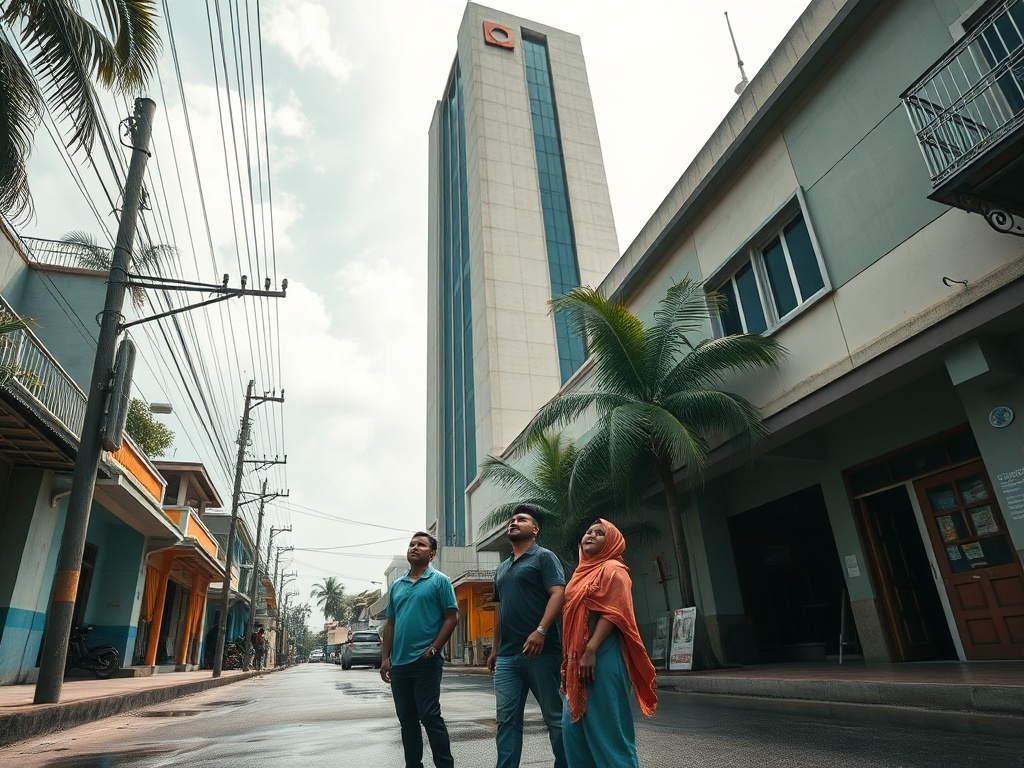
One Bank Now Holds the Keys to Every Island's Future
In the scattered archipelago of the Maldives, where communities are separated by vast stretches of ocean, the concentration of banking power in a single institution has become a source of growing concern. Critics argue that this financial consolidation creates systemic vulnerabilities while leaving regional economies underserved.
The debate centers on what some call the "too big to fail" problem—a scenario where one institution's dominance becomes a national liability. This concern isn't merely theoretical. Germany's post-war economic miracle, observers note, was partly built on a decentralized banking system where regional institutions understood local business conditions and community needs.
Meanwhile, the current banking landscape appears increasingly risk-averse. Rather than extending credit to small businesses and entrepreneurs, the dominant bank appears to favor government treasury bonds—a safer but less productive use of capital. This conservative approach recently prompted government intervention, requiring the bank to deposit significant funds into housing financing, a move that sparked controversy but highlighted the tension between private profit and public need.
The consequences of this financial consolidation ripple through everyday life. In Hithadhoo, residents waited years for a second ATM in the northern part of the island, despite clear community need. Local councils seeking to generate revenue through land leases found themselves unable to secure banking services that would benefit their constituents.
For ordinary Maldivians, the impact is measured in stark financial terms. At current interest rates near 11%, a 1 million rufiyaa loan requires 2 million in interest payments over time—a burden that effectively prices many out of home ownership or business expansion. Comparatively, rates around 2.5% would reduce that interest burden to approximately 300,000 rufiyaa, making financial mobility accessible to a broader segment of the population.
The situation creates what many see as a fundamental injustice: while the banking system grows through risk-free government investments and transaction fees, ordinary citizens and small businesses bear the cost through limited access to capital and expensive banking services. This dynamic exacerbates existing economic inequalities in a nation where the cost of living continues to rise.
The solution, according to this emerging school of thought, lies in financial decentralization. Regional banks—potentially named for Addu, Huvadhoo, or Thiladhunmathi—could theoretically be more responsive to local economic conditions. Such institutions would understand the seasonal rhythms of fisheries, the capital needs of local tourism operations, and the specific challenges facing island communities.
This isn't merely about creating competition; it's about building a financial ecosystem that serves the diverse economic landscapes of the Maldives. From the bustling markets of Addu City to the emerging tourism hubs in the northern atolls, different regions face distinct financial challenges that a one-size-fits-all banking approach cannot adequately address.
As the debate continues, the fundamental question remains: can a nation of scattered islands thrive with a centralized financial system, or does its future prosperity depend on creating financial institutions as diverse as its geography?
— Source fragments: BML is too big and risk averse; regional banks like Bank of Addu proposed; comparison to post-war Germany; high interest rates creating unfair burden; delayed ATM service in Hithadhoo; transaction fees hurting small businesses