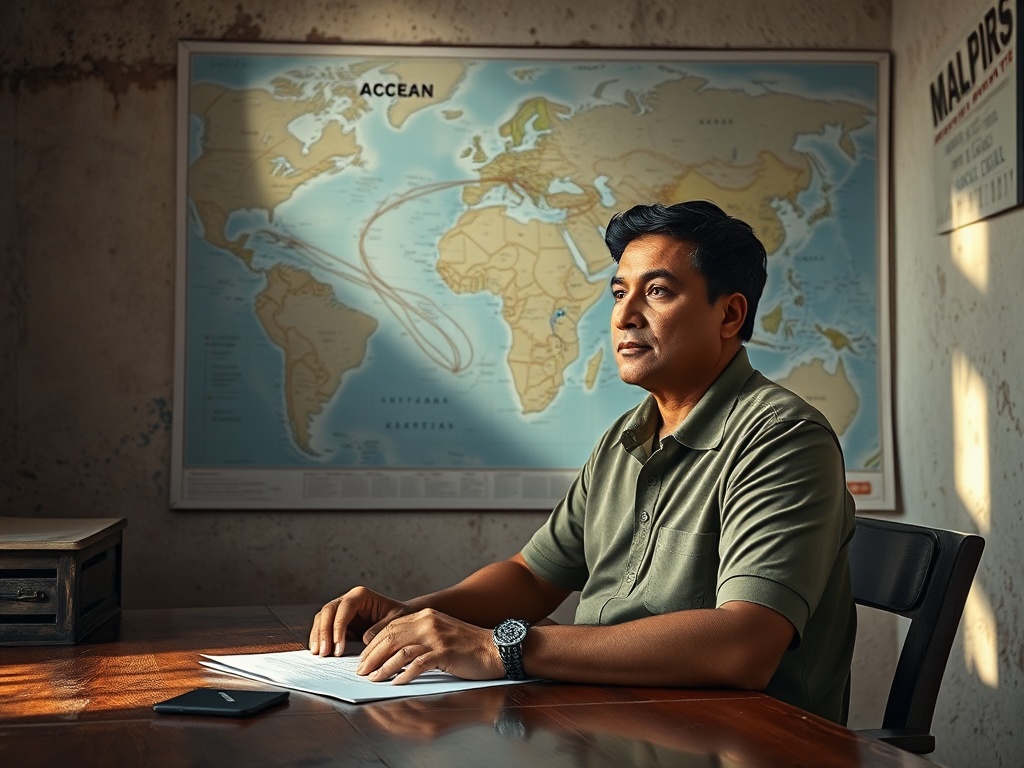
One Diplomat, One Map, and the Sea Lanes Between Giants
In the chessboard of international relations, small island nations often find themselves as pawns in games played by larger powers. Recent global conversations reveal a sobering reality: size matters in diplomacy, but strategic positioning matters more.
The Maldives, with its scattered archipelago spanning strategic sea lanes, understands this dynamic intimately. While nations like Nigeria and Venezuela wield influence through sheer scale and resources, small states must rely on diplomatic agility. The recent shift in Maldivian foreign policy—moving away from traditional partners toward new alliances—reflects this delicate balancing act.
Diplomacy for small nations has evolved from 'pure diplomacy' to what observers might call 'applied diplomacy'—a practical approach where relationships are constantly recalibrated based on shifting global currents. This isn't mere ideological posturing; it's survival calculus. When superpowers like the US and China compete in technological domains like AI and advanced manufacturing, the ripple effects reach even the most remote atolls.
The 'India Out' campaign and subsequent realignment demonstrate how domestic politics intersect with global positioning. Small nations learn to read the tea leaves of international sentiment, understanding that flattery and strategic alignment can open doors that might otherwise remain closed.
Yet this approach carries inherent risks. Over-reliance on any single partner—whether through military bases like Singapore hosts or economic dependencies—can compromise sovereignty. The challenge for the Maldives lies in maintaining strategic autonomy while securing the economic and security partnerships necessary for development.
Recent Universal Periodic Review cycles at the Human Rights Council place the Maldives under international scrutiny, reminding us that global standing isn't solely about military or economic might. Democratic values, human rights records, and governance standards increasingly factor into how small nations are perceived and treated on the world stage.
As one observer noted regarding immigration debates, national identity plays a crucial role in these calculations. While America built its identity through immigration, the Maldives' centuries-old cultural continuity presents different considerations in international engagements.
The ultimate test for small states in this new geopolitical landscape isn't just choosing sides, but mastering the art of navigation—knowing when to form direct alliances and when to maintain strategic ambiguity. In an era where technological disruption can overturn established power dynamics overnight, the most valuable currency may be diplomatic wisdom rather than military might.
— Source fragments: Fair, but Nigeria and Venezuela are countries far bigger than Maldives and with enough resources to actually deal heavy blows to even superpowers like the US; Yes diplomacy. Maybe that time we used pure diplomacy. This time we may have to use applied diplomacy; World leaders have learnt quickly how to get on the good side of Trump. Flattery gets you everywhere; At this point why not form an alliance with israel and stop this backhandshaking via UAE and Turkey; America was built on immigration. It literally defines their civic identity. Citizenship there is a legal contract, not a cultural belonging. The Maldives is a small island community that built its own statehood and traditions without waves of foreign settlement