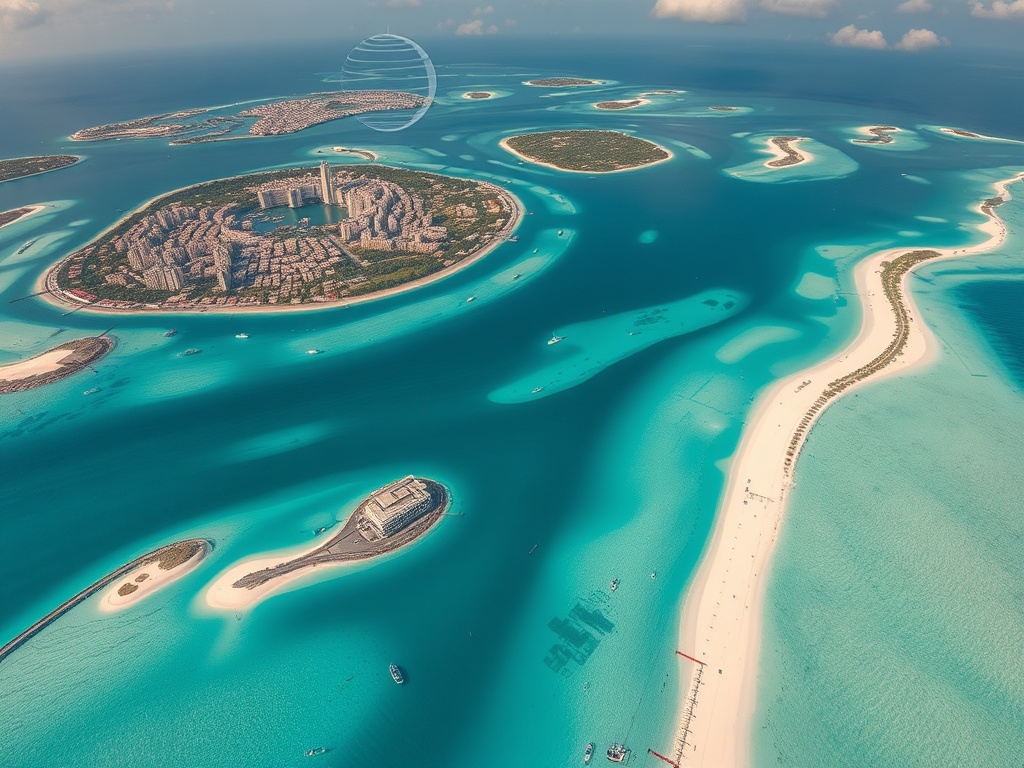
One Million People, Not Enough Land by 2050
The mathematics of land in an archipelago nation presents a sobering reality. With projections indicating the Maldives could approach a population of one million by mid-century, the simple arithmetic of dividing limited land among growing numbers reveals an uncomfortable truth: there won't be enough for everyone in the traditional sense. This demographic pressure forces a critical examination of how we allocate our most finite resource.
The current system reveals significant inefficiencies. In islands like Hulhudhoo and Meedhoo, substantial land parcels remain unused due to policy gaps that allow speculative holding without productive purpose. This underutilization represents not just wasted potential but a failure of land governance. The introduction of mechanisms like land value taxation could potentially free up dormant properties by making indefinite holding economically unfeasible for owners who contribute nothing to community development.
The practical dimensions of land allocation become stark when measured in feet and inches. The difference between a 100x100 foot plot and the more constrained 65x85 foot alternative represents more than just reduced square footage—it symbolizes the narrowing margin between adequate living space and compromised quality of life. These measurements matter profoundly for families planning their futures.
At the heart of the debate lies a fundamental question of economic opportunity. When land becomes a vehicle for wealth generation rather than simply shelter, the distribution mechanism carries profound implications for social equity. Should the chance to profit from land ownership be equally accessible to all citizens, or does it inevitably concentrate in the hands of those with existing advantages?
The government's response—such as the planned reclamation of 44 hectares along Lorong Halus's northeastern coast—acknowledges the supply challenge but doesn't fully address the underlying distribution philosophy. Land reclamation offers temporary relief but cannot solve the structural issues of allocation fairness and utilization efficiency.
This conversation transcends technical policy discussions to touch on core values of Maldivian society. It forces us to confront whether land should primarily serve as a commodity for individual enrichment or as a shared resource managed for collective benefit. The resolution of this tension will define not just our physical landscape but the character of our nation for generations to come.
As we navigate these complex questions, the challenge remains: creating a system that acknowledges land's economic value while ensuring its benefits flow broadly across society, not just to those who already hold the deeds.
— Source fragments: Population projections to 1 million by 2050; Land Value Tax discussion; Unused land in Hulhudhoo and Meedhoo; Government reclamation plans; Land plot size limitations; Equity in land-based economic opportunities