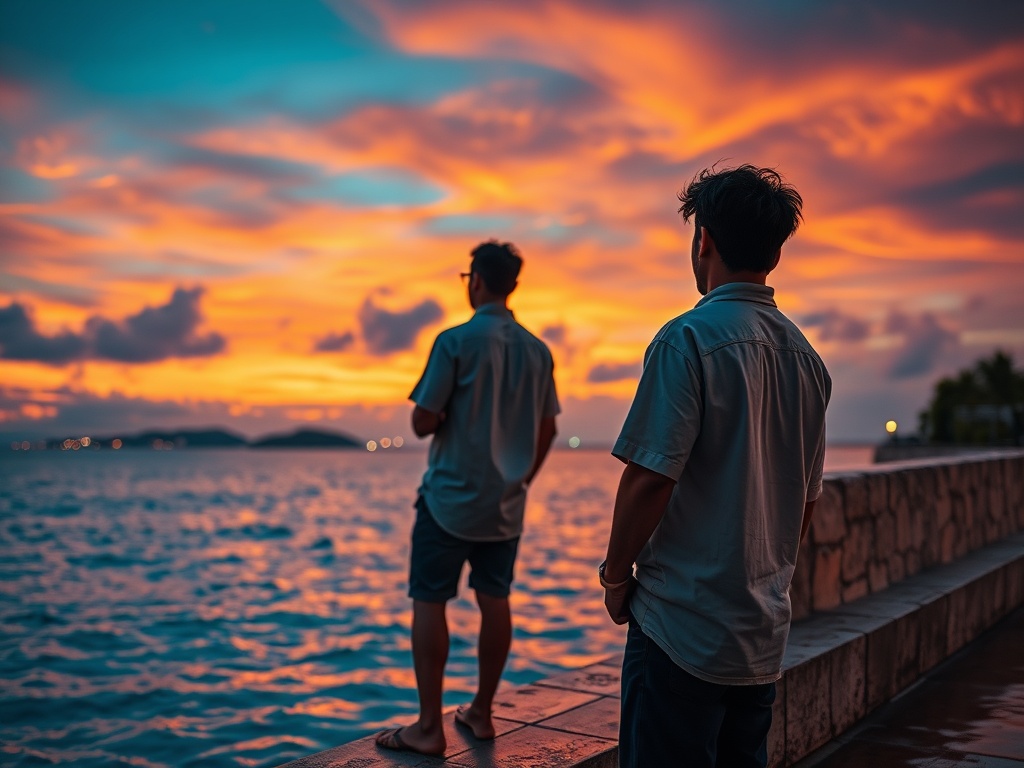
One Salt Scent, Two Different Destinies on the Malé Seawall
The sea breeze carried the same salt scent to both our faces as we stood on the Malé waterfront, watching the same dhoni boats rock in the same turquoise water. My neighbor Ahmed and I had grown up watching these same waves, breathing this same air, yet somehow we stood on different shores.
"They gave me a plot in Laamu," he said, his voice barely audible above the wind. "But you..."
I finished his sentence in my mind. But you got nothing. But you're from the wrong island. But your name carries the wrong weight.
I remembered my grandfather's stories of fishing trips that would last weeks, sailing between atolls where every island welcomed you with fresh coconuts and shared stories. There were no invisible walls then, just the endless horizon connecting us all.
Now, looking at the construction cranes building yet another tower in Malé, I saw the new walls being erected—not of concrete, but of policy and preference. The same sea that once connected us now seemed to separate us into categories: deserving and undeserving, central and peripheral, us and them.
Ahmed shifted uncomfortably. "It's not fair," he murmured, avoiding my eyes. We both knew he'd applied for the same housing scheme I had. We both filled out the same forms, stood in the same queues, dreamed the same dreams of a home where our children could play without counting square feet.
Down the seawall, a group of men played cards on a mat, their laughter carrying on the breeze. They were from different atolls, different backgrounds, yet here they found common ground. I wondered why that common ground couldn't extend to housing, to opportunity, to basic dignity.
The sun dipped toward the horizon, painting the Indian Ocean in shades of gold and orange. From this vantage point, you couldn't tell which water touched which island's shore. The sea belonged to all of us equally, just as it always had.
"Maybe one day," Ahmed said, placing a hand on my shoulder. "Maybe the policies will change."
I watched a heron land on a nearby falhu, its white wings stark against the darkening water. That falhu belonged to no one and everyone—a temporary resting place in the vast ocean. Why couldn't we remember that all these islands were just temporary resting places in our shared journey?
The lights began to twinkle across the water, from Malé to Hulhumalé, little points of hope in the gathering dark. I thought of my cousins in the atolls, watching these same lights from their islands, wondering if they'd ever get to call this place home.
We are all children of these islands, I thought. The same salt runs in our veins, the same stars guide our fishermen, the same monsoons water our crops. The sea doesn't discriminate between atoll and capital—it simply connects us all.
As night fell completely, I realized the most painful divisions aren't the ones you can see, but the ones you feel in the silence between friends, in the unsaid words, in the dreams deferred while watching others' dreams come true.
— Source fragments: Malé people don't deserve Free land; Malé supremacy will ruin rest of Maldives; The Malé person should have the same rights as the RT person; You and I live in Malé under identical conditions; Why is there special treatment for you?; How is it that you are granted a land plot, but I am disqualified