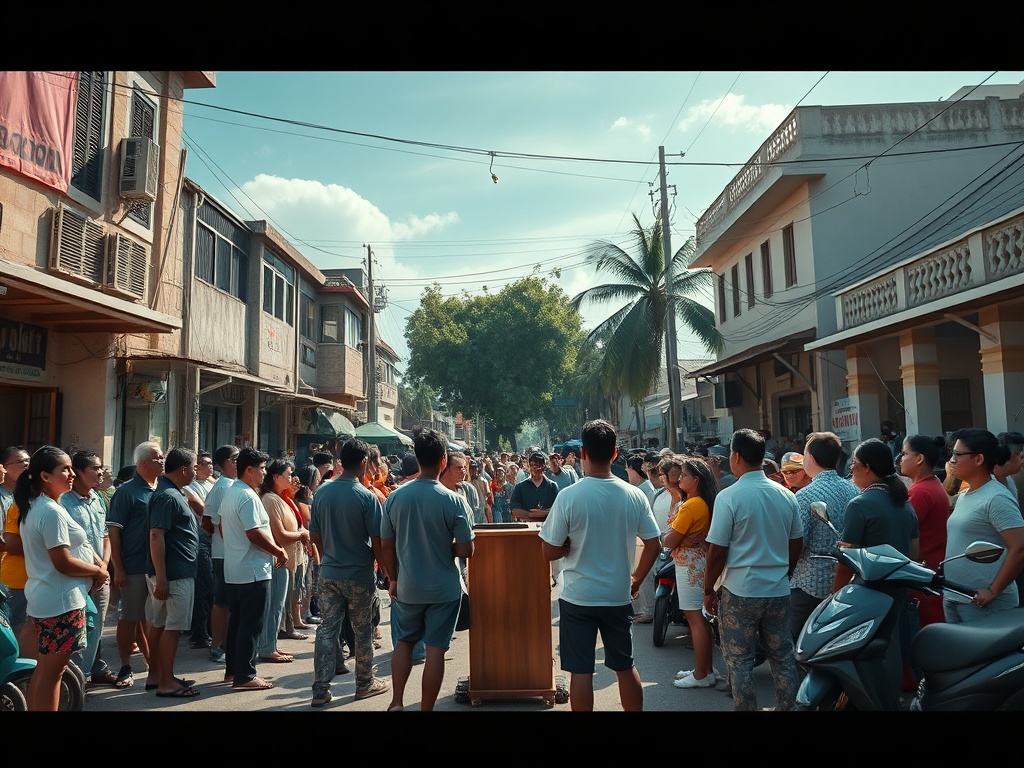
Only 0.1% of people went to MDP protest.
When a political party calls for a major protest in a nation of 400,000 people, and only 1,000 show up, what does that truly signify? Is it a failure of mobilization, or a deeper reflection of public disillusionment? In the congested streets of Malé, where political banners usually flutter with fervor, this sparse turnout forces us to confront uncomfortable realities about our democracy.
Could it be that after years of high-profile corruption scandals and politicized governance, people have simply lost faith in the entire political class? The MPRC scandal, charges against former presidents, and the constant reshuffling of Supreme Court justices have created a climate of cynicism. When citizens see relatives appointed to ambassadorships and ministries bloated with non-working staff, why would they brave the heat for another rally?
Perhaps the answer lies in the daily struggles that dominate Maldivian lives. How can one care about political protests when facing medicine shortages at the hospital? When youth battle drug addiction with few job prospects? When families in Malé's cramped housing watch subsidized flats be subleased by absentee leaseholders? These are the issues that determine political engagement, not party loyalty.
The economy presents another layer to this puzzle. With the government printing money, raising taxes, and facing foreign currency shortages, ordinary people are focused on survival. Expatriate remittances draining forex reserves and resort owners parking profits abroad mean little national benefit trickles down. In such an environment, political rallies become luxuries many cannot afford.
Yet the small turnout also reveals something about opposition strategy. If MDP's digital supporters are busy 'canceling' individuals online rather than building grassroots connections, they're fighting the wrong battle. Real political change requires convincing the 99.9% who didn't attend - the fishermen worried about fuel prices, the mothers struggling with school expenses, the young graduates with nowhere to go.
The protest's minimal attendance might actually signal a political maturity rather than apathy. Maldivians may be waiting for solutions, not spectacles. They've seen land and assets distributed before elections, only to watch promises evaporate afterward. They've experienced freedom of expression eroding while political rights consolidate around power.
What happens next will determine whether this 0.1% becomes a movement or remains a marginal voice. The opposition must address why their message isn't resonating beyond their core supporters. They need to connect political freedom with economic justice, judicial independence with healthcare access, and foreign policy with the cost of living.
The empty spaces at that protest tell a story more powerful than any speech could. They speak of a population that has seen too many political cycles deliver too little real change. Until parties address the fundamental issues of corruption, nepotism, and economic hardship, political rallies will remain theater for the few rather than vehicles for the many.