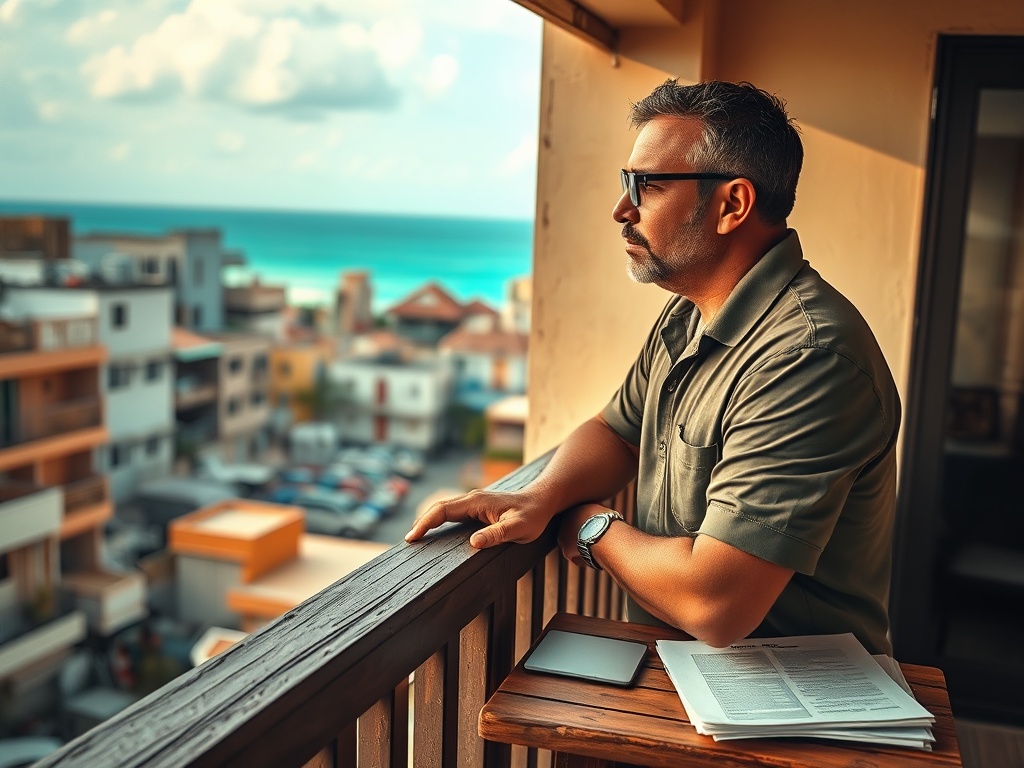
Our Birth Certificates Hold the Deed to This Land
The sea surrounds us, yet we are islands trapped within islands. We speak of mobility, of moving between atolls for work or opportunity, but the system holds us fast to the land of our birth certificates. A man from the north dreams of Addu—a good job, a house to buy and sell, the freedom to come and go. But the dream crashes against the reality: we are bound by inheritance we cannot access, by land grants that never come, by policies that seem designed to keep us exactly where we are.
In Malé, the rent swallows salaries whole—24,000 rufiyaa for spaces that will never be ours, money flowing out like the tide never to return. We speak of 'inherited land' with bitter irony, searching for plots that exist only in government registries, while living in rented rooms that feel increasingly temporary. The question echoes through crowded streets: 'Where do I belong?' When your parents left Fuvahmulah decades ago, when you were born and raised in Malé, the system sees you as belonging nowhere—a second-class citizen in your own country.
Meanwhile, the privileged collect housing like seashells—Hiya flats multiplying within families while others wait endlessly. The promise of land becomes a desert mirage, always shimmering in the distance but never materializing. We call out for what we're owed and hear only the echo of our own voices bouncing off bureaucratic walls.
The sea should connect us, not divide us. These thousand islands scattered across the Indian Ocean could be a nation of possibility rather than feudal domains. Yet we remain stuck, watching as politicians and oligarchs treat our homeland as their personal archipelago while the average Maldivian wonders if they'll ever have a place to truly call their own. The salt air carries both the promise of freedom and the weight of what keeps us anchored in place.
— Source fragments: stuck with land we are born in, feudal system; paying 24k for rent to an apartment which will never be mine; inherited land? I don't yet have anything to fall back on; where do I belong? broken system creates second-class citizens; people who already have housing are taking advantage; waiting for rent from RT is like waiting for rain in desert