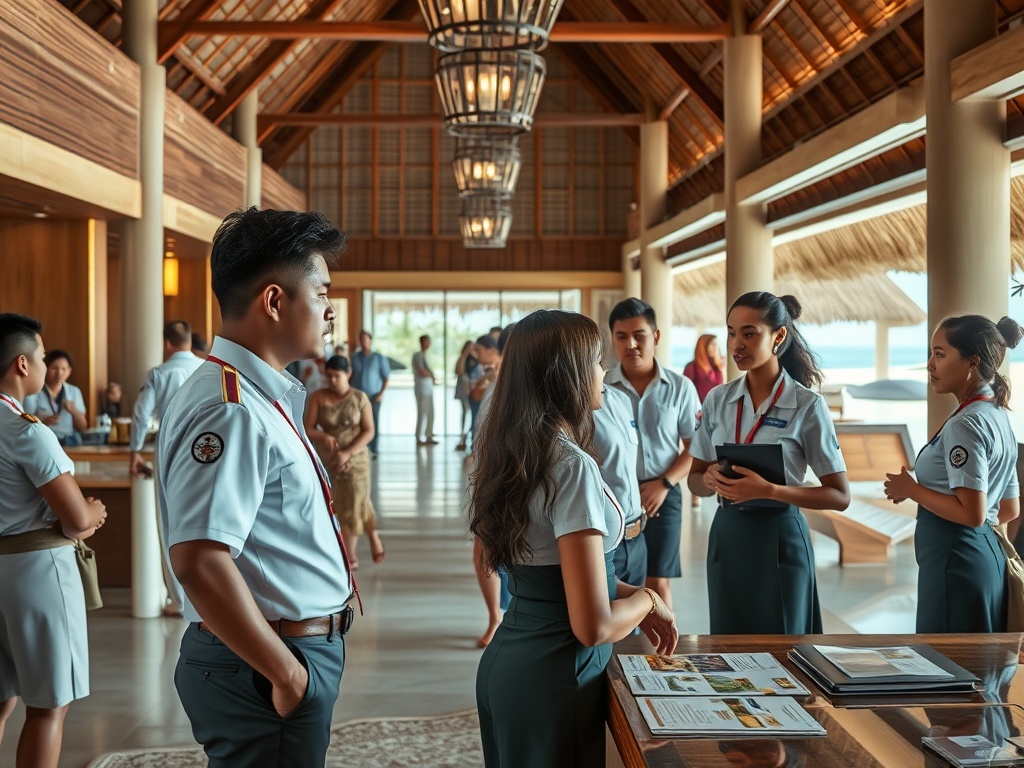
Our education system is failing the hospitality sector
The salty breeze carries the sounds of frustration from resort managers across our islands. They're not just complaining about supply chains or weather patterns—they're struggling to find Maldivians who can truly serve our guests. The problem isn't a lack of degrees; our universities produce plenty of business graduates clutching MBAs. The real issue is what those certificates don't contain: hands-on experience, language fluency, and the practical wisdom that comes from actually working in tourism.
Walk through any resort staff area and you'll see the imbalance. Foreign workers from Bangladesh, India, and Sri Lanka fill roles that should belong to our youth. They're not taking jobs from us—they're filling gaps our education system created. While our classrooms focus on theoretical business models, our tourism industry needs people who can manage a housekeeping team, resolve guest complaints in multiple languages, and understand the subtle art of hospitality that makes visitors return year after year.
The disconnect starts early. Students spend years studying management theories without ever setting foot in a hotel kitchen or front desk. They graduate with impressive credentials but can't handle a simple check-in procedure or explain local fishing traditions to curious tourists. Meanwhile, guesthouse owners on local islands struggle to find Maldivians who can communicate effectively with European families or Asian couples seeking authentic experiences.
What if we transformed our approach? Imagine requiring every tourism and business student to complete a mandatory work year before graduation. Not just any internship, but structured rotations through housekeeping, food service, front office, and guest relations. Learning to manage a team by actually leading one. Understanding revenue management by seeing empty rooms during low season. Building language skills through daily conversations with international guests.
This isn't about abandoning academic excellence—it's about balancing theory with practice. Our hospitality sector, which fuels our economy, deserves graduates who understand both balance sheets and bed configurations. Who can discuss marketing strategies while also knowing how to welcome a tired family arriving on a late-night flight.
The sea has always taught us practical wisdom. Fishermen don't learn navigation from textbooks alone; they go out with experienced captains. Our tourism education should follow the same principle. By bridging the gap between classroom and resort, we can ensure our youth don't just have degrees—they have the skills to lead our most important industry forward, preserving both our economic future and our cultural identity in the process.