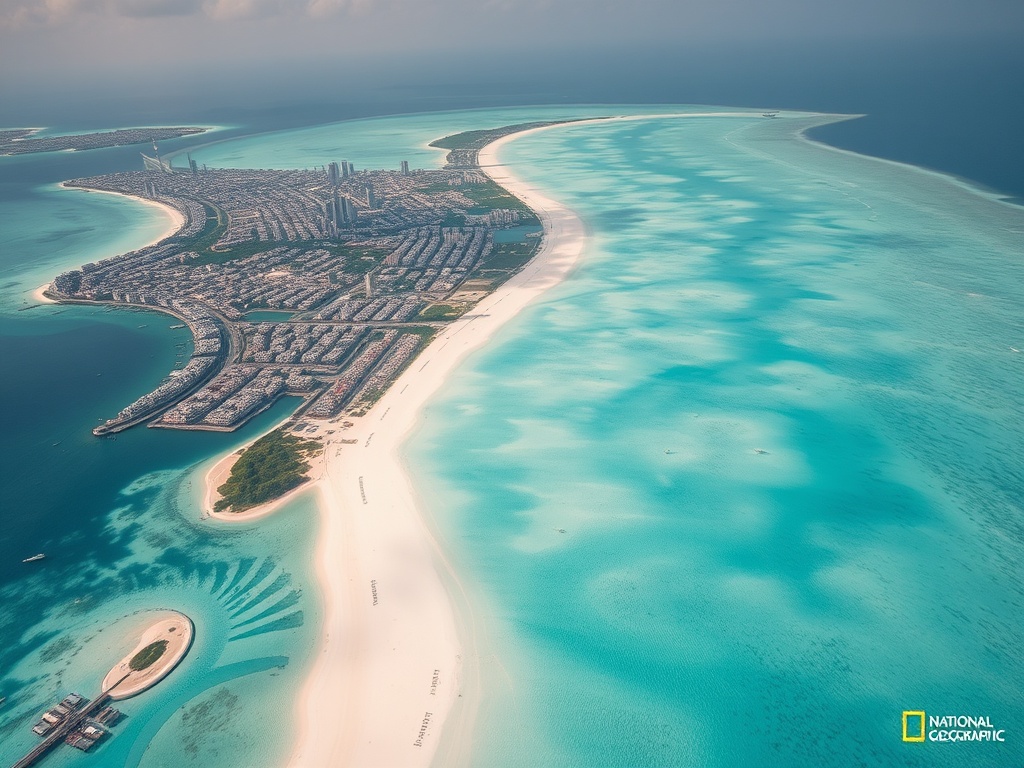
Our Scattered Islands, Their Feudal Grid
In the scattered geography of the Maldives, land is more than soil and sand—it is identity, security, and the foundation of family legacy. Yet for many citizens, this foundation feels increasingly unstable. The current system, as one observer noted, resembles a feudal structure that traps people in the land they're born to, limiting mobility and opportunity in an archipelago where movement should be natural.
The Binveriya scheme has become the focal point of this discontent. Designed to address housing shortages, it has instead highlighted deeper inequities. The requirement to surrender inherited land in Male' to qualify for new allocations creates impossible choices for many. As one voice from Baa Atoll expressed, the accumulation of small inherited plots—3,000 square feet from a father, 2,000 more expected from a mother—creates a paradox of ownership without utility, of having land but no home.
This system privileges bloodline over need, granting land to those with Male' addresses regardless of actual residence, while others must wait for marriage or established residency. The policy creates what critics call 'nikamethi meehaa'—paper citizens who qualify through ancestry rather than circumstance.
The fundamental issue isn't scarcity but distribution. With population growth stabilizing and reclamation projects creating vacant lands across atolls, the problem shifts from availability to accessibility. Wealthy landowners hold vast tracts that remain undeveloped because holding costs nothing. As one commentator noted, if policies made land retention financially burdensome, market forces would naturally release unused properties.
The solution requires rethinking land as a dynamic resource rather than static inheritance. Imagine a system where accepting a job in Addu didn't mean abandoning northern roots, but rather participating in a fluid property market where buying, living, and selling followed natural career and life cycles. This would require policy interventions that discourage hoarding while enabling mobility.
Current political approaches have failed to address these structural issues. Neither major party has proposed comprehensive reforms that balance inheritance rights with equitable distribution. The result is a generation caught between ancestral claims and contemporary needs, between the land they're from and the land they need to build lives upon.
The conversation around land policy represents more than housing—it's about whether the Maldives can transition from a system of static inheritance to one of dynamic opportunity, where geography doesn't determine destiny but enables it.
— Source fragments: currently we are stuck with land we are born in, Binveriya scheme, inherited land, policy could fix this, land hogging, enough land for everyone, mobility between islands