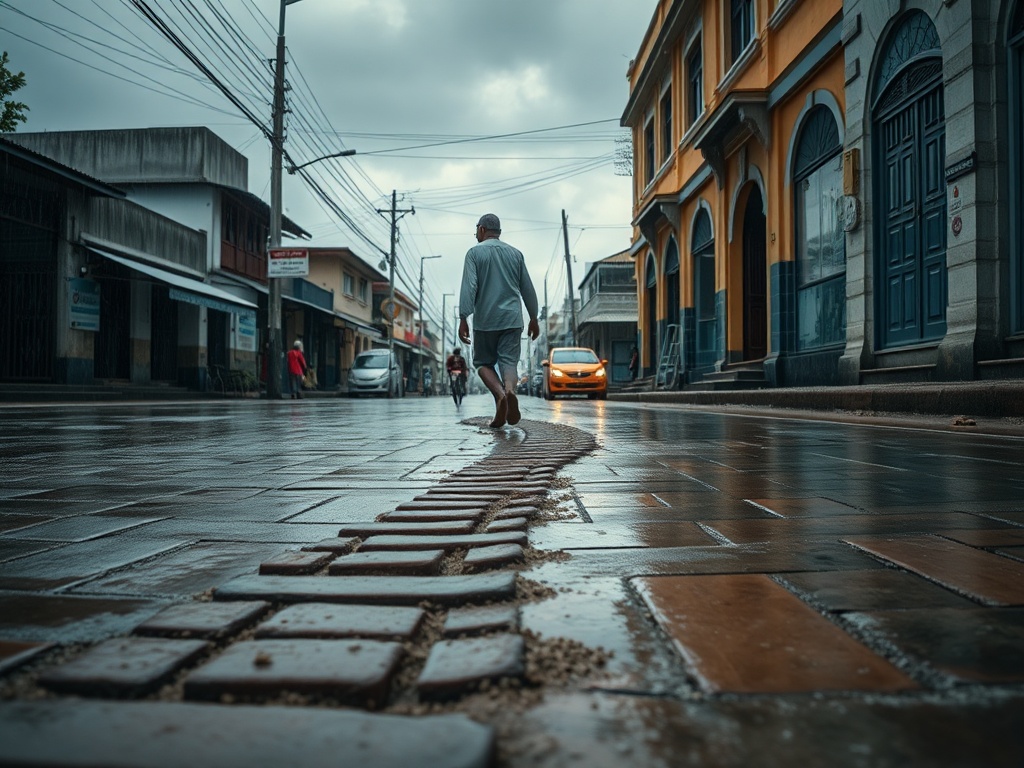
Our streets are worse after they fix them
I was walking home yesterday when the first drops began to fall, and I felt that familiar dread settle in my stomach. The new layer of sand between the bricks, meant to smooth our path, had turned into a slick, shifting trap. My shoes sank in, and I had to watch every step, my ankles twisting on the uneven surface. This is what improvement looks like in our city—something that sounds good but feels worse.
For twenty years, I've watched this dance. A street gets torn up, promises are made, and then we're left with something that doesn't last one good downpour. They used so much sand this time that when the rain comes, it doesn't drain—it pools and turns the pathways into messy, gritty streams. You see people hopping from one semi-stable brick to another, mothers pulling their children closer, everyone moving with a shared, silent frustration. We've learned to expect this cycle: disruption, then disappointment.
What does it say about us that we accept this as normal? That we navigate these broken paths day after day, year after year? There's a deeper weariness here, beyond just muddy shoes. It's the feeling that those who plan these things don't walk these streets like we do. They don't feel the same urgency when rushing to work or carrying groceries home in the rain. Our reality is measured in practical steps, not in project reports.
Maybe the real problem isn't the sand or the bricks, but the distance between intention and outcome. Between the promise of a better city and the reality of our daily struggle. We keep hoping, though. We keep watching for that one repair that actually holds, that one change that makes life here just a little bit easier. Because this is our home, and these streets, however flawed, are the veins through which our lives flow. We deserve paths we can walk on with confidence, not with caution.