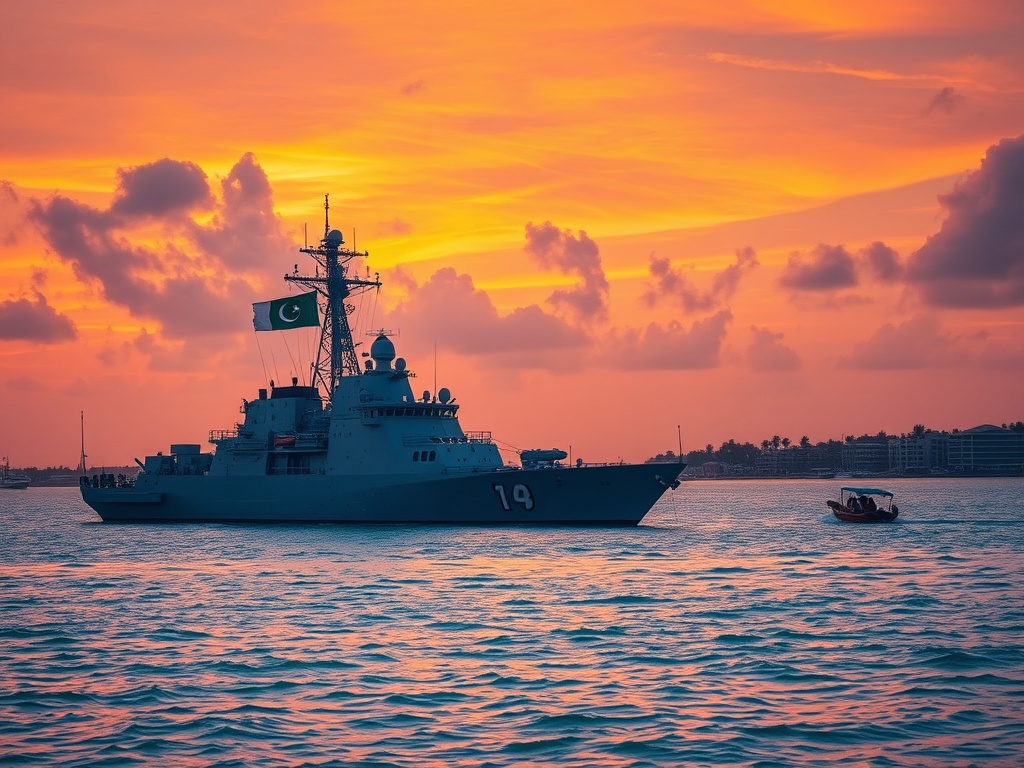
Pakistan Navy Ship Docks Despite External Pressure
The arrival of a Pakistan Navy warship in Maldivian waters, despite external pressure to cancel the visit, signals more than just routine military cooperation. It represents a strategic shift in the archipelago's foreign policy approach—one that prioritizes national sovereignty while navigating the complex currents of regional geopolitics.
This recalibration comes amid ongoing discussions about foreign military presence in the Maldives. The government's current direction reflects a calculated approach to international relations, where diplomatic engagements are increasingly viewed through the lens of national interest rather than external expectations. The Pakistan naval visit, complete with joint exercises, underscores Maldives' determination to diversify its defense partnerships.
Historical context informs current policy. The expulsion of foreign forces after they overstayed their welcome by two years remains a reference point in sovereignty discussions. This historical precedent reinforces the government's position that military presence must align with Maldivian timelines and conditions, not external agendas.
The timing coincides with Maldives' recent Universal Periodic Review at the UN Human Rights Council, where the nation reaffirmed its commitment to human rights while asserting its independent foreign policy stance. This dual approach—engaging with international institutions while making sovereign decisions—characterizes the current administration's worldview.
Experts observing these developments note that the government's strategy appears designed to create a more balanced regional engagement. By strengthening ties with multiple partners, including Pakistan and Middle Eastern nations, Maldives aims to reduce over-reliance on any single power while maintaining its non-aligned principles.
The domestic conversation around these foreign policy shifts reveals a nation confident in its diplomatic capabilities. Rather than reacting to external pressure, the government appears to be executing a deliberate strategy—one that acknowledges the realities of regional influence while firmly establishing Maldives' right to determine its own international partnerships.
As the Maldives continues this recalibration, the fundamental question remains how to maximize national benefit while maintaining regional stability. The current approach suggests a belief that diversified international relationships ultimately strengthen sovereignty rather than diminish it—a calculation that will be tested in the coming months as these new partnerships develop.
— Source fragments: Pakistan Navy warship visit despite Indian pressure; historical reference to expulsion of foreign forces; government direction on sovereignty; UN human rights review context