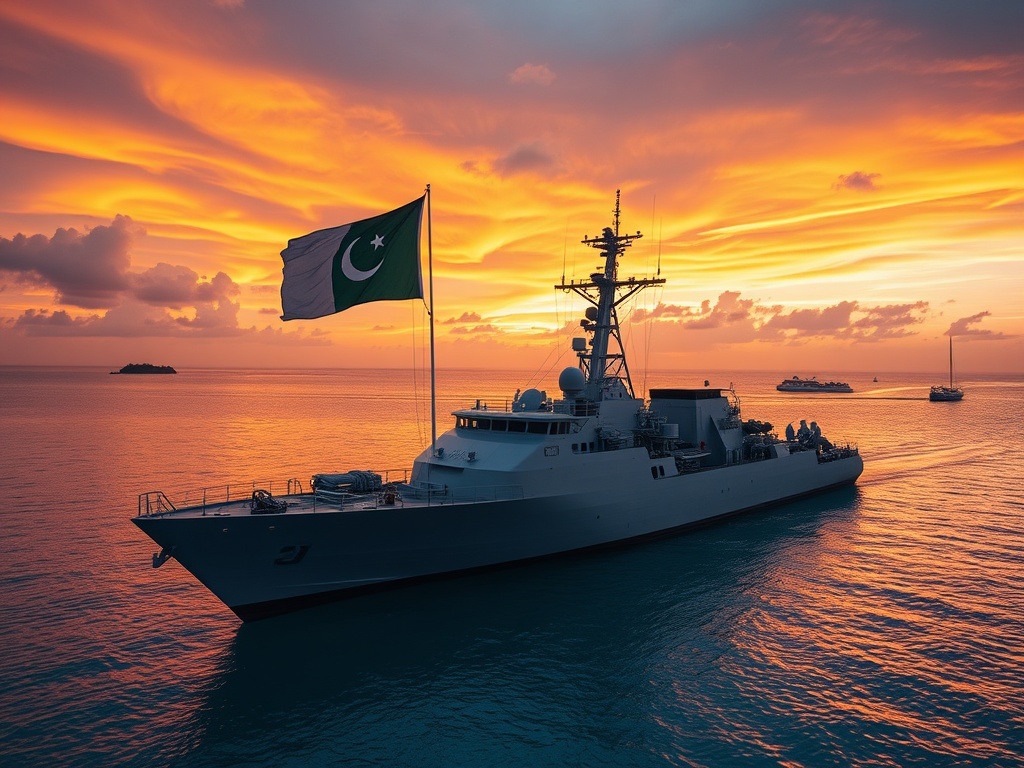
Pakistan Warship Docks Despite Delhi's Displeasure
The arrival of a Pakistan Navy warship in Maldivian waters for joint exercises represents more than routine military diplomacy. Despite reported pressure from New Delhi to cancel the visit, the Maldivian government proceeded with the engagement, signaling a deliberate shift in regional alignment. This development comes amid ongoing discussions about the presence of foreign military forces in the archipelago, with many experts and observers arguing that the current administration is pursuing a necessary course correction.
Historical context informs much of the present debate. Many recall the 1988 incident when Indian forces intervened to thwart a coup attempt—an action that, while stabilizing at the time, created lasting questions about sovereignty. The subsequent extended presence of Indian military personnel became a point of contention, with some arguing they overstayed their welcome by two years. This historical backdrop explains why former President Maumoon Abdul Gayoom's decision to eventually expel them continues to resonate with many Maldivians who see it as an assertion of national sovereignty.
The current government's approach appears to be guided by a clear calculus: that maintaining foreign military presence ultimately diminishes rather than enhances Maldivian influence in the long term. This perspective holds that by reducing dependence on any single regional power, the Maldives can negotiate from a position of greater strength. The Pakistan naval engagement, therefore, represents not just military cooperation but strategic diversification.
International observers note that India has maintained what some describe as "secret agreements" without formally declaring a military base—a diplomatic ambiguity that has fueled suspicion. The government's current stance suggests a desire to replace such arrangements with more transparent, mutually respectful partnerships.
This foreign policy recalibration occurs as the Maldives continues to engage with international human rights mechanisms, having recently concluded its Fourth Universal Periodic Review at the UN Human Rights Council. The simultaneous pursuit of sovereign foreign policy and international human rights commitments reflects a nation carefully navigating its place in the global order.
While some Western politicians have drawn attention for criticizing regional leaders, the Maldivian approach appears more measured—focused on national interest rather than ideological posturing. The government's actions suggest a belief that sovereignty isn't just about territory, but about the freedom to make independent choices in international relations.
The path forward requires balancing multiple considerations: maintaining regional stability while asserting sovereignty, diversifying partnerships without creating new dependencies, and pursuing international engagement while addressing domestic priorities. As one observer noted, there are usually solutions to complex problems—the challenge lies in implementing them with strategic foresight.
— Source fragments: usually there are solutions to every problem, experts have discussed this, govt going right direction, India will have less influence if they keep force here, India has not fully declared military base despite secret agreements, Pakistan Navy warship visit and joint exercises despite Indian pressure, historical context of Indian military presence and expulsion