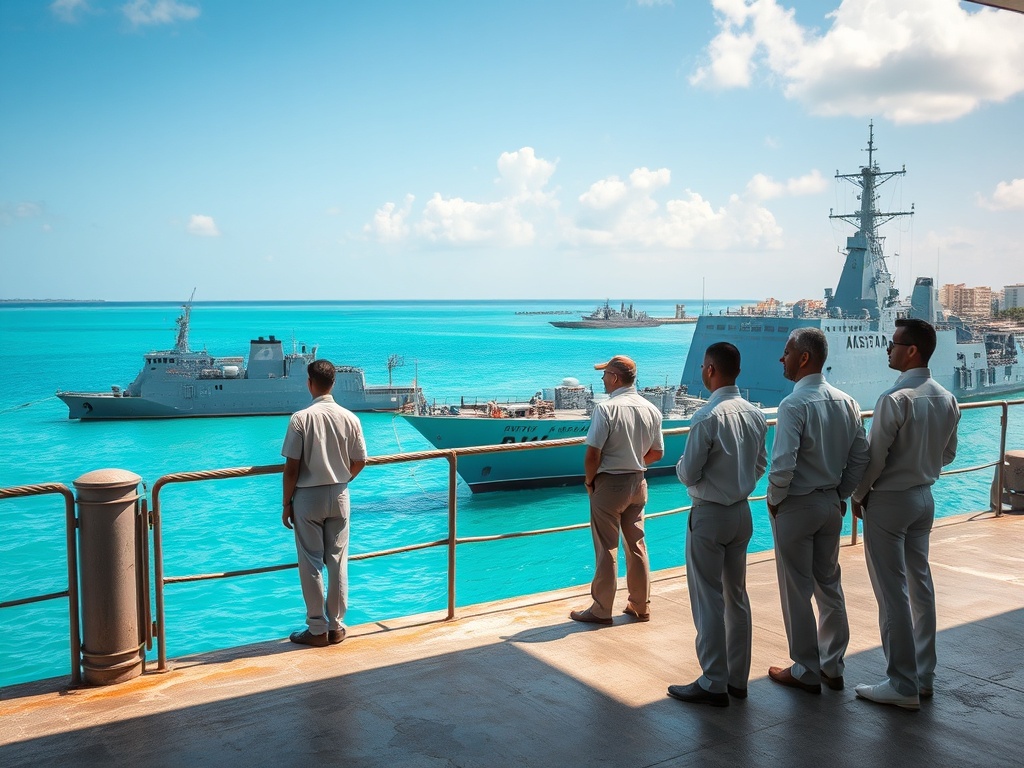
Pakistani Warship Docks in Malé as Defense Ties Strengthen
The recent port call by a Pakistani Navy warship to the Maldives, complete with joint battle exercises, represents more than routine military diplomacy. This engagement, conducted despite regional pressures, signals a deliberate shift in Maldivian foreign policy that has been months in the making. The government's determination to proceed with these defense cooperation activities underscores a broader strategy to diversify international partnerships and assert greater sovereignty in foreign affairs.
This recalibration comes amid ongoing discussions about the presence of foreign military forces in the archipelago. Policy experts and government officials have engaged in extensive analysis of how to balance regional relationships while protecting national interests. The current administration appears to be pursuing what it views as a necessary rebalancing—one that acknowledges the geopolitical realities of the Indian Ocean while seeking to maximize Maldivian autonomy.
The foreign policy approach draws from historical precedent, including former President Maumoon Abdul Gayoom's decision to expel Indian military personnel who had overstayed their welcome by two years—a move that continues to inform contemporary diplomatic thinking. This historical context provides a framework for understanding current efforts to ensure that international partnerships serve Maldivian interests without creating dependencies.
Simultaneously, the Maldives continues to engage with global governance mechanisms, having recently concluded its Fourth Universal Periodic Review at the UN Human Rights Council. This dual-track approach—asserting sovereignty in security matters while maintaining international human rights commitments—reflects the complexity of modern statecraft for small island nations.
The government's foreign policy direction appears driven by a calculation that diversified partnerships ultimately strengthen bargaining position and reduce over-reliance on any single power. This strategy acknowledges that in the competitive landscape of Indian Ocean geopolitics, maintaining multiple channels of cooperation can enhance rather than diminish a small state's influence.
As these policies unfold, they generate both domestic debate and international attention. The coming months will reveal whether this recalibration achieves its intended balance—securing the Maldives' interests while navigating the complex currents of regional power dynamics. What remains clear is that the archipelago nation is determined to chart its own course in international affairs, guided by its assessment of national priorities rather than external pressure.
— Source fragments: Pakistan Navy warship port call and joint exercises despite Indian pressure; historical reference to MAG expelling Indian forces; discussion of government direction on foreign policy; UN Human Rights Council engagement