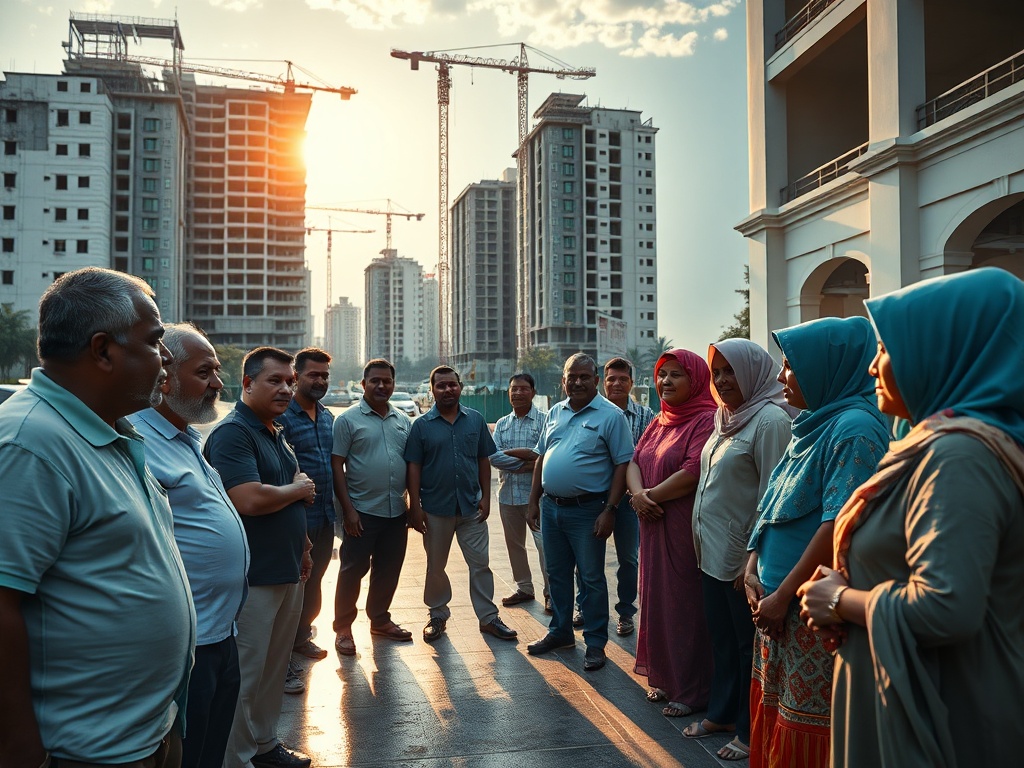
Parliament Debates Housing While Malé Waits
The debate over housing in Maldives has reached a critical juncture, with Parliament currently reviewing new housing legislation amid urgent public discourse. At the heart of the conversation lies a fundamental tension between immediate needs and long-term solutions.
Critics argue that the housing crisis stems not from ignorance but from implementation failures. The discussion has shifted from whether people can see Malé is overcrowded to how policies should distribute limited resources fairly. Some observers note that demands often center on financial compensation rather than mere recognition of the problem, reflecting deeper economic pressures facing residents.
The previous administration's 'Goathi' housing scheme represents this dichotomy—praised by some for addressing real needs at lower costs, yet criticized for unconstitutional implementation that favored certain groups. This pattern highlights how even well-intentioned policies can falter without transparent, equitable frameworks.
Economic realities complicate the picture. When demand dramatically outstrips supply, price controls often backfire, creating black markets where housing units rent illegally at higher rates. International experience suggests regulated percentage increases might offer more sustainable alternatives.
What's often missed in the 'Malé meehaa' narrative is the distributed nature of the rental economy. While land ownership may concentrate in certain demographics, real estate development and management involve stakeholders from across the archipelago. The benefits—and challenges—of the housing market are more widely shared than political rhetoric suggests.
The proposed housing bill aims to standardize government housing schemes and require comprehensive national planning. Yet questions remain about eligibility criteria and whether residency requirements might inadvertently disadvantage those most in need.
Beneath the policy debates lies a growing consensus: the solution requires moving beyond blaming Malé citizens or atoll residents. Successive governments have failed to develop holistic approaches where all Maldivians can access land and housing equally. The real failure isn't individual opportunism but systemic inadequacy.
As one observer noted, the path forward requires separating housing from land allocation debates while recognizing that sustainable solutions demand rigorous research and national development planning. The current legislative moment offers an opportunity to build frameworks that serve all Maldivians, regardless of birthplace or profession—if implemented with the fairness the public demands.
— Source fragments: Policy implementation failures, economic analysis of housing markets, distribution of rental economy benefits, legislative developments, calls for non-discriminatory criteria, need for holistic national approach