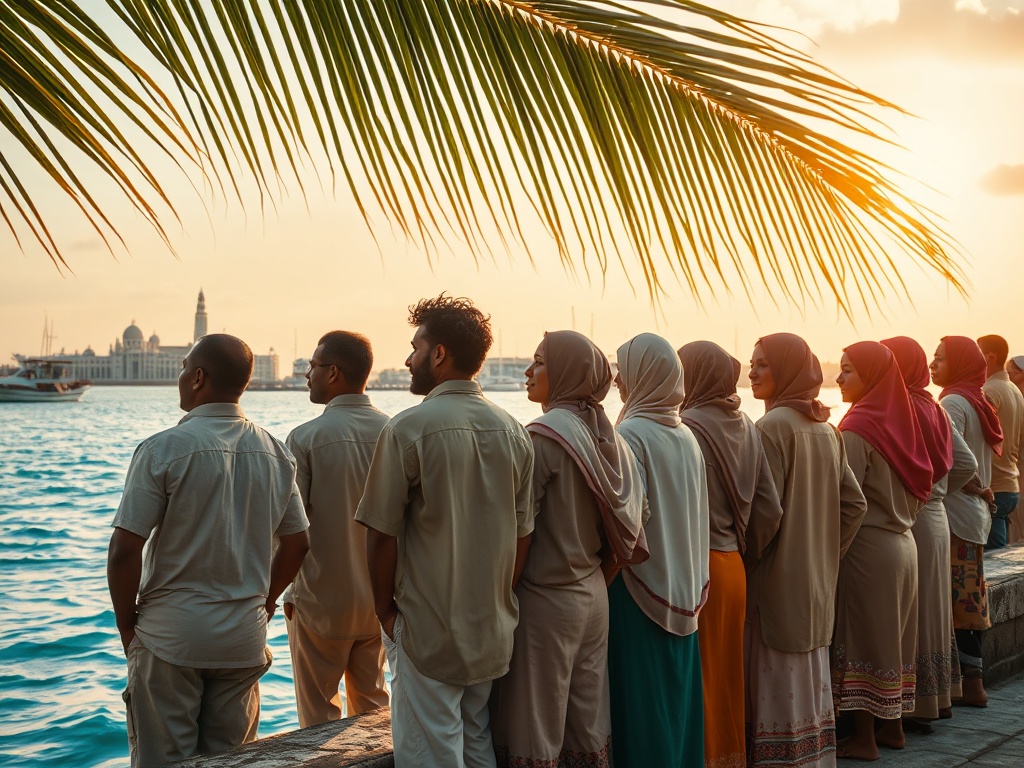
Parliament Rethinks Who Gets a Home in the Maldives
The sudden scheduling of a parliamentary committee meeting to review the Housing Bill has intensified a long-simmering debate about fairness, allocation, and the very nature of social housing in the Maldives. Across social media and public discourse, Maldivians are grappling with fundamental questions about who deserves housing support and how to distribute limited resources in a nation where demand far outstrips supply.
The conversation reveals a significant shift in perspective. While some still frame housing as a birthright issue—particularly regarding Male' residents—a growing consensus argues for criteria based on need rather than birthplace. "It's simple; don't discriminate among residents on any island," one perspective summarizes. "Criteria for housing must not be where one was born."
This push for standardization comes as the proposed legislation aims to establish consistent frameworks for social housing provision. According to preliminary reviews, the bill would require the government to conduct housing surveys and present a National Development Plan, creating more systematic approaches to a crisis that has persisted through multiple administrations.
The economic dimensions are equally complex. Some argue that price controls, while well-intentioned, often backfire when supply cannot meet demand. "Setting a price ceiling below the market rate is rarely effective," one analysis notes. "It often worsens the situation by creating black markets." Instead, regulation through limiting percentage increases emerges as a more practical alternative.
What becomes clear in these discussions is that the housing crisis transcends regional loyalties. As one observer points out, the rental business—often perceived as dominated by Male' natives—actually involves development and management by people from across the archipelago. This complexity underscores the need for solutions that recognize housing as a national, rather than regional, challenge.
The political dimension remains unavoidable. Previous housing schemes, like the MDP's Goathi program, receive praise for addressing real problems at lower costs, but criticism for implementation that many viewed as "obviously unconstitutional and biased." This pattern highlights how even well-designed policies can falter without transparent, equitable execution.
Perhaps the most telling development is the emerging consensus around personal responsibility versus systemic failure. While some express frustration with demands based on birthplace, others note that "we shouldn't blame Male' citizens" when "anyone—Male' or Atolls—would take an opportunity if given." The real failure, they argue, lies with successive governments that have not developed holistic, national approaches.
As parliament deliberates, the public conversation increasingly centers on creating systems where "everyone can access land equally"—a vision that acknowledges both the urgency of the housing crisis and the fundamental principle that solutions must serve all Maldivians, regardless of where they were born.
— Source fragments: its not they don't know. people have eyes and can see that Male' is full; How do we set limitation for free island allocation for Maldivian couples; MDP goathi scheme is actually a v good policy bec it solves a problem and at a lower cost; When demand far exceeds supply, setting a price ceiling below the market rate is rarely effective; this Rent business is not a 'Male' Meehaa' business; PNC is fast-tracking through the Housing Bill; don't discriminate among residents on any island; The bill aims to standardise housing schemes; We shouldn't blame Malé citizens. Real blame lies with successive gov that failed to fix the housing crisis