Parliamentary Debate Intensifies Over Crackdown on Illegal Political Activities and Social Disorder
Members of the Maldivian Parliament have called for decisive action against political parties engaging in illegal activities, arguing that the pursuit of political goals must not supersede the maintenance of public order and social cohesion.
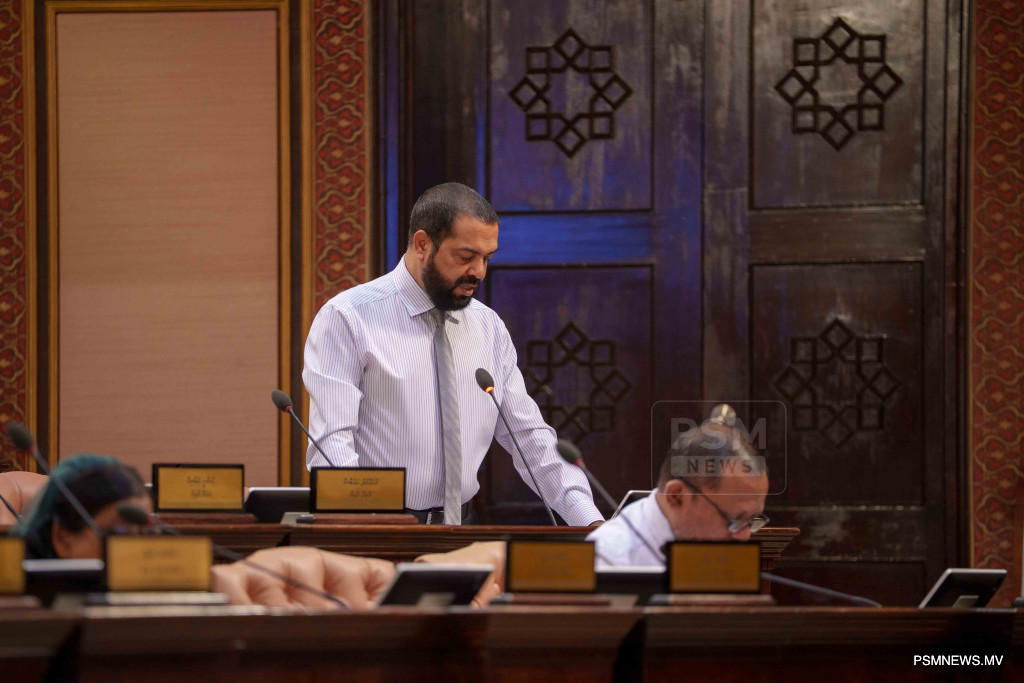
The debate was triggered by a motion moved by Holhudhoo MP Abdul Sattar Mohamed. In his presentation, MP Sattar emphasized that while the Constitution guarantees fundamental freedom of expression, the illegal actions of certain political entities have caused significant hardship for the general public. He urged relevant authorities to implement immediate institutional measures to address growing threats to societal security.
Lawmakers from the ruling People’s National Congress (PNC) voiced strong support for the motion. They argued that constitutional rights, including freedom of the press and expression, must be exercised within legal and reasonable limits. PNC members specifically highlighted the rise of inflammatory language in public spaces, claiming such rhetoric undermines national harmony.
Inguraidhoo MP Ibrahim Falah, leader of the PNC Parliamentary Group, criticized the perceived inaction of oversight institutions. He asserted that there is no legal justification for freedom of expression to be used as a tool to cause harm to others, noting that despite significant annual budget allocations for maintaining order, responsibilities are not being met.
Conversely, the opposition Maldivian Democratic Party (MDP) rejected the motion, characterizing it as an unacceptable interference in individual freedoms and personal affairs. MDP lawmakers argued that political parties serve as essential vehicles for representing citizen aspirations and warned that the motion could pave the way for the selective enforcement of laws by the government.
Despite the opposition's concerns, a majority of participating members supported the motion. Some MPs went further, calling for the dissolution of political parties that operate outside the framework of the Political Parties Act, suggesting that some organizations have abandoned the goal of national unity in favor of fostering societal division.